Review
. 2021 Apr;37(4):389-400.
doi: 10.1016/j.tig.2020.09.018. Epub 2020 Oct 19.

Gene Regulation and Cellular Metabolism: An Essential Partnership

Affiliations
Review

Gene Regulation and Cellular Metabolism: An Essential Partnership

Richard W Carthew. Trends Genet. 2021 Apr.

Abstract

It is recognized that cell metabolism is tightly connected to other cellular processes such as regulation of gene expression. Metabolic pathways not only provide the precursor molecules necessary for gene expression, but they also provide ATP, the primary fuel driving gene expression. However, metabolic conditions are highly variable since nutrient uptake is not a uniform process. Thus, cells must continually calibrate gene expression to their changing metabolite and energy budgets. This review discusses recent advances in understanding the molecular and biophysical mechanisms that connect metabolism and gene regulation as cells navigate their growth, proliferation, and differentiation. Particular focus is given to these mechanisms in the context of organismal development.

Keywords: ATP; gene regulation; glucose metabolism.


Figures

Figure 1.
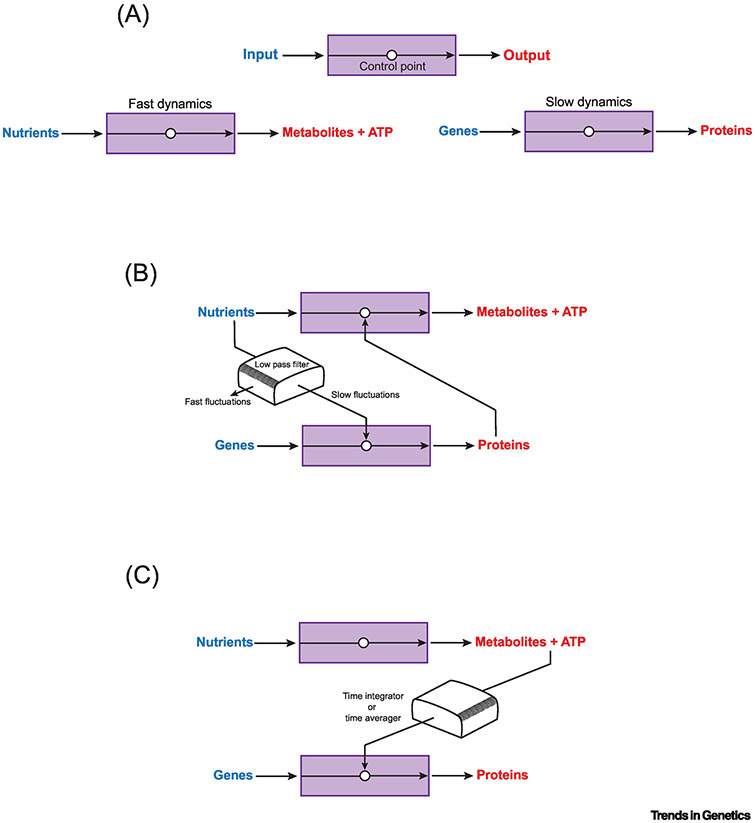
Figure 1.. Coupling two processes with very different dynamics.
(A) A generic process can be represented as input into a "black box" to generate output. Control points regulate the process. Such a representation can be used to abstract metabolism (lower left) and gene regulation (lower right), which have very different black box dynamics. (B) The GRN coupling galactose metabolism and gene expression forms a low-pass filter that then synchronizes signals between the two processes. (C) An alternate mechanism to couple the two processes is for gene regulation to integrate or average the variable metabolic signals over time. The net result is to improve metabolic signal to noise and generate a synchronized response.
Figure 2.
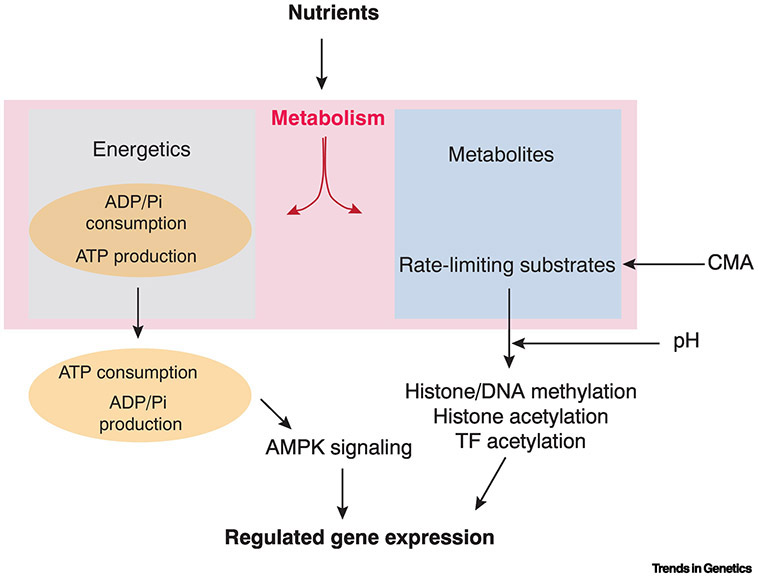
Figure 2.. Roles for metabolism in gene regulation.
Scheme to categorize the distinct outcomes of nutrient uptake, which generates energy and metabolites. Energy is expended by hydrolysis of ATP into ADP and inorganic phosphate (Pi), and this flux controls the rate at which biochemical processes such as transcription, translation, and molecular degradation occur. Certain signaling pathways such as AMPK actively sense ATP status and regulate specific genes in response. Generation of certain metabolites regulates gene expression because these metabolic substrates can act as rate-limiting factors in modulating epigenetic and protein modifications. Other metabolic processes can tune these modifications. Examples include chaperone-mediated autophagy (CMA), an alternate protein degradation mechanism from the proteasome, and efflux of lactate from cells, leading to higher intracellular pH.
Figure 3.
Figure 3.. An overview of glucose metabolism.
Glucose is transported into cells where it is catabolized by glycolysis to yield pyruvate. Pyruvate is then either converted into lactate (which can be excreted from the cell) or transported into mitochondria and metabolized into acetyl-CoA, fueling the tricarboxylic acid (TCA) cycle. NADH and FADH2, produced through glycolysis and the TCA cycle, are used by the mitochondrial electron transport chain for generating an electrochemical proton gradient, which drives oxidative phosphorylation (OxPhos) for ATP production. Since mitochondrial acetyl-CoA cannot enter the cytosol, citrate made in the TCA cycle can enter the cytosol and be converted to acetyl-CoA. This is then a substrate for protein acetylation. Glucose can also enter the pentose phosphate pathway via glucose-6-phosphate. This ultimately produces nucleotides, which in addition to being nucleic acid precursors, also generate S-adenosyl-methionine (SAM-e), a substrate for protein methylation. Note that shunting glucose to form cytosolic acetyl-CoA and SAM-e comes at the expense of oxidative phosphorylation.
Figure 4.
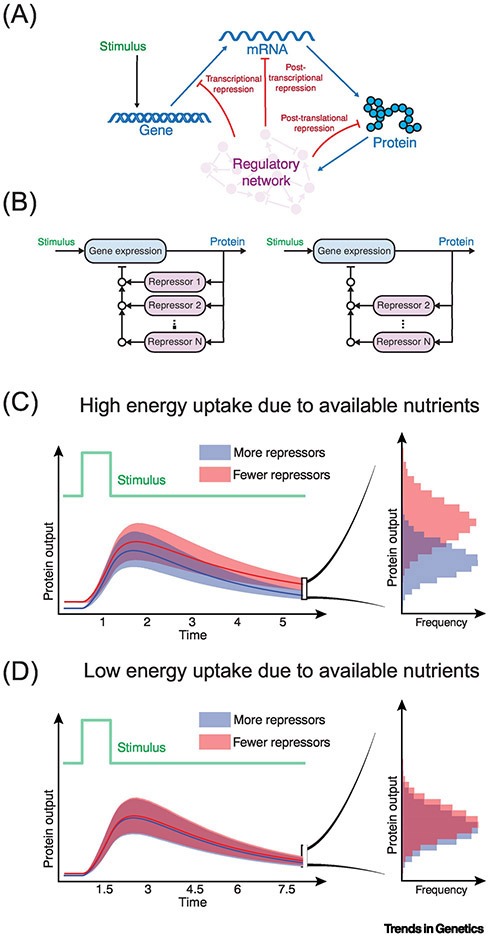
Figure 4.. Gene regulation and energy uptake.
(A) A stimulus activates gene expression, followed by repression of gene expression at different steps, thereby reducing protein output down to a resting steady-state. (B) Multiple repressors can act on gene expression, and the repressors can be more (left) or fewer (right) in number. (C,D) When the stimulus is transient, expression dynamics are pulse-like owing to repression. Shown are the average dynamics of protein output when there are more (blue line) or fewer (red line) repressors. Shaded areas show the distribution of curves for protein output from many cells. The histograms to the right, plot the frequency distribution of protein output at a defined time as indicated. In (C), energy uptake in the system is high owing to nutrient availability, allowing the gene expression machinery to expend ATP at high rates. Fewer repressors lead to higher protein output as would be intuitively predicted. In (D), energy uptake is low owing to limited nutrient availability, causing the gene expression machinery to expend ATP at lower rates. In this scenario, fewer repressors do not result in higher protein output. The repressors become redundant with each other. An implication of this is that multi-layered repression enables gene expression to uniformly operate under a wide variety of metabolic conditions. This might be a driving force in how gene regulation has evolved in organisms.

References

    1. Beckwith J (2011) The operon as paradigm: normal science and the beginning of biological complexity. J Mol Biol 409 (1), 7–13. - PubMed
    1. Klar AJ and Halvorson HO (1974) Studies on the positive regulatory gene, GAL4, in regulation of galactose catabolic enzymes in Saccharomyces cerevisiae. Mol Gen Genet 135 (3), 203–12. - PubMed
    1. Johnston SA and Hopper JE (1982) Isolation of the yeast regulatory gene GAL4 and analysis of its dosage effects on the galactose/melibiose regulon. Proc Natl Acad Sci U S A 79 (22), 6971–5. - PMC - PubMed
    1. Escalante-Chong R et al. (2015) Galactose metabolic genes in yeast respond to a ratio of galactose and glucose. Proc Natl Acad Sci U S A 112 (5), 1636–41. - PMC - PubMed
    1. Venturelli OS et al. (2015) Population diversification in a yeast metabolic program promotes anticipation of environmental shifts. PLoS Biol 13 (1), e1002042. - PMC - PubMed

Publication types

MeSH terms

Substances

LinkOut - more resources