Sequencing identifies multiple early introductions of SARS-CoV-2 to the New York City region
- PMID: 33093069
- PMCID: PMC7706732
- DOI: 10.1101/gr.266676.120
Sequencing identifies multiple early introductions of SARS-CoV-2 to the New York City region
Abstract
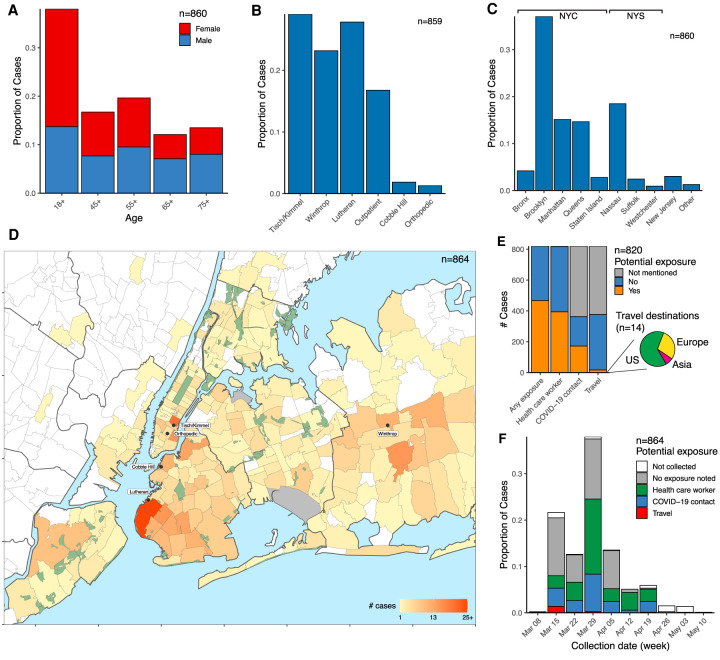
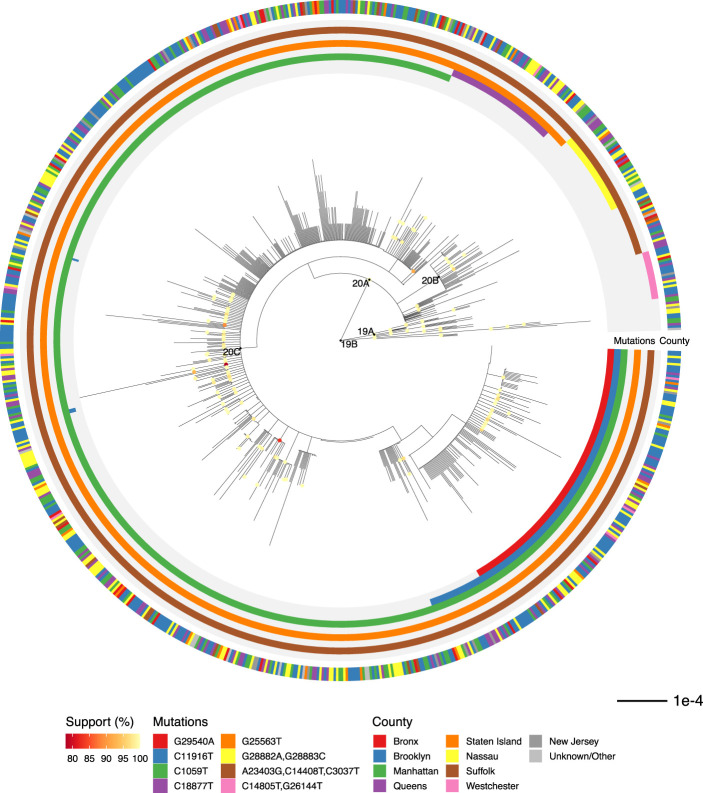
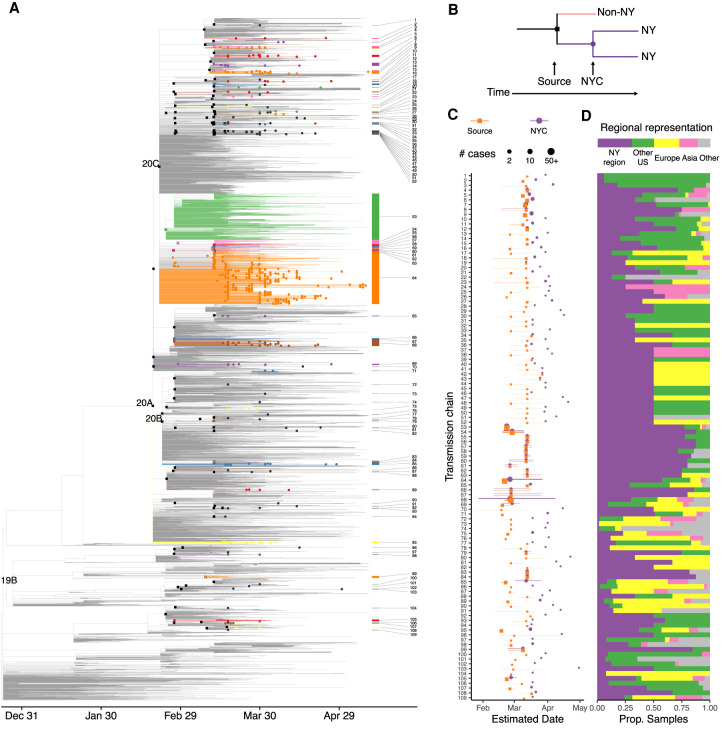
Effective public response to a pandemic relies upon accurate measurement of the extent and dynamics of an outbreak. Viral genome sequencing has emerged as a powerful approach to link seemingly unrelated cases, and large-scale sequencing surveillance can inform on critical epidemiological parameters. Here, we report the analysis of 864 SARS-CoV-2 sequences from cases in the New York City metropolitan area during the COVID-19 outbreak in spring 2020. The majority of cases had no recent travel history or known exposure, and genetically linked cases were spread throughout the region. Comparison to global viral sequences showed that early transmission was most linked to cases from Europe. Our data are consistent with numerous seeds from multiple sources and a prolonged period of unrecognized community spreading. This work highlights the complementary role of genomic surveillance in addition to traditional epidemiological indicators.
© 2020 Maurano et al.; Published by Cold Spring Harbor Laboratory Press.
Figures
Update of
-
Sequencing identifies multiple early introductions of SARS-CoV-2 to the New York City Region.medRxiv [Preprint]. 2020 Aug 19:2020.04.15.20064931. doi: 10.1101/2020.04.15.20064931. medRxiv. 2020. Update in: Genome Res. 2020 Dec;30(12):1781-1788. doi: 10.1101/gr.266676.120. PMID: 32511587 Free PMC article. Updated. Preprint.
References
-
- Davis JT, Chinazzi M, Perra N, Mu K, Pastore y Piontti A, Ajelli M, Dean NE, Gioannini C, Litvinova M, Merler S, et al. 2020. Estimating the establishment of local transmission and the cryptic phase of the COVID-19 pandemic in the USA. medRxiv 10.1101/2020.07.06.20140285 - DOI
Publication types
MeSH terms
Grants and funding
LinkOut - more resources
Full Text Sources
Medical
Miscellaneous