


Family experiences with palliative care for children at home: a systematic literature review
- PMID: 33099303
- PMCID: PMC7585197
- DOI: 10.1186/s12904-020-00672-4
Family experiences with palliative care for children at home: a systematic literature review
Abstract
Background: The main goal of pediatric palliative care (PPC) is to improve or maintain the best possible quality of life (QoL) for the child and their family. PPC can be provided in community health centres, within the specialist health care service and/or in the child's home. Home is often the preferred place for families, and recommendations state that, whenever possible, the family home should be the centre of care for the child. The aim of this study is to systematically review the experiences and needs of families with children receiving palliative care at home.
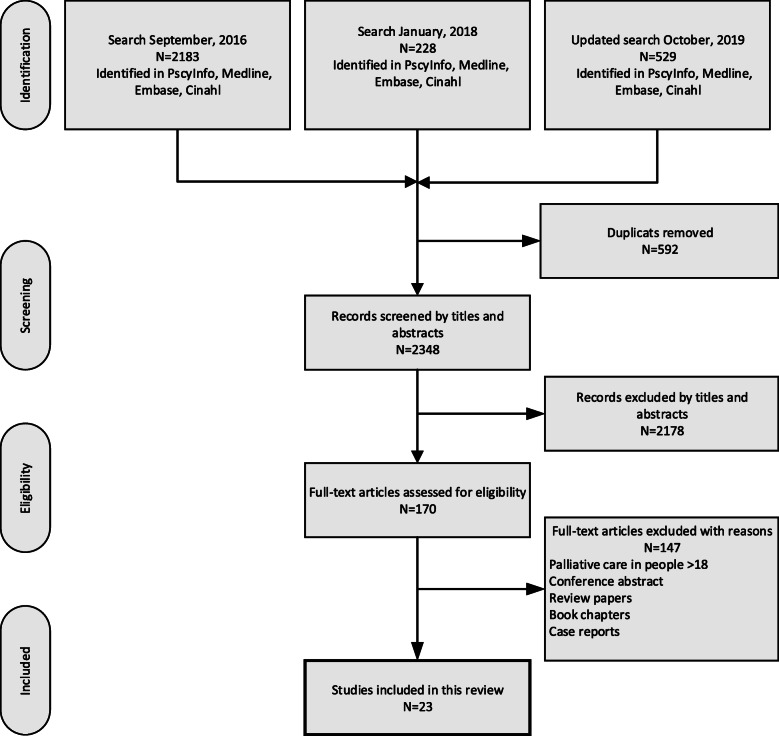
Methods: We conducted a systematic review and searched the peer-reviewed databases CINAHL, Embase, PsycInfo and MEDLINE for articles published between January 2000 and October 2019. We included 23 studies emphasising the experience of family members when their child (0-18 years) received palliative care at home. We used a thematic analysis to identify relevant themes in the literature, and synthesised the findings from the different studies.
Results: The review represents the experiences of the families of almost 300 children with life-limiting (LL) and life-threatening (LT) conditions receiving palliative care at home. In general, the children's mothers are interviewed, and seldom the sick children themselves or their siblings. Most families preferred staying at home since it made it easier to maintain a normal family life, was less stressful for the sick child, and meant that siblings could still attend school and be with friends. Families experienced a range of challenges due to the coordination of care, including a lack of support and adequately skilled staff with appropriate experience. Respite care was needed in order to cope with everyday life. Some studies were not specific concerning the place of care, and some relevant papers may have been omitted.
Conclusions: Families receiving PPC need organised, individualised support from a skilled PPC team. Respite care is necessary in order to manage a demanding home-care situation and parents need support for siblings. Privacy to be a family is a need, and many families need financial support. Future studies should focus on PPC at home in the perspectives of sick children and their siblings.
Keywords: Child; Family; Family centred care; Home care; Life limiting condition; Life threatening condition; PPC; Parents; Pediatric palliative care; Sibling.
Conflict of interest statement
The authors declare that they have no competing interests.
References
-
- Definition of Palliative Care . Worlds Health Organization. 1998.
Publication types
MeSH terms
LinkOut - more resources
Full Text Sources
Medical
