


Optimization of the Fermentation Media and Parameters for the Bio-control Potential of Trichoderma longibrachiatum T6 Against Nematodes
- PMID: 33101249
- PMCID: PMC7554348
- DOI: 10.3389/fmicb.2020.574601
Optimization of the Fermentation Media and Parameters for the Bio-control Potential of Trichoderma longibrachiatum T6 Against Nematodes
Abstract
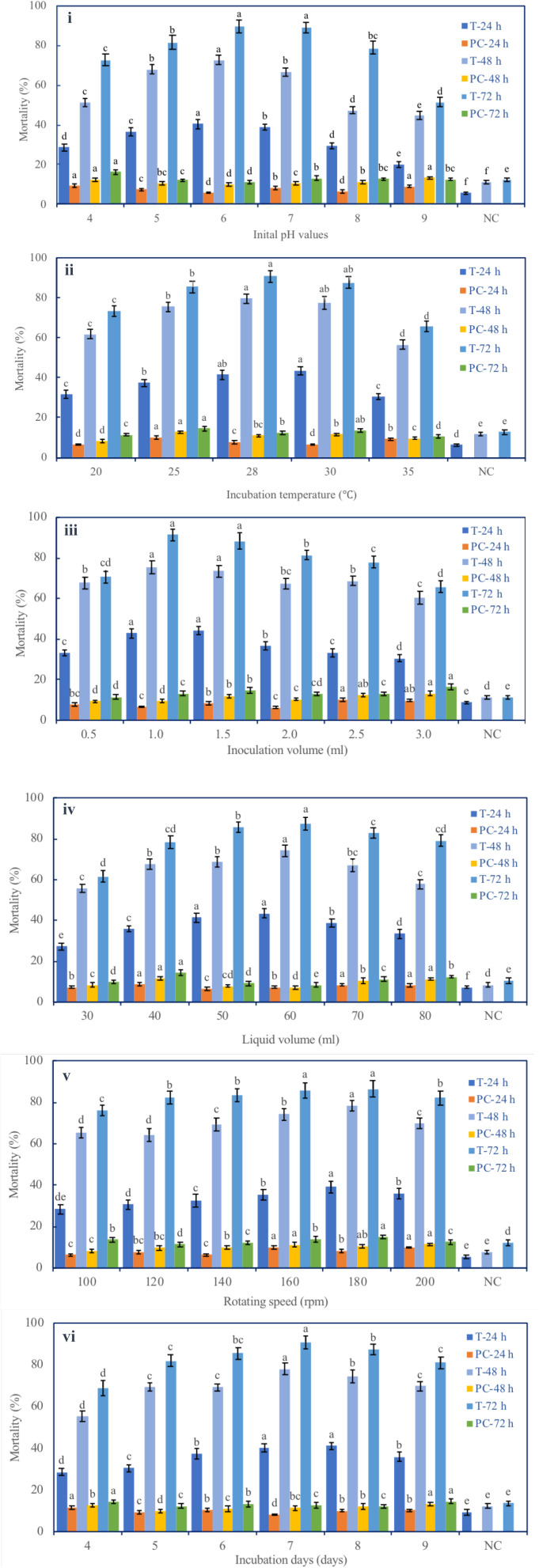
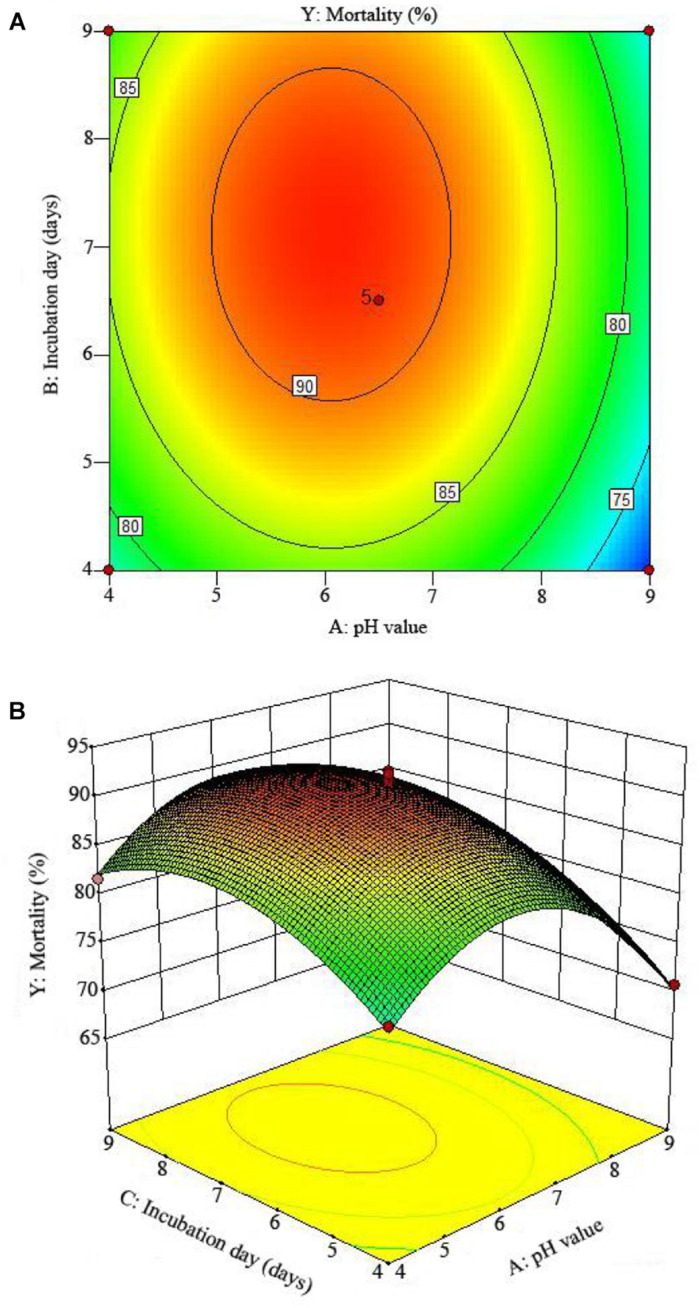
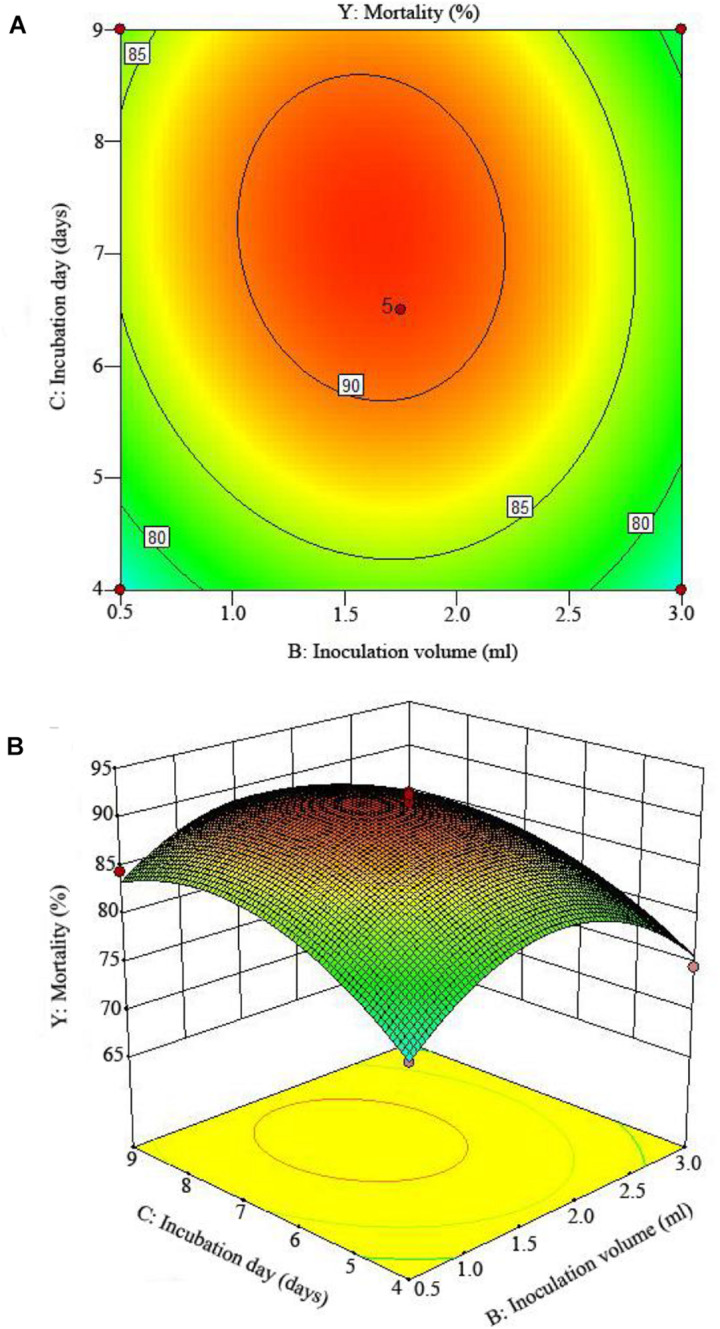
The cereal cyst nematode Heterodera avenae is one of the important soil-borne pathogens of cereal crops and causes high yield losses worldwide. Trichoderma spp. formulations are applied as commercial bio-control agents against soil-borne plant pathogens such as H. avenae. However, the relationship between Trichoderma longibrachiatum fermentation parameters and its bio-control potential against H. avenae has not been exclusively established. In the present study, the effect of 10 different fermentation media and conditions on the nematicidal activity of T. longibrachiatum T6 (T6) was evaluated with a single-factor method and a Plackett-Burman design, and the interaction between different fermentation parameters was investigated by a Box-Behnken design. The variables for enhancing the nematicidal activity of T6 culture filtrates were explored and optimized using response surface methodology (RSM). The Minor Medium (MM) plus wheat bran-2 medium was found to be the most effective fermentation medium for T6 culture filtrates against the second stage juveniles (J2s) of H. avenae. The maximum mortality of the J2s was obtained using the T6 culture filtrates under the following fermentation conditions: initial pH 6, 28°C culture temperature, 180 rpm rotating speed, 60 ml of fermentation media, 7 days of incubation time, and 1 ml of inoculation volumes. Among these parameters, the initial pH, inoculation volume, and incubation day were identified as the most significant parameters and critical independent variables for enhancing the nematicidal activity of the T6 culture filtrates. After further optimizations based on statistical predictions, the highest nematicidal activity (92.42%) was obtained with the T6 culture filtrates fermented under an initial pH of 6.06, an inoculation volume of 1.62 ml, and an incubation time of 7.15 days. The nematicidal activity was increased approximately by as high as 1.07% compared with that before optimization. Bio-control efficacy of T6 culture filtrates was 83.88% at the 70th day after wheat seeds sowing in greenhouse experiments. The results from the validation experiments agreed with the model predictions. Our study has improved the bio-control potential of Trichoderma spp. against the plant-parasitic nematodes H. avenae and provided a cost-efficient bio-resource in the future development of novel bio-control agents.
Keywords: Box–Behnken design; Heterodera avenae; Plackett–Burman design; Trichoderma species; fermentation media and conditions; nematicidal activity; response surface methodology.
Copyright © 2020 Zhang, Gan, Liu, Zhou and Xu.
Figures


References
-
- Ambat P., Ayyanna C. (2001). Optimizing medium constituents and fermentation conditions for citric acid production from palmyra jaggery using response surface methods. J. Microbiol. Biotechnol. 17 331–335.
-
- Araujo P. W., Brereton R. G. (1996). Experimental design II. optimization. TrAC Trends Anal. Chem. 15 63–70. 10.1016/0165-9936(96)80762-x - DOI
-
- Baklawa M., Björn N., Massoud S. (2017). Influence of temperature and storage conditions on the hatching behavior of cereal cyst nematodes (Heterodera avenae Wollenweber) from Egypt. J. Plant Dis. Prot. 124 213–222. 10.1007/s41348-016-0060-x - DOI
-
- Baş D., Boyaci I. H. (2007). Modeling and optimization I: usability of response surface methodology. J. Food Eng. 78 836–845. 10.1016/j.jfoodeng.2005.11.024 - DOI
LinkOut - more resources
Full Text Sources
Miscellaneous
