


Identification of Targets to Redirect CAR T Cells in Glioblastoma and Colorectal Cancer: An Arduous Venture
- PMID: 33101285
- PMCID: PMC7555836
- DOI: 10.3389/fimmu.2020.565631
Identification of Targets to Redirect CAR T Cells in Glioblastoma and Colorectal Cancer: An Arduous Venture
Abstract
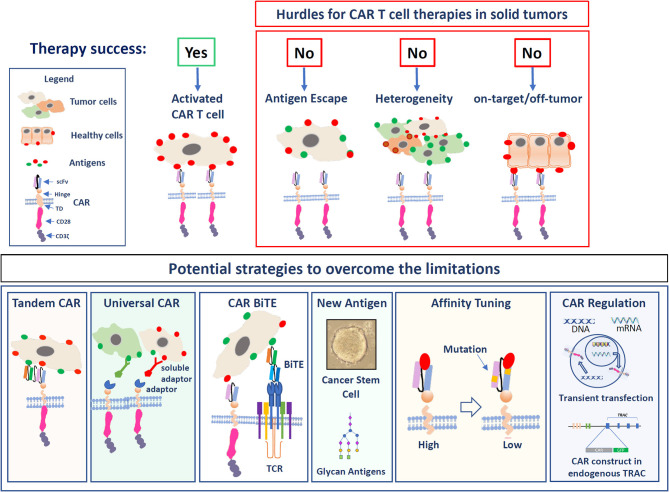
The chimeric antigen receptor (CAR) is an artificial molecule engineered to induce cytolytic T cell reactions in tumors. Generally, this molecule combines an extracellular single-chain variable fragment (scFv) able to recognize tumor-associated epitopes together with the intracellular signaling domains that are required for T cell activation. When expressed by T cells, the CAR enables the recognition and subsequent destruction of cancer cells expressing the complementary antigen on their surface. Although the clinical application for CAR T cells is currently limited to some hematological malignancies, researchers are trying to develop CAR T cell-based therapies for the treatment of solid tumors. However, while in the case of CD19, or other targets restricted to the hematopoietic compartment, the toxicity is limited and manageable, the scarcity of specific antigens expressed by solid tumors and not by healthy cells from vital organs makes the clinical development of CAR T cells in this context particularly challenging. Here we summarize relevant research and clinical trials conducted to redirect CAR T cells to surface antigens in solid tumors and cancer stem cells with a focus on colorectal cancer and glioblastoma. Finally, we will discuss current knowledge of altered glycosylation of CSCs and cancer cells and how these novel epitopes may help to target CAR T cell-based immunotherapy in the future.
Keywords: CAR T cells therapy; CRC (colorectal cancer); CSCs; GBM; MAbs; solid tumor.
Copyright © 2020 Ponterio, De Maria and Haas.
Figures
References
Publication types
MeSH terms
Substances
LinkOut - more resources
Full Text Sources
Other Literature Sources
Medical
