Precochlear Implant Assessment: Clinical Profile and Family History of Children with Severe Bilateral Prelingual Hearing Loss
- PMID: 33101511
- PMCID: PMC7575360
- DOI: 10.1055/s-0039-3402442
Precochlear Implant Assessment: Clinical Profile and Family History of Children with Severe Bilateral Prelingual Hearing Loss
Abstract
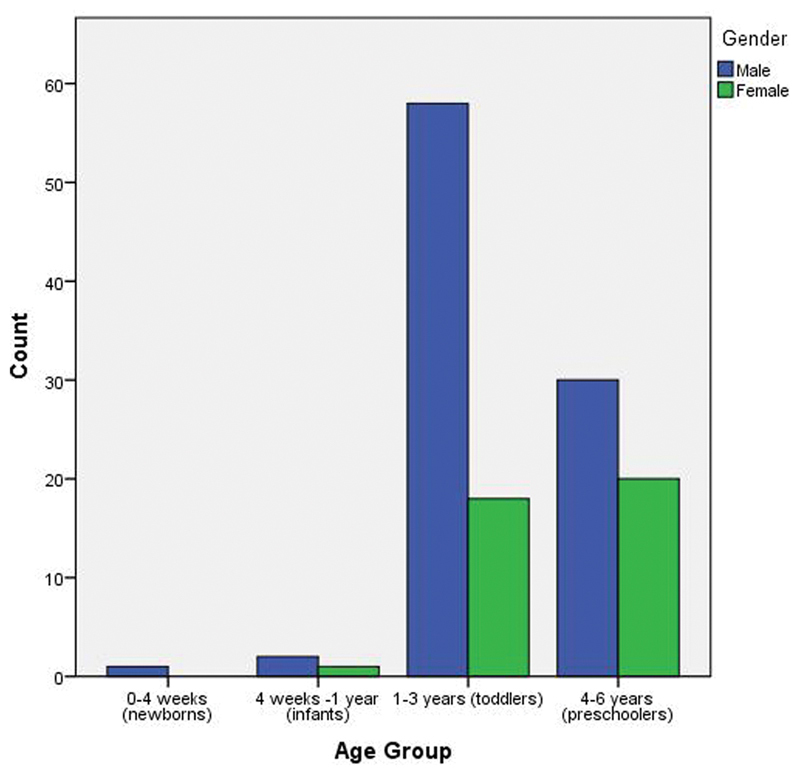
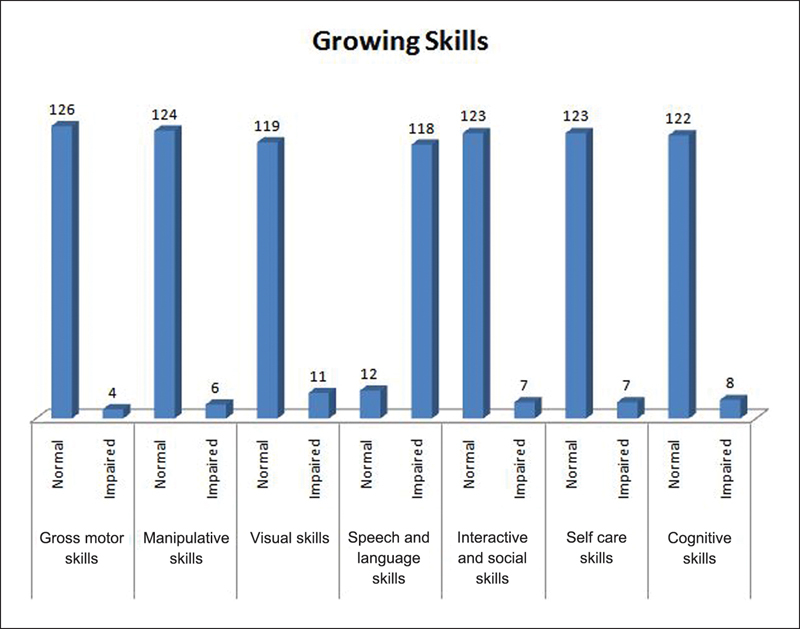
Introduction The prevalence of deafness is high in Pakistan. Knowledge regarding the clinical features of patients with profound hearing loss will not only help identify the cause but will also help in the strategic planning for public health interventions. Objective The present study was conducted to cover in detail the clinical aspects of children with hearing loss, that is, age at presentation, associated deficits and disorders, possible cause of the disease, associated family history, and role of consanguineous marriage. Methods The present study was performed from November 2016 to September 2018. All of the patients under 6 years of age with profound bilateral hearing loss who would benefit from cochlear implantation were included in the study. Detailed history was taken. The developmental skills were assessed for all areas, and the patients were scored regarding their motor, manipulative, visual, language, social and self-care skills according to the Schedule of Growing Skills II. Detailed family history was taken from the parents of the affected children. The Statistical Package for the Social Sciences (SPSS) software, version 20.0, was used for the statistical analysis. Results The mean age of the children to be treated was 3.2 ± 1.25 years. Most patients (51.5%) had a positive family history of disease. Consanguineous marriage was common; the parents of 76.9% of the patients were first-degree relatives. Most patients (90.8%) had associated language impediments. In total, four (Ł3.07%) patients had global developmental delay. Conclusion Consanguineous marriage pattern plays an important role in diseases running in families. Development in these children is strongly linked to their age at the consultation.
Keywords: cochlear implant; consanguinity; hearing loss.
Conflict of interest statement
Conflict of Interests The authors have no conflict of interests to declare.
Figures
References
-
- World Health Organization.WHO global estimates on prevalence of hearing loss World Health Organization; 2012
-
- Ali G. Genetic deafness in Pakistani population. J Pak Med Assoc. 2010;60(06):418–419. - PubMed
-
- Khan M I, Mukhtar N, Saeed S R, Ramsden R T. The Pakistan (Lahore) cochlear implant programme: issues relating to implantation in a developing country. J Laryngol Otol. 2007;121(08):745–750. - PubMed
-
- McMahon C M, Kifley A, Rochtchina E, Newall P, Mitchell P. The contribution of family history to hearing loss in an older population. Ear Hear. 2008;29(04):578–584. - PubMed
LinkOut - more resources
Full Text Sources