How to manage IBD in the 'elderly'
- PMID: 33101625
- PMCID: PMC7569512
- DOI: 10.1136/flgastro-2019-101218
How to manage IBD in the 'elderly'
Abstract
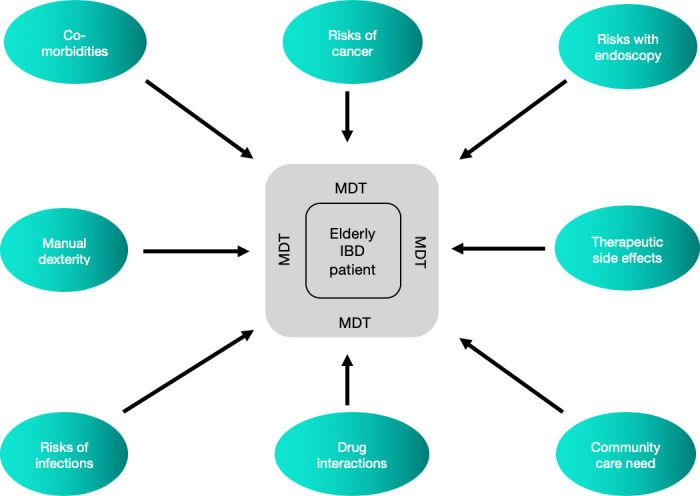
As the incidence of inflammatory bowel disease (IBD) rises and the global population ages, the number of older people living with these conditions will inevitably increase. The challenges posed by comorbid conditions, polypharmacy, the unintended consequences of long-term treatment and the real but often underestimated mismatch between chronological and biological ages underpin management. Significantly, there may be differences in disease characteristics, presentation and management of an older patient with IBD, together with other unique challenges. Importantly, clinical trials often exclude older patients, so treatment decisions are frequently pragmatic, extrapolated from a number of sources of evidence and perhaps primarily dictated by concerns around adverse effects. This review aimed to discuss the epidemiology, clinical features and considerations with management in older patients with IBD.
Keywords: IBD; crohn's disease; elderly; ulcerative colitis.
© Author(s) (or their employer(s)) 2020. No commercial re-use. See rights and permissions. Published by BMJ.
Conflict of interest statement
Competing interests: None declared.
Figures
References
-
- Sturm A, Maaser C, Mendall M, et al. European Crohn’s and Colitis Organisation Topical Review on IBD in the Elderly: Table 1. J. Crohn’s Colitis 2016;11:jjw188. - PubMed
Publication types
LinkOut - more resources
Full Text Sources