Review
. 2020 Aug 24:9:e33.
doi: 10.1017/jns.2020.26. eCollection 2020.

From lifespan to healthspan: the role of nutrition in healthy ageing

Affiliations
Review

From lifespan to healthspan: the role of nutrition in healthy ageing

Kremlin Wickramasinghe et al. J Nutr Sci. .

Abstract

Across the globe, there has been a marked increase in longevity, but significant inequalities remain. These are exacerbated by inadequate access to proper nutrition and health care services and to reliable information to make the decisions related to nutrition and health care. Many in economically developing as well as developed societies are plagued with the double-burden of energy excess and undernutrition. This has resulted in mental and physical deterioration, increased non-communicable disease rates, lost productivity, increased medical costs and reduced quality of life. While adequate nutrition is fundamental to good health at all stages of the life course, the impact of diet on prolonging good quality of life during ageing remains unclear. For progress to continue, there is need for new and/or innovative approaches to promoting health as individuals age, as well as qualitative and quantitative biomarkers and other accepted tools that can measure improvements in physiological integrity throughout life. A framework for progress has been proposed by the World Health Organization in their Global Strategy and Action Plan on Ageing and Health. Here, we focused on the impact of nutrition within this framework, which takes a broad, person-centred emphasis on healthy ageing, stressing the need to better understand each individual's intrinsic capacity, their functional abilities at various life stages, and the impact of their mental, and physical health, as well as the environments they inhabit.

Keywords: Ageing; Healthspan; Lifespan; Longevity; Non-communicable diseases; Nutrition; Phenotypic flexibility.


Figures

Fig. 1.
Fig. 1.
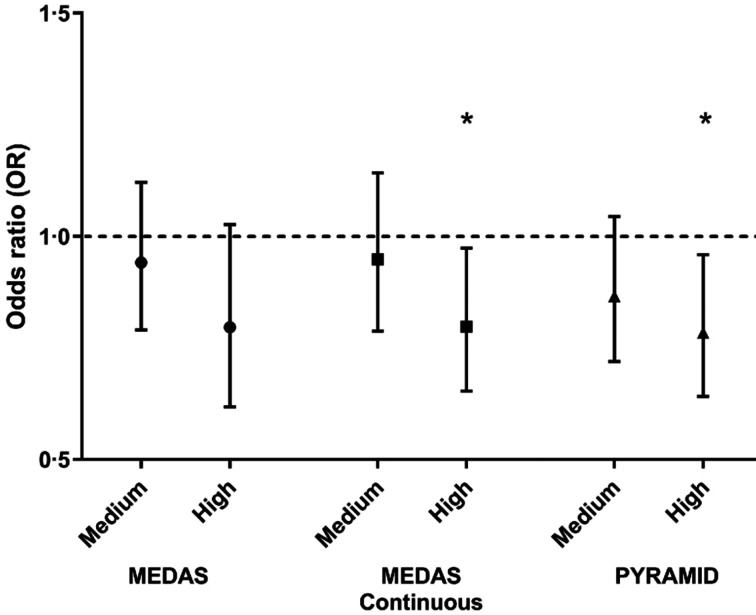
Associations between Mediterranean diet adherence and risk of poor cognitive performance assessed by the Hopkins Verbal Learning Test among participants (n 7589) in the European Prospective Investigation into Cancer and Nutrition-Norfolk study. Poor performance was defined as a score in the bottom 10 % of the population distribution of the test. Results are expressed as odds ratios (ORs) plus 95 % CIs for poor cognitive performance with medium and high compared with the lowest tertile of Mediterranean diet adherence (dashed line) quantified using three different methods of assessing adherence. These were: (a) the standard Mediterranean Diet Adherence Screener (MEDAS) (score); (b) the MEDAS Continuous that is similar to the standard MEDAS but with points allocated on a continuous basis (i.e., between 0 and 1) depending on closeness to the dietary target; (c) the Pyramid score, a 15-point scoring system proposed by the Mediterranean Diet Foundation(37). Further details of these scoring methods are provided by Shannon et al.(36). *Significantly lower risk of poor cognitive performance compared with the lowest tertile of Mediterranean diet adherence (P < 0⋅05).
Fig. 2.
Fig. 2.
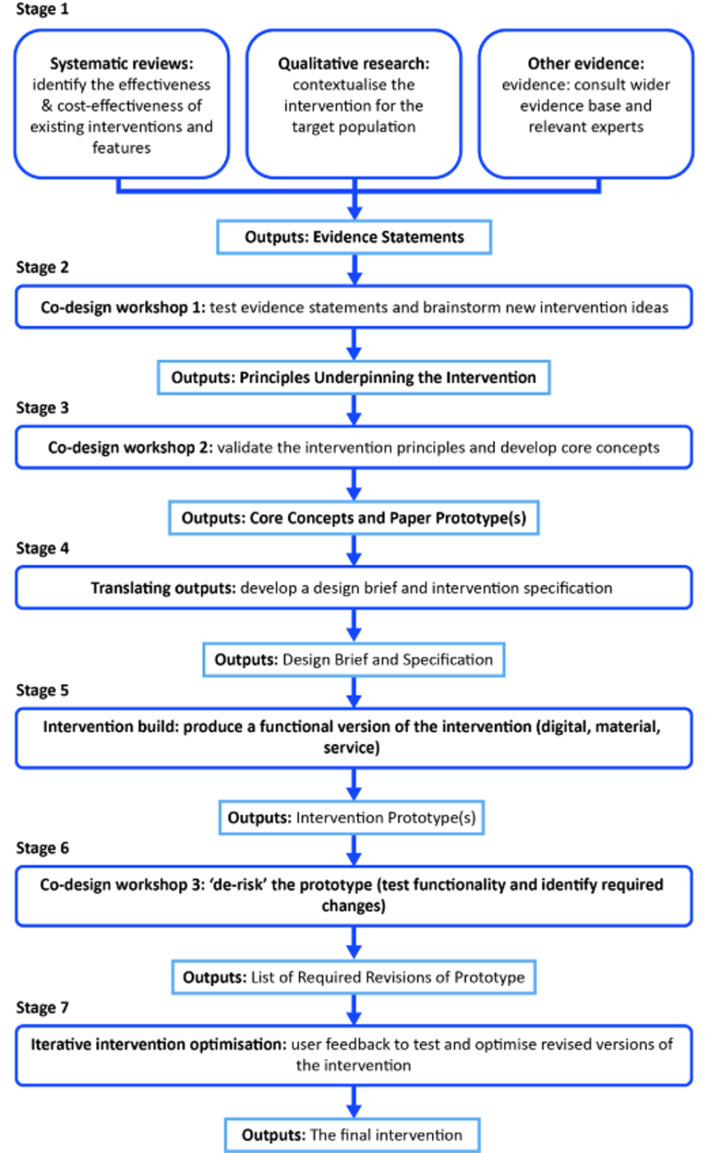
Overview of the systematic, sequential approach to intervention co-design and development used to develop the LEAP (Living, Eating, Activity and Planning) online platform. LEAP incorporates selected behaviour change techniques and is designed to provide personalised support in making changes to diet (to increase adherence to the Mediterranean dietary pattern), physical activity and social roles/ networks and to enhance healthy ageing(53).
Fig. 3.
Fig. 3.
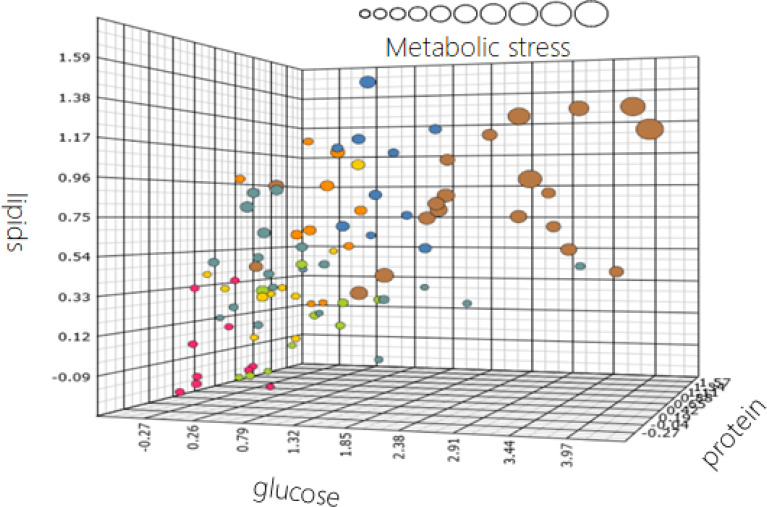
Health space that visualises the increase of a person's metabolic age with age, body fat and the presence of a metabolic disorder such as type II diabetes mellitus. The circles represent different male individuals from two studies focusing on health quantification by means of phenotypic flexibility(64,65). The health space is defined by four axes that summarise all biomarkers related to the capacity to deal with ‘lipids or fats’, ‘glucose or carbohydrates’, ‘proteins’ and the size of the circle summarises the individual metabolic stress state referring to inflammation and oxidative stress. The colour coding of the circles have the following meaning: red, healthy young (age 20–30) and lean (low body fat percentage); marine blue, healthy elderly (age 60–70) and overweight (normal to high body fat percentage); green, healthy adults (age 30–60) with low body fat percentage; yellow and aqua-green, healthy adults (age 30–60) with normal body fat percentage; orange, healthy adults (age 30–60) with high body fat percentage; brown, male adults (age 30–60) with type II diabetes. Adapted from van den Broek et al.(65).
Fig. 4.
Fig. 4.
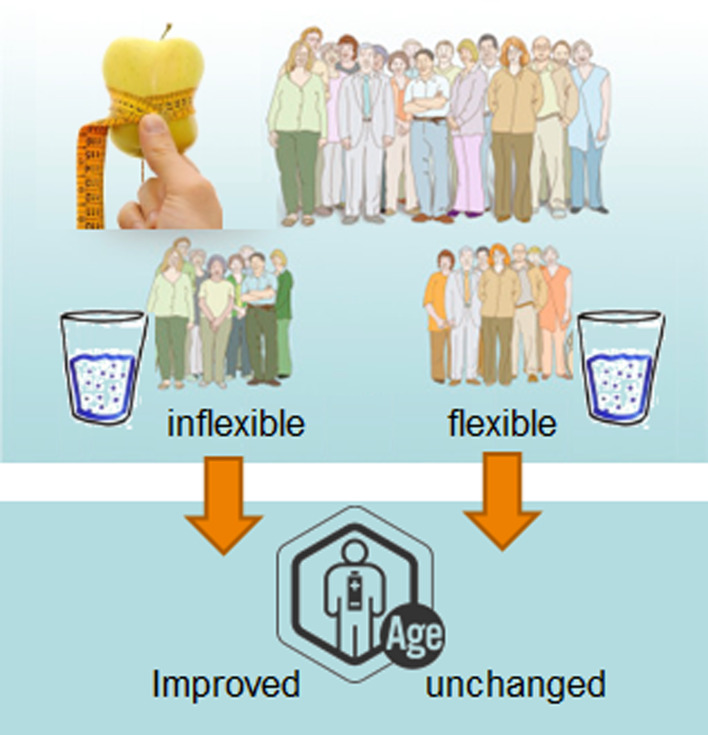
In a human intervention study, focusing on the effect of weight loss (20 % reduction in energy intake for 12 weeks) on ‘resilient ageing’, the quantification of phenotypic flexibility identified subjects with different susceptibility to weight loss-mediated metabolic improvements. Persons who had a reduced resilience (inflexible persons) showed a significant metabolic improvement after 12 weeks of intervention, whereas persons with normal resilience had an unaltered metabolic age.
Fig. 5.
Fig. 5.
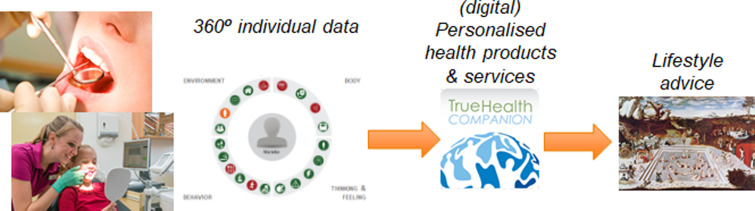
The envisioned transition from lifespan to healthspan: persons should have a regular health check through the lifespan like presently is the case within dentistry. Based on digital 360° individual data on a person's biology (including phenotypic flexibility), thinking and feeling, lifestyle behaviour and contextual environment, it can be determined if a person is following their optimal ageing trajectory. When deviation from this trajectory is noticed, personalized nutrition and lifestyle advice can be provided, thereby adding life to years by preventing non-communicable diseases (NCDs).

References

    1. World Health Organization (2015) World Report on Ageing and Health. https://apps.who.int/iris/bitstream/handle/10665/186463/9789240694811_en... (accessed 14 February 2020).
    1. World Health Organization (2016) The Global Strategy and Action Plan on Ageing and Health. https://www.who.int/ageing/global-strategy/en/ (accessed 30 January 2020).
    1. Kalache A, de Hoogh I, Howlett SE, et al. (2019) Nutrition interventions for healthy ageing across the lifespan: a conference report. Eur J Nutr 58, S1–S11. - PMC - PubMed
    1. Marsman DS, Belsky DW, Gregori D, et al. (2018) Healthy ageing: the natural consequences of good nutrition: a conference report. Eur J Nutr 57, S15–S34. - PMC - PubMed
    1. Shao A, Drewnowski A, Willcox DC, et al. (2017) Optimal nutrition and the ever-changing dietary landscape: a conference report. Eur J Nutr 56, S1–S21. - PMC - PubMed