


Arteriocaliceal Fistula: A Life-Threatening Condition After Retrograde Intrarenal Surgery
- PMID: 33102737
- PMCID: PMC7580615
- DOI: 10.1089/cren.2020.0004
Arteriocaliceal Fistula: A Life-Threatening Condition After Retrograde Intrarenal Surgery
Abstract
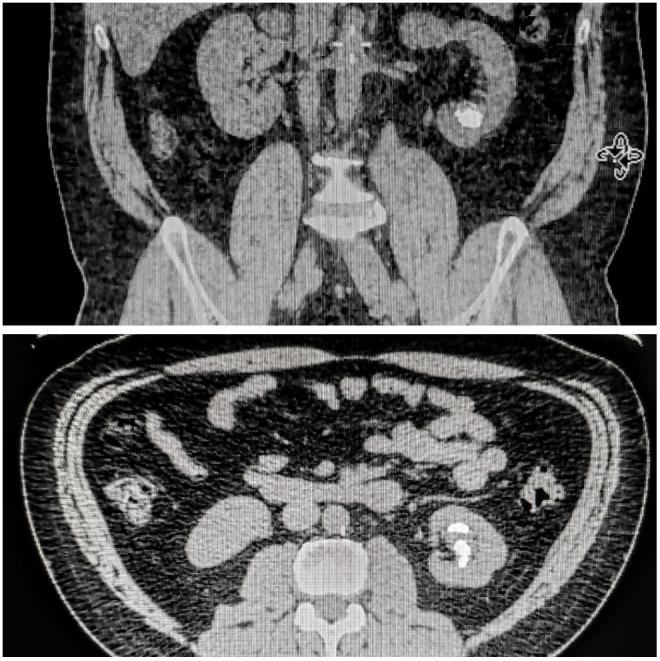
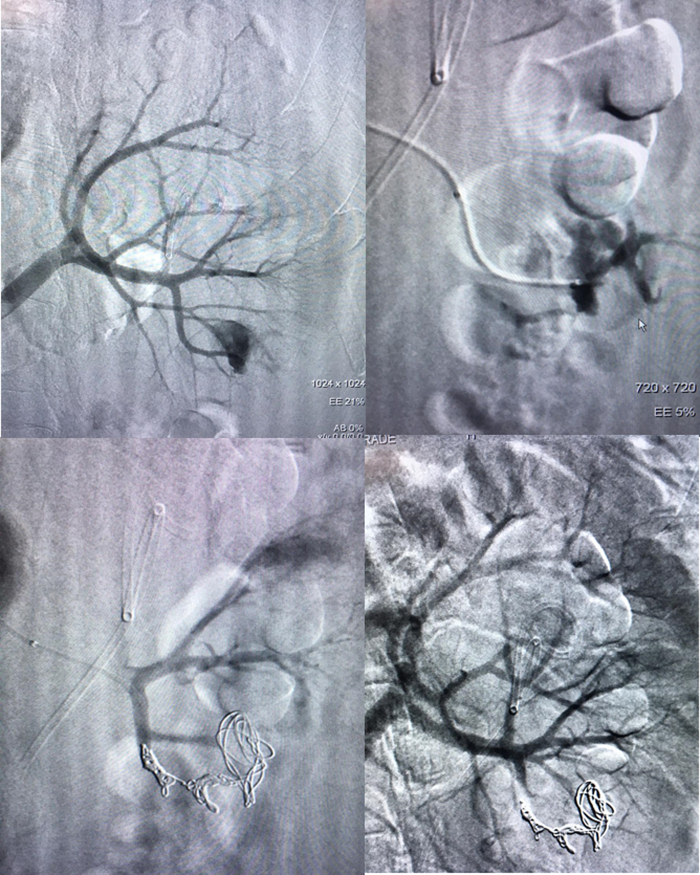
Background: Retrograde intrarenal surgery (RIRS) has emerged as a viable and safe option for renal stones <2 cm. Because of its high efficiency and relative safety, experienced endourologists have applied it to even larger stones. We present a case of arteriocaliceal fistula, which is a rare postoperative complication of RIRS. Case Presentation: A 52-year-old man with a rich history of endourologic procedures and extracorporeal shockwave lithotripsy caused by inferior caliceal calculi was subjected to RIRS. This was complicated by transient intraoperative hemorrhage, followed by recurrent hematuria and clot retention several days postoperatively. Renal arteriography revealed the presence of an arteriocaliceal fistula. This was completely resolved with selective arterial embolization. Conclusion: This case highlights that early detection and timely intervention are crucial to avoid serious consequences of post-RIRS hemorrhage resulting from arteriocaliceal fistula.
Keywords: endourology; nephrolithiasis; retrograde intrarenal surgery; surgical complication; urology.
Copyright 2020, Mary Ann Liebert, Inc., publishers.
Conflict of interest statement
No competing financial interests exist.
Figures
References
-
- Türk C, Petřík A, Sarica K, et al. . EAU guidelines on diagnosis and conservative management of urolithiasis. Eur Urol 2016;69:468–474 - PubMed
-
- Cindolo L, Castellan P, Primiceri G, et al. . Life-threatening complications after ureteroscopy for urinary stones: Survey and systematic literature review. Minerva Urol Nefrol 2017;69:421–431 - PubMed
-
- Cindolo L, Castellan P, Marco C, et al. . Mortality and flexible ureteroscopy: Analysis of six cases 2015. World J Urol 2016;34:305–310 - PubMed
LinkOut - more resources
Full Text Sources