Review
. 2021 Jan;41(1):630-703.
doi: 10.1002/med.21743. Epub 2020 Oct 25.

Evolution of the adaptogenic concept from traditional use to medical systems: Pharmacology of stress- and aging-related diseases

Affiliations
Review

Evolution of the adaptogenic concept from traditional use to medical systems: Pharmacology of stress- and aging-related diseases

Alexander G Panossian et al. Med Res Rev. 2021 Jan.

Abstract

Adaptogens comprise a category of herbal medicinal and nutritional products promoting adaptability, resilience, and survival of living organisms in stress. The aim of this review was to summarize the growing knowledge about common adaptogenic plants used in various traditional medical systems (TMS) and conventional medicine and to provide a modern rationale for their use in the treatment of stress-induced and aging-related disorders. Adaptogens have pharmacologically pleiotropic effects on the neuroendocrine-immune system, which explain their traditional use for the treatment of a wide range of conditions. They exhibit a biphasic dose-effect response: at low doses they function as mild stress-mimetics, which activate the adaptive stress-response signaling pathways to cope with severe stress. That is in line with their traditional use for preventing premature aging and to maintain good health and vitality. However, the potential of adaptogens remains poorly explored. Treatment of stress and aging-related diseases require novel approaches. Some combinations of adaptogenic plants provide unique effects due to their synergistic interactions in organisms not obtainable by any ingredient independently. Further progress in this field needs to focus on discovering new combinations of adaptogens based on traditional medical concepts. Robust and rigorous approaches including network pharmacology and systems pharmacology could help in analyzing potential synergistic effects and, more broadly, future uses of adaptogens. In conclusion, the evolution of the adaptogenic concept has led back to basics of TMS and a new level of understanding of holistic approach. It provides a rationale for their use in stress-induced and aging-related diseases.

Keywords: adaptogen; aging; ethnopharmacology; network pharmacology; stress.


Conflict of interest statement

Alexander G. Panossian is self‐employed by the research and development company, Phytomed AB. He has an Independent Contractor Agreement with Europharma USA Inc. He has no shares or financial interest in any pharmaceutical company. All other authors declare no conflict of interests.

Figures
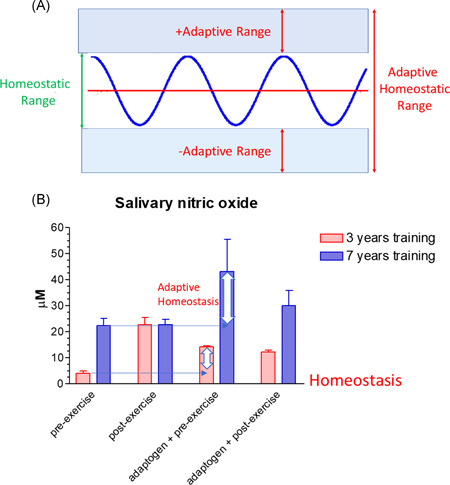
Figure 1
Figure 1
(A) Adaptive homeostasis was defined as the transient reversible adjustments of the homeostatic range in response to exposure to signaling molecules or events. Any biological function or measurement oscillate around a mean or median, within a homeostatic range that is considered a “normal” or physiological, upgraded from Reference [131]. (B) Adaptogens and physical exercise adjust the homeostatic range of salivary nitric oxide. Effects of physical exercise and androgens on the nitric oxide level in saliva of athletes regularly trained for 3 and 7 years 141 [Color figure can be viewed at wileyonlinelibrary.com]
Figure 2
Figure 2
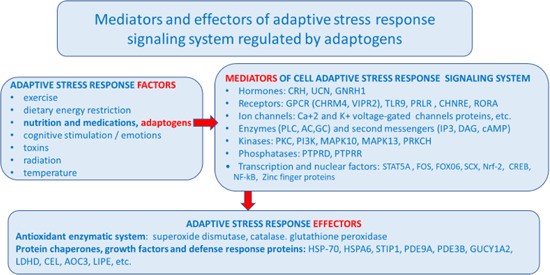
Adaptive stress response factors, mediators, and effectors (updated and adapted from Reference [143] and authors’ drawings. 17 Adaptive stress response involves activation of intracellular and extracellular signaling pathways and increased expression of antiapoptotic proteins, neuropeptides, antioxidant enzymes, and defense response of an organism resulting in increased survival. One basic mechanism of action of adaptogens, that is, that they activate adaptive cellular stress response pathways in humans’ brain cells [Color figure can be viewed at wileyonlinelibrary.com]
Figure 3
Figure 3
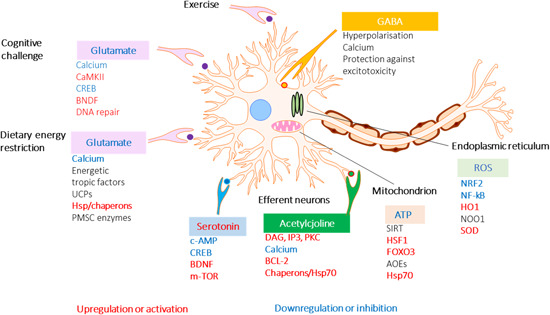
Effects of adaptogens on adaptive stress response signaling pathways that promote synaptic plasticity and protect neurons against degeneration. Illustration of a glutamatergic neuron receiving excitatory signals from neurons activated in response to intellectual tasks, exercise, and dietary energy restriction. Postsynaptic receptors for glutamate, acetylcholine, and serotonin, are activated to trigger intracellular signaling pathways and transcription factors that activate the expression of neuroprotective proteins including antiapoptotic proteins, brain‐mitochondrial uncoupling proteins (UCPs), and derived neurotrophic factor (BDNF). BDNF activates neuronal growth by stimulating the mammalian target of rapamycin (mTOR). Mild cellular stress resulting from dietary energy restriction and oxidative stress (ROS) activates adaptive stress response pathways including those that upregulate antioxidant enzymes (AOEs) and protein chaperones. CREB, cyclic AMP response element‐binding protein; CaMKII, calcium/calmodulin kinase II; DAG, diacylglycerol; FOXO3, forkhead box protein O3; HO1, heme oxygenase 1; HSF1, heat shock factor 1; IP3 PKC, inositol trisphosphate 3 protein kinase C; NF‐B, nuclear factor B; NRF2, nuclear regulatory factor 2 NQO1, NAD(P)H‐quinone oxidoreductase 1 (updated and adapted from Reference [59] and from authors’ drawings 16 [Color figure can be viewed at wileyonlinelibrary.com]
Figure 4
Figure 4
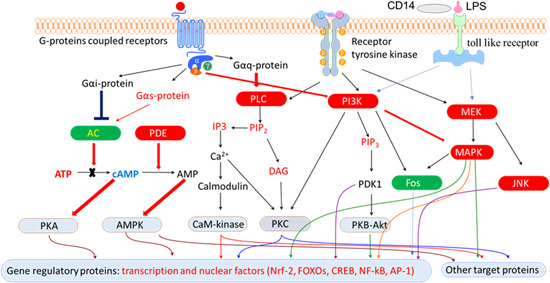
Effects of adaptogens on adaptive stress response intracellular signaling pathways (updated from authors’ drawings 17 ). Activation of the PI3K/AKT/mTOR signaling pathway positively regulates cell cycle, proliferation, neural long‐term potentiation (memory cognitive functions and longevity. AC, adenylate cyclase; AMPK, 5' AMP‐activated protein kinase; AP‐1, activator protein 1 transcription factor; CREB, cyclic AMP response element‐binding protein; DAG, diacylglycerol; Fos, Fos proto‐oncogene, AP‐1 transcription factor subunit; FOXOs, forkhead box proteins; IP3, inositol 1,4,5‐trisphosphate; JNK, c‐Jun N‐terminal kinases; MaM‐kinase, Ca2+/calmodulin‐dependent protein kinase II; MAPK–MEK (MAPK/ERK), mitogen‐activated protein kinases; NF‐κB, nuclear factor kappa‐light‐chain‐enhancer of activated B cells; NRF2, nuclear regulatory factor 2; PDE, 3',5'‐cyclic‐AMP phosphodiesterase; PI3K, phosphoinositide 3‐kinase; PIP3, phosphatidylinositol (3,4,5)‐trisphosphate; PIP2, phosphatidylinositol (4,5)‐bisphosphate; PKA, cAMP‐dependent protein kinase; PKB‐Akt, serine/threonine‐specific protein kinase; PKC, protein kinase C; PLC, phospholipase C [Color figure can be viewed at wileyonlinelibrary.com]
Figure 5
Figure 5
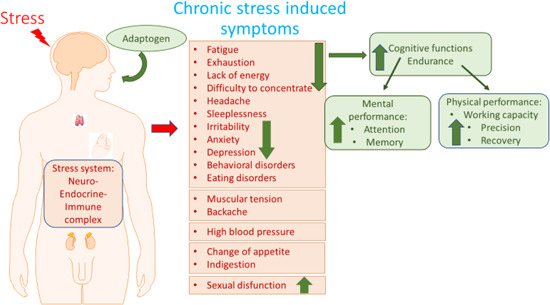
Chronic stress‐induced symptoms and effect of adaptogens, updated from authors’ drawings 14 [Color figure can be viewed at wileyonlinelibrary.com]
Figure 6
Figure 6
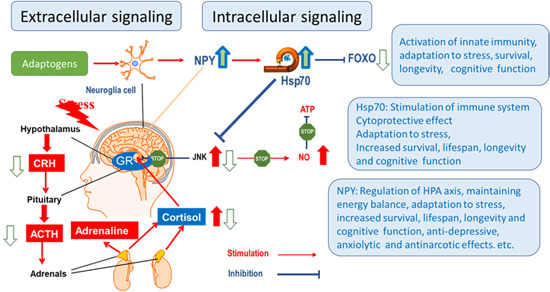
Hypothetical mechanism of action underlying the effects of adaptogens on the adaptive stress response in the hypothalamic–pituitary–adrenal axis: forkhead box O, neuropeptide‐Y (NPY), and Hsp70 signaling. Persistent chronic stress induces and blockage of negative feedback regulation of cortisol and disruption of ATP synthesis. During stress, corticotropin‐releasing hormone (CRH) is released from the hypothalamus, followed by the release of adrenocorticotropic hormone (ACTH) from the pituitary, which stimulates the release of adrenal hormones and NPY. Feedback regulation of overreaction is triggered by cortisol release from the adrenal cortex, followed by binding to glucocorticoid receptors (GRs) in the brain, which halts the further release of brain hormones, resulting in decreases of cortisol to normal levels. Although mild stress (eustress) is a vital part of life, chronic and severe stress can cause depression associated with the production of active oxygen‐containing molecules including nitric oxide, which inhibits ATP formation. The stress‐induced signaling protein c‐Jun N‐terminal kinase (JNK) inhibits GRs. Subsequently, this feedback control is inhibited and the cortisol content in the bloodstream of depressed patients is permanently high, which is associated with impaired memory, decreased ability to concentrate, fatigue, among others. Adaptogens normalize increased cortisol/corticosterone levels in the bloodstream and saliva of humans or animals 12 , 357 presumably due to direct interaction with GRs. Adaptogens also attenuate elevated JNK and cortisol levels during stress and activate the generation of Hsp70, which inhibits JNK. Therefore, the nitric oxide level no longer rises, and ATP production is not inhibited (adapted from authors’ drawings 26 ) [Color figure can be viewed at wileyonlinelibrary.com]
Figure 7
Figure 7
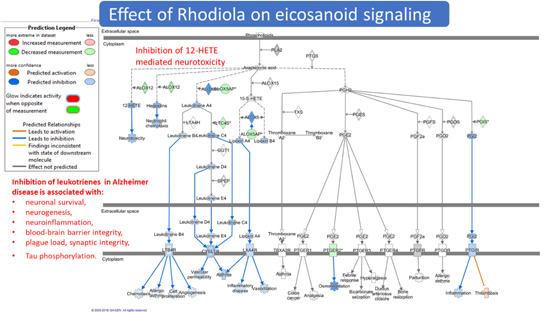
Effect of Rhodiola extract on the eicosanoids signaling pathway. Upregulated genes are shown in red color, while downregulated genes—in green color 452 [Color figure can be viewed at wileyonlinelibrary.com]
Figure 8
Figure 8
Adaptogens exhibit antioxidant and detoxifying effects presumably by activation of the Nrf2/ARE pathway. Nrf2 is a principal regulator of redox homeostasis normally retained in the cytoplasm by association Kelch‐like ECH‐associated protein‐1 (Keap1). Upon exposure of cells to oxidative stress, Nrf2 is phosphorylated in response to PKC, phosphatidylinositol 3‐kinase (PI3K), and MAPK pathways. After phosphorylation, this complex dissociates and Nrf2 translocates to the nucleus where it binds to the ARE and triggers expression of antioxidant and detoxifying genes including superoxide dismutase, glutathione S‐transferase, NAD(P)H quinone oxidoreductase 1, and heme oxygenase 1. Thus, activation of Nrf2 translocation or upregulation of gene expression resulting in activation of the Nrf2 signaling pathway is the key mechanism of the cellular defense response 500 , 501 associated with the antioxidant effects of medicinal plants, and particularly of adaptogenic plants, which are useful in stress‐ and aging‐related diseases [Color figure can be viewed at wileyonlinelibrary.com]
Figure 9
Figure 9
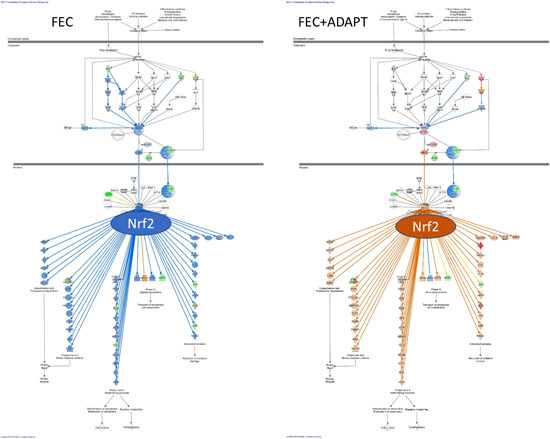
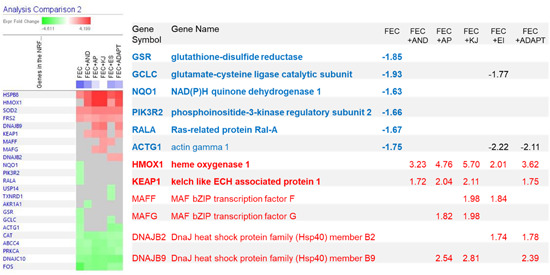
Adaptogens prevents the chemotherapy (FEC)‐induced downregulation of genes activating production of antioxidant and detoxifying proteins and upregulates genes involved in reduction of oxidation damage via Nrf2 signaling. Upregulated genes are shown in red, whereas downregulated genes are shown in blue [Color figure can be viewed at wileyonlinelibrary.com]
Figure 10
Figure 10
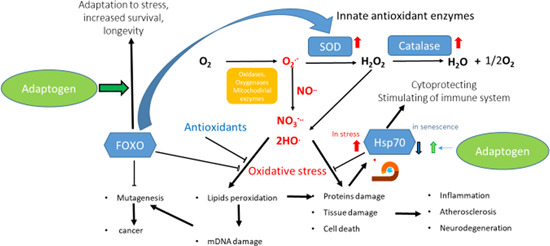
Hypothetical mechanism of action of adaptogens in the regulation of the innate antioxidant system and oxidative stress‐induced apoptosis in aging. According to the free radical theory of aging, the organisms are continuously exposed to reactive oxygen species containing molecules/species (ROS), which are produced as by‐products of normal cellular metabolism. When the innate antioxidant system (glutathione peroxidase, superoxide dismutase, and catalase) incompletely deactivates ROS, increasing cellular oxidative damage induces irreversible functional changes leading to early senescence and to aging‐associated diseases. Oxidative stress triggers many signaling pathways, including FOXO and Hsp70 mediated pathways. Adaptogens upregulate Hsp70, which directly regulates FOXO signaling and promote translocation of FOXO/DAF‐16 to nucleus triggering activation antioxidant systems and antiaging programs. Updated from authors’ drawings 16 [Color figure can be viewed at wileyonlinelibrary.com]
Figure 11
Figure 11
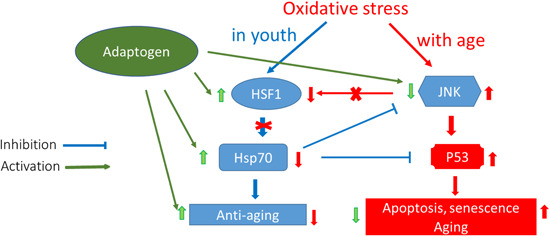
Effects of age and adaptogens on longevity regulatory pathways during oxidative stress. HSF1, heat shock factor 1; Hsp70, heat shock protein 70; JNK, JN kinase; P‐53, p‐53 transcription factor; or ←, for activation; x, for blocking; |, for inhibition; bold text for the prevailing process [Color figure can be viewed at wileyonlinelibrary.com]
Figure 12
Figure 12
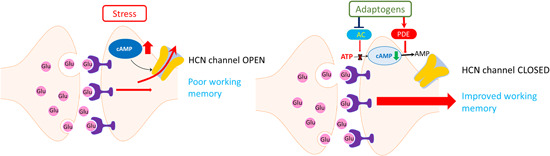
Effect on cAMP‐mediated signaling in prefrontal cortex neurons. HCN channel opening shunts synaptic inputs onto dendritic spines and reduces strength of prefrontal cortex network activity. cAMP opens HCN channel that decreases the efficacy of cortical inputs. Adaptogens downregulate AC and upregulate PDE that decreases cAMP level in brain cells followed by closing of HCN channel. That increases efficacy of synaptic imputes, neuronal activity and working memory. 23 cAMP, cyclic adenosine monophosphate; HCN, hyperpolarization‐activated channels [Color figure can be viewed at wileyonlinelibrary.com]
Figure 13
Figure 13
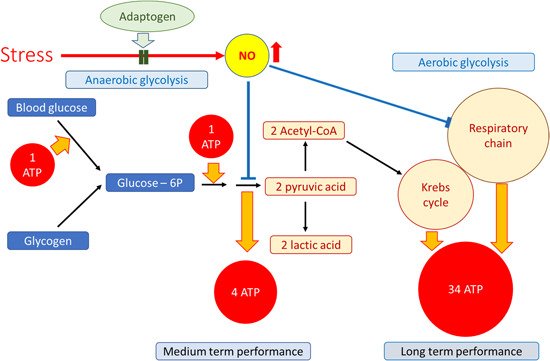
Schematic representation of the potential molecular mechanism by which generation of nitric oxide (NO) strongly inhibits the production of cellular energy through two mechanisms: inhibition of mitochondrial respiration by reversible (from constitutive isoforms of nitric oxide synthase [NOS]) and irreversible (from inducible NOS [iNOS]) inhibition of cytochrome P450 578 ; and glycolysis inhibition through modification of the SH‐groups of glyceraldehyde 3‐phosphate dehydrogenase. 579 In anaerobic glycolysis, muscle glycogen is converted to lactic acid via glucose‐6‐phosphate, yielding three ATP molecules for each glucose residue. Aerobic oxidation of glucose is required for the sustained exercise and provides 34 ATP molecules per glucose residue via the Krebs cycle and the respiratory chain, a process that occurs 1 min after anaerobic ATP generation. If a sufficient supply of ATP is not generated, anaerobic glycolysis is continued. NO levels increase during stress, consequently decreasing performance by inhibiting ATP production. Adaptogens prevent stress‐induced increases in NO, 18 and as such, ATP production remains efficient and performance and endurance are increased. 26 Updated from authors’ drawings 26 [Color figure can be viewed at wileyonlinelibrary.com]

References

    1. EMA/HMPC/232100/2011. Assessment report on Rhodiola rosea L., rhizoma et radix. Based on Article 16d (1), Article 16f and Article 16h of Directive 2001/83/EC as amended traditional use). Final. 27 March 2012.
    1. EMA/HMPC/321232/2012. Assessment report on Panax ginseng C.A. Meyer, radix. Based on Article 16d (1), Article 16f and Article 16h of Directive 2001/83/EC as amended (traditional use). Final. 25 March 2014.
    1. EMA/HMPC/680615/2013. Assessment report on Eleutherococcus senticosus (Rupr. et Maxim.) Maxim., radix. Based on Article 16d (1), Article 16f and Article 16h of Directive 2001/83/EC as amended (traditional use). Final. 25 March 2014.
    1. EMA/HMPC/320433/2012. Assessment report on Andrographis paniculata Nees, folium. Based on Article 10a of Directive 2001/83/EC as amended (well‐established use). Based on Article 16d (1), Article 16f and Article 16h of Directive 2001/83/EC as amended (traditional use). Final. 27 August 2014.
    1. Samuelsson G, Bohlin L. Drugs of Natural Origin: A Treatise of Pharmacognosy. 6th ed. Stockholm: Swedish Academy of Pharmaceutical Sciences; 2009:776.

LinkOut - more resources