


Psychometric testing of a set of patient-reported instruments to assess healthcare interventions for autistic adults
- PMID: 33103457
- PMCID: PMC8068734
- DOI: 10.1177/1362361320967178
Psychometric testing of a set of patient-reported instruments to assess healthcare interventions for autistic adults
Abstract
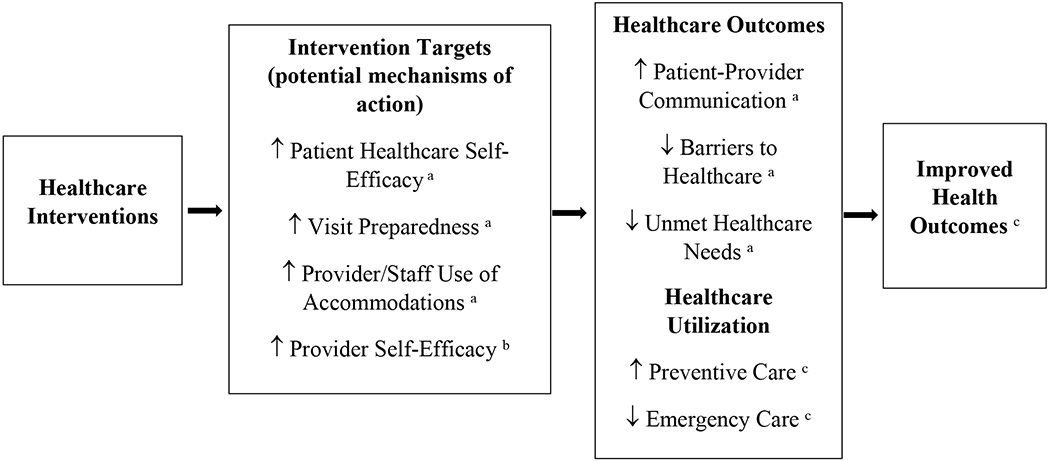
Interventions to improve healthcare for autistic adults are greatly needed. To evaluate such interventions, researchers often use surveys to collect data from autistic adults (or sometimes, their supporters), but few survey measures have been tested for use with autistic adults. Our objective was to create and test a set of patient- or proxy-reported survey measures for use in studies that evaluate healthcare interventions. We used a community-based participatory research (CBPR) approach, in partnership with autistic adults, healthcare providers, and supporters. We worked together to create or adapt survey measures. Three survey measures focus on things that interventions may try to change directly: (1) how prepared patients are for visits; (2) how confident they feel in managing their health and healthcare; and (3) how well the healthcare system is making the accommodations patients feel they need. The other measures focus on the outcomes that interventions may hope to achieve: (4) improved patient-provider communication; (5) reduced barriers to care; and (6) reduced unmet healthcare needs. We then tested these measures in a survey of 244 autistic adults recruited from 12 primary care clinics in Oregon and California, USA (with 194 participating directly and 50 participating via a proxy reporter). Community partners made sure items were easy to understand and captured what was important about the underlying idea. We found the survey measures worked well in this sample. These measures may help researchers evaluate new healthcare interventions. Future research needs to assess whether interventions improve healthcare outcomes in autistic adults.
Keywords: adults; autism; community-based participatory research; healthcare; patient-reported outcome measures; psychometrics.
Figures
References
-
- Akobirshoev I, Mitra M, Dembo R, & Lauer E (2019). In-hospital mortality among adults with autism spectrum disorder in the United States: A retrospective analysis of US hospital discharge data. Autism, 1362361319855795. - PubMed
-
- Barber C (2017). Meeting the healthcare needs of adults on the autism spectrum. British Journal of Nursing, 26(7), 420–425. - PubMed
-
- Blackwell D, Gentleman J, Martin M, Ng E,Sanmartin C, Simile C (2004). Joint Canada/United States Survey of Health: Findings and Public-use Microdata File. Retrieved from http://www.statcan.gc.ca/pub/82m0022x/2003001/pdf/4228656-eng.pdf
-
- Burns MI, Baylor C, Dudgeon BJ, Starks H, & Yorkston K (2017). Health care provider accommodations for patients with communication disorders. Topics in Language Disorders, 37(4), 311–333.
Publication types
MeSH terms
Grants and funding
LinkOut - more resources
Full Text Sources
Medical
