


At the Bench: Pre-clinical evidence for multiple functions of CXCR4 in cancer
- PMID: 33104270
- PMCID: PMC8254203
- DOI: 10.1002/JLB.2BT1018-715RR
At the Bench: Pre-clinical evidence for multiple functions of CXCR4 in cancer
Abstract
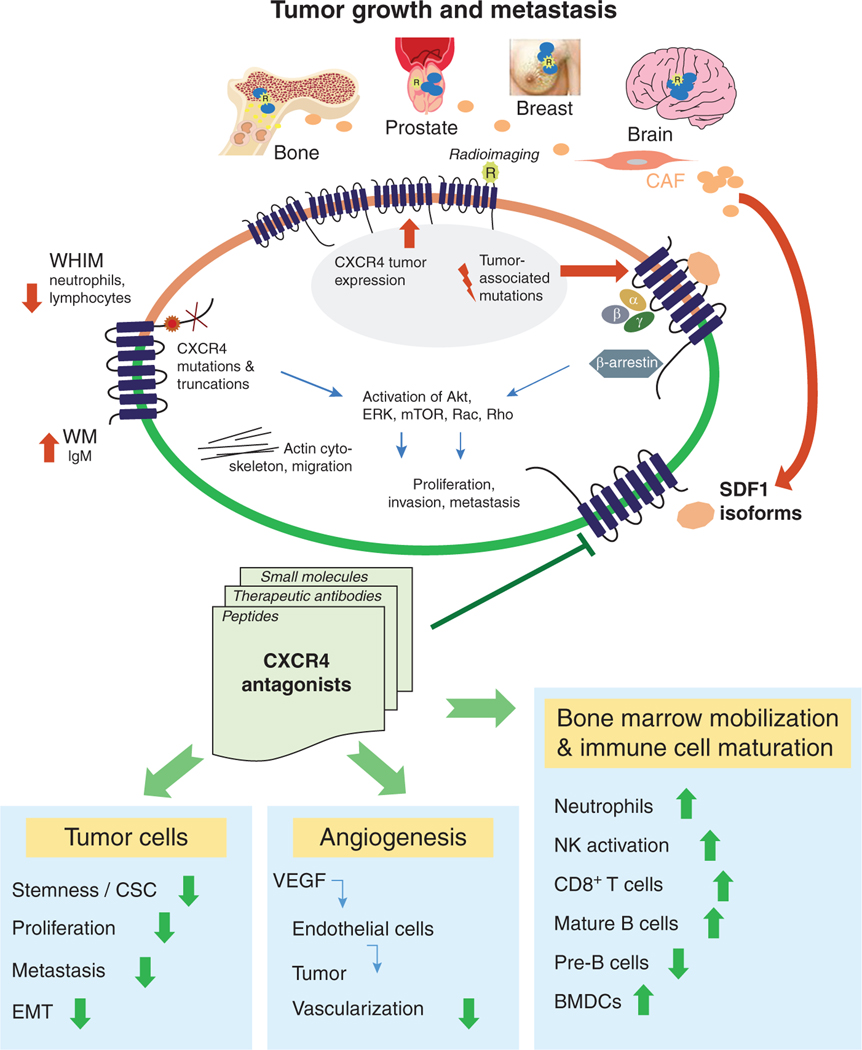
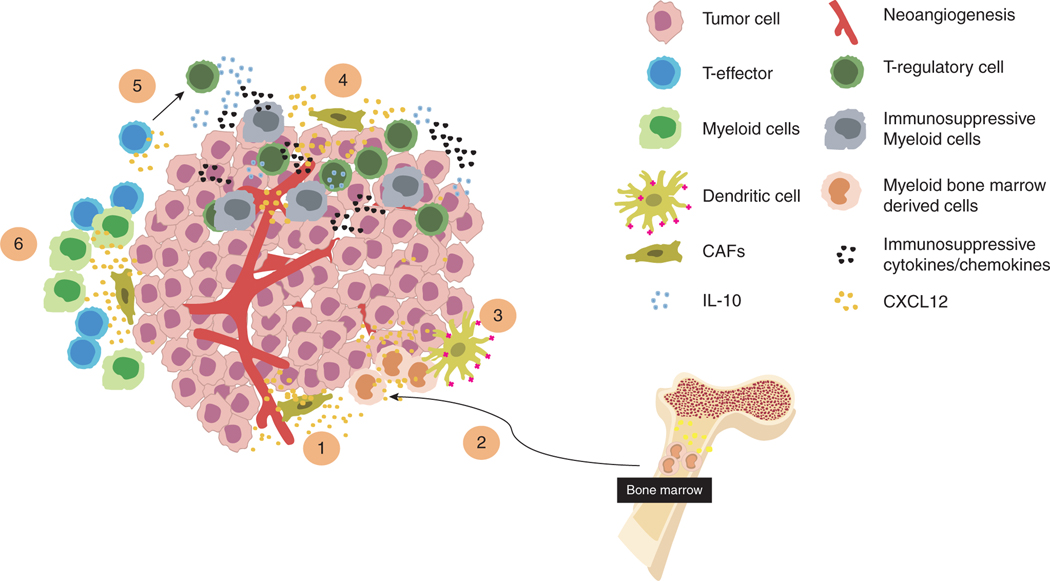
Signaling through chemokine receptor, C-X-C chemokine receptor type 4 (CXCR4) regulates essential processes in normal physiology, including embryogenesis, tissue repair, angiogenesis, and trafficking of immune cells. Tumors co-opt many of these fundamental processes to directly stimulate proliferation, invasion, and metastasis of cancer cells. CXCR4 signaling contributes to critical functions of stromal cells in cancer, including angiogenesis and multiple cell types in the tumor immune environment. Studies in animal models of several different types of cancers consistently demonstrate essential functions of CXCR4 in tumor initiation, local invasion, and metastasis to lymph nodes and distant organs. Data from animal models support clinical observations showing that integrated effects of CXCR4 on cancer and stromal cells correlate with metastasis and overall poor prognosis in >20 different human malignancies. Small molecules, Abs, and peptidic agents have shown anticancer efficacy in animal models, sparking ongoing efforts at clinical translation for cancer therapy. Investigators also are developing companion CXCR4-targeted imaging agents with potential to stratify patients for CXCR4-targeted therapy and monitor treatment efficacy. Here, pre-clinical studies demonstrating functions of CXCR4 in cancer are reviewed.
Keywords: CXCL12; CXCR4 antagonist; CXCR4 inhibitor; chemokine; radioimaging; tumor.
©2020 Society for Leukocyte Biology.
Figures
References
-
- Ma Q, Jones D, Springer TA. The chemokine receptor CXCR4 is required for the retention of B lineage and granulocytic precursors within the bone marrow microenvironment. Immunity. 1999;10(4):463–471. - PubMed
-
- Odemis V, Lamp E, Pezeshki G, et al. Mice deficient in the chemokine receptor CXCR4 exhibit impaired limb innervation and myogenesis. Mol Cell Neurosci. 2005;30(4):494–505. - PubMed
-
- Devine SM, Vij R, Rettig M, et al. Rapid mobilization of functional donor hematopoietic cells without G-CSF using AMD3100, an antagonist of the CXCR4/SDF-1 interaction. Blood. 2008;112(4):990–998. - PubMed
Publication types
MeSH terms
Substances
Grants and funding
- I01 BX002301/BX/BLRD VA/United States
- R01CA243326/United States National Institutes of Health
- IK6 BX005225/BX/BLRD VA/United States
- R01 CA238042/CA/NCI NIH HHS/United States
- R01 CA243326/CA/NCI NIH HHS/United States
- R01CA116021/United States National Institutes of Health
- R33CA225549/United States National Institutes of Health
- R33 CA225549/CA/NCI NIH HHS/United States
- R01CA238042/United States National Institutes of Health
- R01CA238023/United States National Institutes of Health
- R01 CA196018/CA/NCI NIH HHS/United States
- R01 CA238023/CA/NCI NIH HHS/United States
- R01CA34590/United States National Institutes of Health
- RF-2018-12367026/Italian Ministry of Health
- R01CA196018/United States National Institutes of Health
- U01CA210152/United States National Institutes of Health
- R37CA222563/United States National Institutes of Health
- R01 CA034590/CA/NCI NIH HHS/United States
- R01 CA116021/CA/NCI NIH HHS/United States
- U01 CA210152/CA/NCI NIH HHS/United States
- TRS-2016-00000341/Italian Ministry of Health
- R37 CA222563/CA/NCI NIH HHS/United States
LinkOut - more resources
Full Text Sources
Other Literature Sources
Medical
