


Interplay effects in highly modulated stereotactic body radiation therapy lung cases treated with volumetric modulated arc therapy
- PMID: 33104297
- PMCID: PMC7700928
- DOI: 10.1002/acm2.13028
Interplay effects in highly modulated stereotactic body radiation therapy lung cases treated with volumetric modulated arc therapy
Abstract
Interplay effects in highly modulated stereotactic body radiation therapy lung cases treated with volumetric modulated arc therapy.
Purpose: To evaluate the influence of tumor motion on dose delivery in highly modulated stereotactic body radiotherapy (SBRT) of lung cancer using volumetric modulated arc therapy (VMAT).
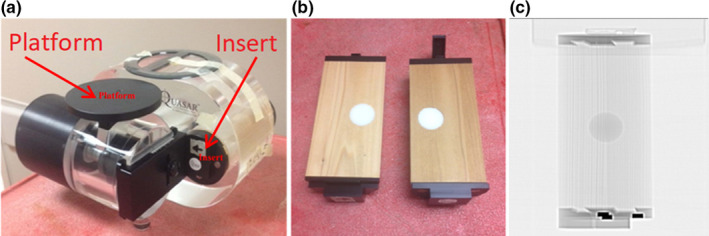
Methods: 4D-CT imaging data of the quasar respiratory phantom were acquired, using a GE Lightspeed 16-slice CT scanner, while the phantom reproduced patient specific respiratory traces. Flattening filter-free (FFF) dual-arc VMAT treatment plans were created on the acquired images in Pinnacle3 treatment planning system. Each plan was generated with varying levels of complexity characterized by the modulation complexity score. Static and dynamic measurements were delivered to GafChromic EBT3 film inside the respiratory phantom using an Elekta Versa HD linear accelerator. The treatment prescription was 10 Gy per fraction for 5 fractions. Comparisons of the planned and delivered dose distribution were performed using Radiological Imaging Technology (RIT) software.
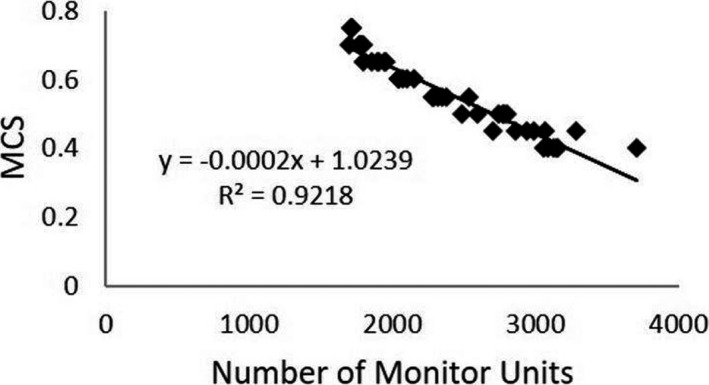
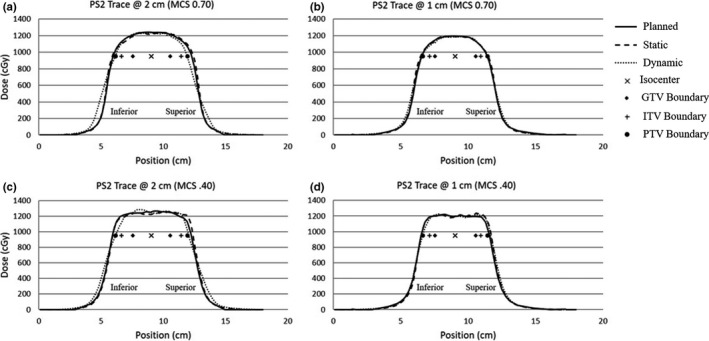
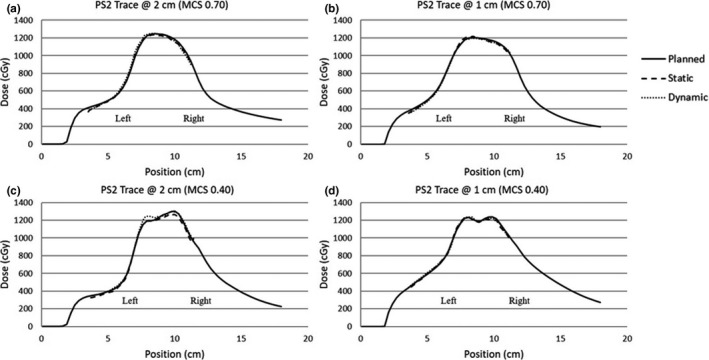
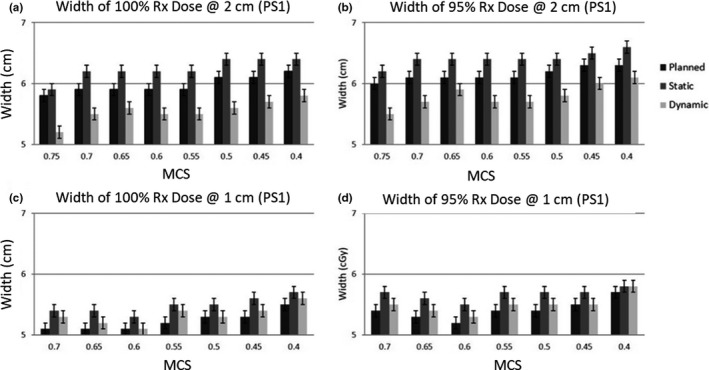
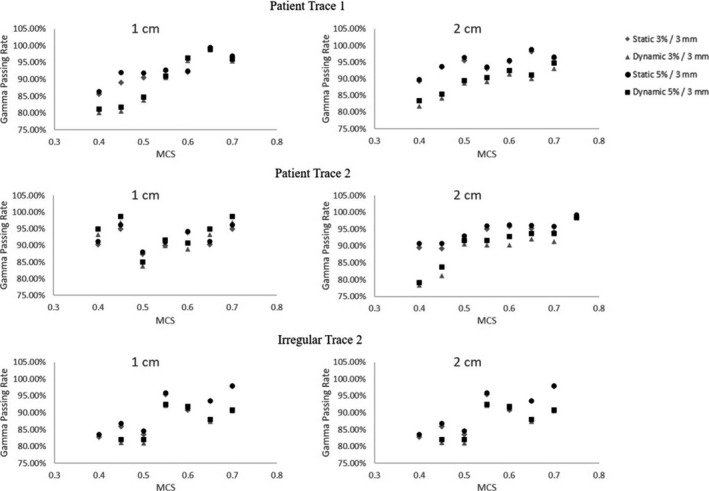
Results: For the motion amplitudes and periods studied, the interplay effect is insignificant to the GTV coverage. The mean dose deviations between the planned and delivered dose distribution never went below -2.00% and a minimum dose difference of -5.05% was observed for a single fraction. However for amplitude of 2 cm, the dose error could be as large as 20.00% near the edges of the PTV at increased levels of complexity. Additionally, the modulation complexity score showed an ability to provide information related to dose delivery. A correlation value (R) of 0.65 was observed between the complexity score and the gamma passing rate for GTV coverage.
Conclusions: As expected, respiratory motion effects are most evident for large amplitude respirations, complex fields, and small field margins. However, under all tested conditions target coverage was maintained.
Keywords: 4D-CT; MLC; SBRT; VMAT; interplay.
© 2020 The Authors. Journal of Applied Clinical Medical Physics published by Wiley Periodicals, Inc. on behalf of American Association of Physicists in Medicine.
Conflict of interest statement
The authors have no conflicts of interest to disclose.
Figures
References
-
- Breathe Easy . American Lung Association. http://www.lung.org/lung‐disease/lung‐cancer/resources/facts‐figures/lun.... Accessed February 23, 2015.
-
- NCCN Quick Guide Non‐Small Cell Lung Cancer Treatment Options . National Comprehensive Cancer Network. https://www.nccn.org/patients/. Accessed May 30, 2016.
-
- Jiang S, Pope C, Al Jarrah MK, Kung, JH , Bortfeld, T , Chen, GT . An experimental investigation on intra‐fractional organ motion effects in lung IMRT treatments. Phys Med Biol. 2003;48:1773–1784. - PubMed
-
- Chui C‐S, Yorke E, Hong L. The effects of intra‐fraction organ motion on the delivery of intensity‐modulated field with a multileaf collimator. Med Phys. 2003;30:1736–1746. - PubMed
MeSH terms
LinkOut - more resources
Full Text Sources
Medical
Research Materials
