. 2021 Aug 16;73(4):e860-e869.
doi: 10.1093/cid/ciaa1616.

Repeated Coronavirus Disease 2019 Molecular Testing: Correlation of Severe Acute Respiratory Syndrome Coronavirus 2 Culture With Molecular Assays and Cycle Thresholds

Affiliations

Repeated Coronavirus Disease 2019 Molecular Testing: Correlation of Severe Acute Respiratory Syndrome Coronavirus 2 Culture With Molecular Assays and Cycle Thresholds

Victoria Gniazdowski et al. Clin Infect Dis. .

Abstract

Background: Repeated coronavirus disease 2019 (COVID-19) molecular testing can lead to positive test results after negative results and to multiple positive results over time. The association between positive test results and infectious virus is important to quantify.

Methods: A 2-month cohort of retrospective data and consecutively collected specimens from patients with COVID-19 or patients under investigation were used to understand the correlation between prolonged viral RNA positive test results, cycle threshold (Ct) values and growth of severe acute respiratory syndrome coronavirus 2 (SARS-CoV-2) in cell culture. Whole-genome sequencing was used to confirm virus genotype in patients with prolonged viral RNA detection. Droplet digital polymerase chain reaction was used to assess the rate of false-negative COVID-19 diagnostic test results.

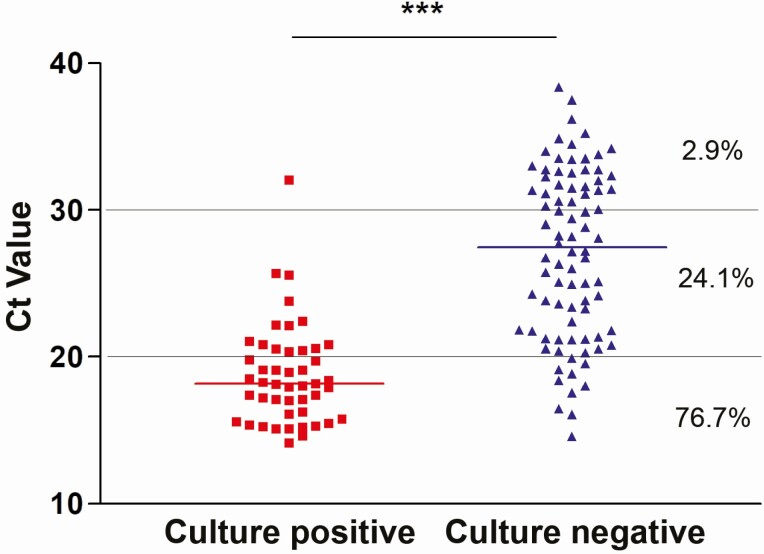
Results: In 2 months, 29 686 specimens were tested and 2194 patients underwent repeated testing. Virus recovery in cell culture was noted in specimens with a mean Ct value of 18.8 (3.4) for SARS-CoV-2 target genes. Prolonged viral RNA shedding was associated with positive virus growth in culture in specimens collected up to 21 days after the first positive result but mostly in individuals symptomatic at the time of sample collection. Whole-genome sequencing provided evidence the same virus was carried over time. Positive test results following negative results had Ct values >29.5 and were not associated with virus culture. Droplet digital polymerase chain reaction results were positive in 5.6% of negative specimens collected from patients with confirmed or clinically suspected COVID-19.

Conclusions: Low Ct values in SARS-CoV-2 diagnostic tests were associated with virus growth in cell culture. Symptomatic patients with prolonged viral RNA shedding can also be infectious.

Keywords: COVID-19; SARS-CoV-2; infectious virus; repeat testing.


Figures

Figure 1.
Figure 1.
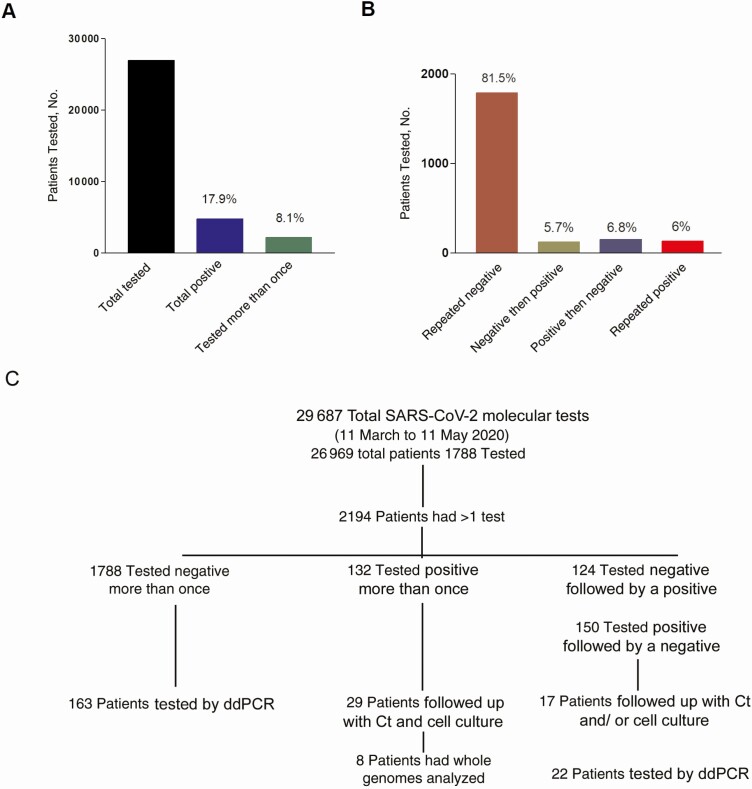
Coronavirus disease 2019 molecular testing at the Johns Hopkins Hospital. A, Total number of patients tested from 11 March through 11 May 2020, patients with positive results, and patients tested more than once. B, Total number of patients with repeated testing, assay results. (Percentages in [A] and [B] represent proportion of total.) C, Flow chart showing how patients were selected for additional analyses. Abbreviations: Ct, cycle threshold; ddPCR, droplet digital polymerase chain reaction; SARS-CoV-2, severe acute respiratory syndrome coronavirus 2.
Figure 2.
Figure 2.
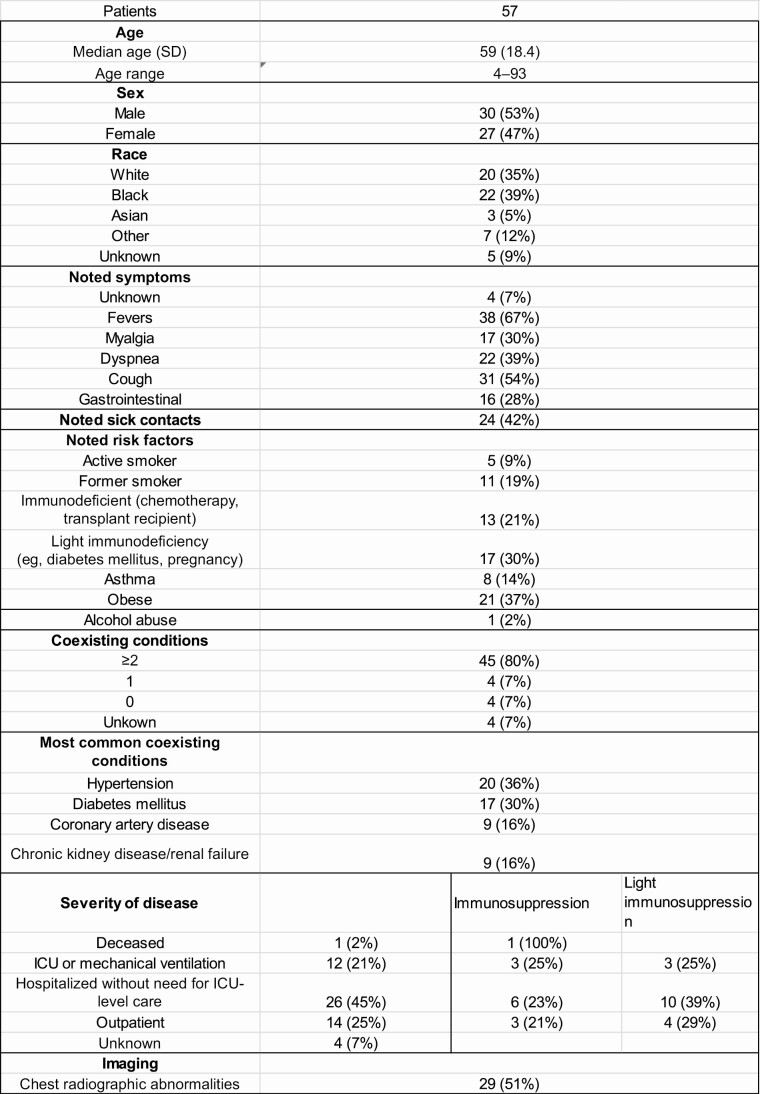
Details of study patient population. Abbreviations: ICU, intensive care unit; SD, standard deviation.
Figure 3.
Figure 3.
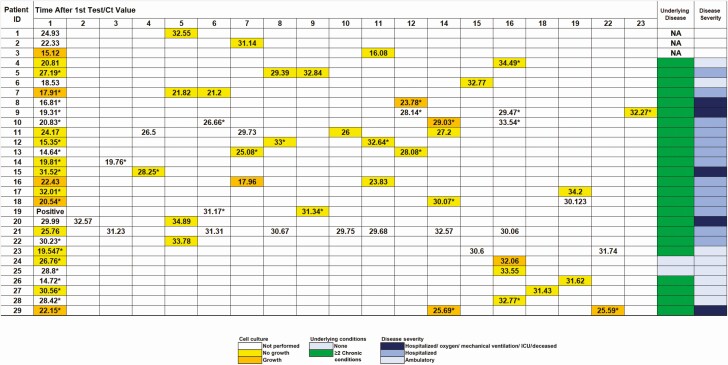
Findings in patients with multiple positive molecular results over time and correlation between time of testing, isolation of infectious virus in cell culture, and cycle threshold (Ct) value of the diagnostic assay. Asterisks indicate presence of symptoms at the time of specimen collection. Abbreviations: ICU, intensive care unit; ID, identifier; NA, clinical information not available.
Figure 4.
Figure 4.
Patients with positive molecular results after ≥1 negative result and correlation with time of testing, isolation of infectious virus in cell cultures, and cycle threshold (Ct) value of the diagnostic assay. Abbreviations: ID, identifier; ND, target not detected.
Figure 5.
Figure 5.
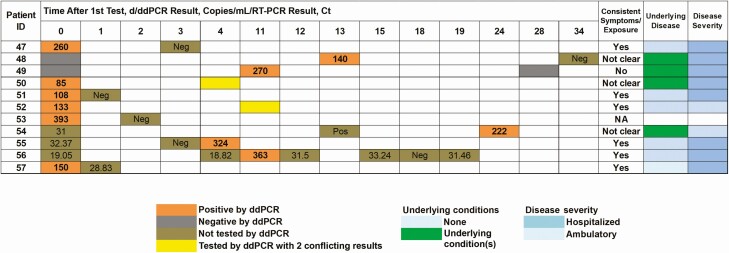
Droplet digital polymerase chain reaction (ddPCR) sensitivity of detection in patients with consecutive negative results (patients 47–53) and negative specimens collected from known positive patients (patients 54–57). ddPCR copies are shown for the N1 target. Note that a sputum sample was used in patient 51. Abbreviations: Ct, cycle threshold; ID, identifier; NA, clinical information not available; Neg, negative result with standard-of-care reverse-transcription polymerase chain reaction (RT-PCR); Pos, positive result with standard-of-care RT-PCR, with no available Ct value.
Figure 6.
Figure 6.
Correlation between severe acute respiratory syndrome coronavirus 2 growth in cell cultures and cycle threshold (Ct) values. Nasopharyngeal specimens were cultured on Vero E6 cells, and the recovery of virus and development of cytopathic effect were monitored for up to 4 days after infection. Percentages of viral growth–positive samples with given Ct values are shown on the right. Viral growth was confirmed by means of antigen staining or polymerase chain reaction. ***P < .001 (paired t test).
Figure 7.
Figure 7.
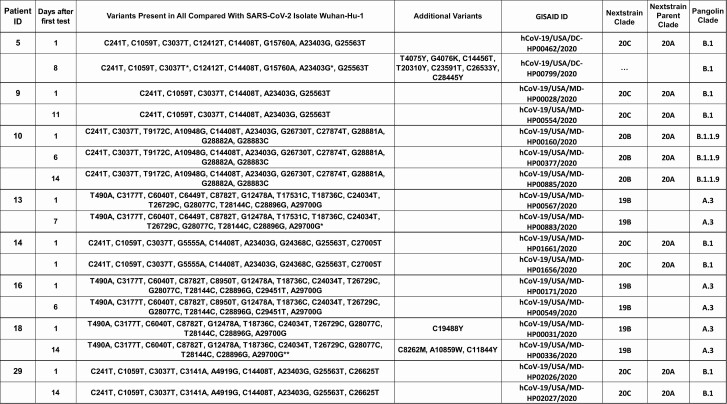
Sequence comparison of whole viral genomes from consecutive positive nasopharyngeal samples (subset of patients from Figure 3). Single asterisks indicate that limited read data are consistent with specified mutation (>75% of reads support variant), but position is ambiguous (N) owing to low coverage. Double asterisks indicate that limited read data provide some evidence for possible mutation or mixture (<75% of reads support variant), but position is ambiguous (N) owing to low coverage. Abbreviations: ID, identifier; SARS-CoV-2, severe acute respiratory syndrome coronavirus 2.

References

    1. Zhen W, Manji R, Smith E, Berry GJ. Comparison of four molecular in vitro diagnostic assays for the detection of SARS-CoV-2 in nasopharyngeal specimens. J Clin Microbiol 2020; 58:e00743– 20. doi: 10.1128/JCM.00743-20. - DOI - PMC - PubMed
    1. Rhoads DD, Cherian SS, Roman K, Stempak LM, Schmotzer CL, Sadri N. Comparison of Abbott ID Now, Diasorin Simplexa, and CDC FDA EUA methods for the detection of SARS-CoV-2 from nasopharyngeal and nasal swabs from individuals diagnosed with COVID-19. J Clin Microbiol 2020; 58:e00760– 20. doi: 10.1128/JCM.00760-20. - DOI - PMC - PubMed
    1. Uhteg K, Jarrett J, Richards M, et al. Comparing the analytical performance of three SARS-CoV-2 molecular diagnostic assays. J Clin Virol 2020; 127:104384. - PMC - PubMed
    1. Bordi L, Piralla A, Lalle E, et al. Rapid and sensitive detection of SARS-CoV-2 RNA using the Simplexa™ COVID-19 direct assay. J Clin Virol 2020; 128:104416. - PMC - PubMed
    1. Lieberman JA, Pepper G, Naccache SN, Huang ML, Jerome KR, Greninger AL. Comparison of commercially available and laboratory developed assays for in vitro detection of SARS-CoV-2 in clinical laboratories. J Clin Microbiol 2020; 58:e00821– 20. doi: 10.1128/JCM.00821-20. - DOI - PMC - PubMed

Publication types