Review
. 2021 Feb;124(3):539-551.
doi: 10.1038/s41416-020-01107-w. Epub 2020 Oct 27.

Hypoxia and its therapeutic possibilities in paediatric cancers

Affiliations
Review

Hypoxia and its therapeutic possibilities in paediatric cancers

Carolina Bernauer et al. Br J Cancer. 2021 Feb.

Abstract

In tumours, hypoxia-a condition in which the demand for oxygen is higher than its availability-is well known to be associated with reduced sensitivity to radiotherapy and chemotherapy, and with immunosuppression. The consequences of hypoxia on tumour biology and patient outcomes have therefore led to the investigation of strategies that can alleviate hypoxia in cancer cells, with the aim of sensitising cells to treatments. An alternative therapeutic approach involves the design of prodrugs that are activated by hypoxic cells. Increasing evidence indicates that hypoxia is not just clinically significant in adult cancers but also in paediatric cancers. We evaluate relevant methods to assess the levels and extent of hypoxia in childhood cancers, including novel imaging strategies such as oxygen-enhanced magnetic resonance imaging (MRI). Preclinical and clinical evidence largely supports the use of hypoxia-targeting drugs in children, and we describe the critical need to identify robust predictive biomarkers for the use of such drugs in future paediatric clinical trials. Ultimately, a more personalised approach to treatment that includes targeting hypoxic tumour cells might improve outcomes in subgroups of paediatric cancer patients.


Conflict of interest statement

The authors declare no competing interests.

Figures
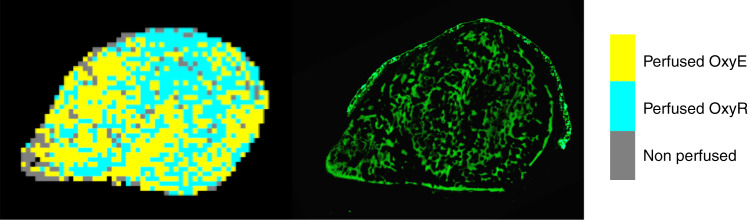
Fig. 1
Fig. 1. OE-MRI mapping of hypoxia in a rhabdomyosarcoma cell line model.
The image shows a RH41 rhabdomyosarcoma cell line xenograft, in which perfused voxels that are refractory to hyperoxia-induced changes in R1 (perfused OxyR), are coloured blue, perfused and oxygenated voxels (perfused OxyE) are coloured yellow and necrotic voxels (non-perfused) are coloured grey (image on the left). An aligned section stained for pimonidazole adduct formation in green was used as an established marker to map tumour hypoxia (image on the right). Significant areas of hypoxia are mapped.
Fig. 2
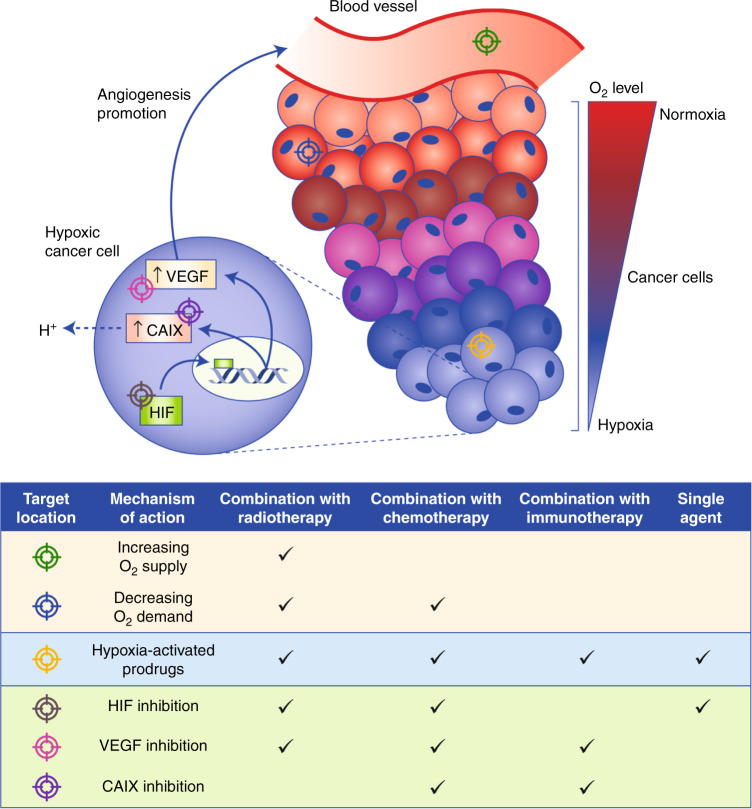
Fig. 2. Hypoxia-targeted treatment strategies.
Key interactions between tumour hypoxia and the tumour vasculature are depicted by the blood vessels and cancer cells of a solid tumour. The levels of oxygen (O2) in cancer cells decrease with increasing distance from the blood vessel. In hypoxic cancer cells, hypoxia-inducible factor (HIF), a transcription factor, enters the nucleus and upregulates the expression of target genes, such as vascular endothelial growth factor (VEGF), which promotes angiogenesis, thus improving the blood supply to promote tumour progression, and carbonic anhydrase IX (CAIX), which regulates the acidification of the extracellular tumour microenvironment (TME). Counteracting the effects of hypoxia in a solid tumour for therapeutic benefit can be achieved by targeting distinctive areas of the tumour with therapies that have different mechanisms of action, as depicted: (i) increasing the supply of O2 to cancer cells through surrounding blood vessels, (ii) decreasing the O2 demand in well-oxygenated perihypoxic cells, thereby increasing O2 availability for hypoxic cells, (iii) using inactive prodrugs that are activated by enzymes present specifically in hypoxic cells, (iv) directly inhibiting HIF and its downstream effects that enable hypoxic cells to adapt to hypoxia and inhibiting HIF downstream targets, such as (v) VEGF or (vi) CAIX. These treatment strategies can be used in combination with other therapies, such as radiotherapy and/or chemotherapy, or immunotherapy, or as single agents, for optimal therapeutic benefit.
Fig. 3
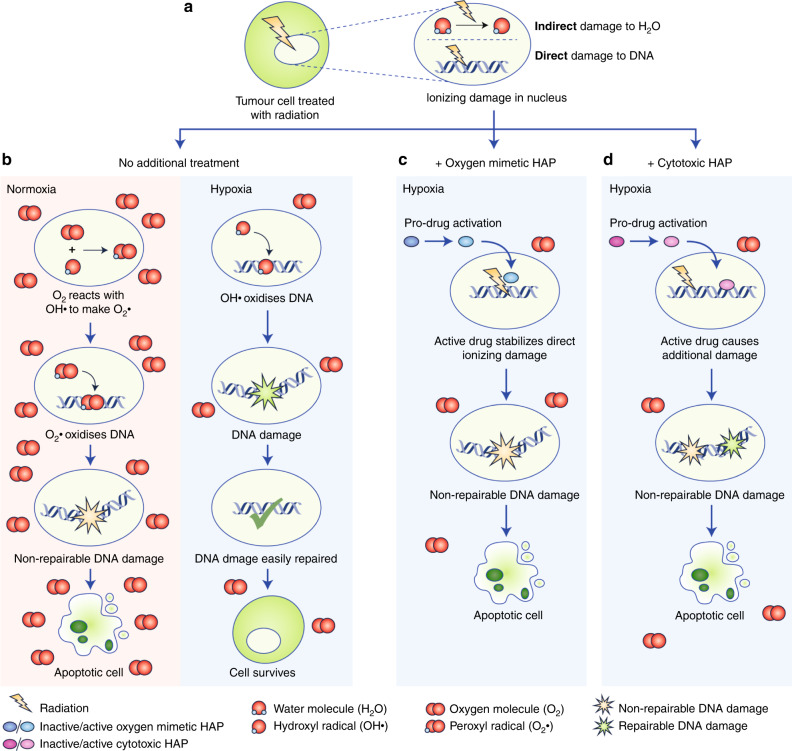
Fig. 3. Schema: modes of action for hypoxia-activated prodrugs (HAPs).
A schematic diagram that compares the differing stages of events within the tumour cell nucleus following treatment with radiation in the presence and absence of an oxygen mimetic HAP or a cytotoxic HAP in hypoxia. a During radiation, a high-energy electron indirectly causes DNA damage by impinging on a water molecule (H2O) to form a reactive hydroxyl radical (OH·). Radiation also interacts directly with DNA, producing radiation-induced DNA damage. b In normoxia, free oxygen molecules (O2) interact with OH·, promoting the formation of a peroxyl radical (O2·), that interacts with DNA, causing non-repairable damage resulting in cellular apoptosis. In hypoxia, the OH· radiation-induced DNA damage is repaired to its original state preventing cell death. c In hypoxia, an oxygen mimetic HAP (e.g., nimorazole) converts into its activated form, stabilising the radiation-induced DNA damage to promote apoptosis. d A cytotoxic HAP (e.g., evofosfamide) prodrug is also converted into its active form in hypoxia, consequently inducing DNA damage, independently of the radiation-induced DNA damage, leading to apoptosis.

References

    1. Vaupel P, Kallinowski F, Okunieff P. Blood flow, oxygen and nutrient supply, and metabolic microenvironment of human tumors: a review. Cancer Res. 1989;49:6449–6465. - PubMed
    1. Dhani, N., Fyles, A., Hedley, D. & Milosevic, M. The clinical significance of hypoxia in human cancers. Semin. Nucl. Med. 45, 110–121 (2015). - PubMed
    1. Belli JA, Dicus GJ, Bonte FJ. Radiation response of mammalian tumor cells. I. Repair of sublethal damage in vivo. J. Natl Cancer Inst. 1967;38:673–682. - PubMed
    1. Minassian, L. M., Cotechini, T., Huitema, E. & Graham, C. H. In Hypoxia and Cancer Metastasis (ed. Gilkes, D. M.) 123–139 (Springer, Cham, 2019). - PubMed
    1. Comerford KM, Wallace TJ, Karhausen J, Louis NA, Montalto MC, Colgan SP. Hypoxia-inducible factor-1-dependent regulation of the multidrug resistance (MDR1) gene. Cancer Res. 2002;62:3387–3394. - PubMed

Publication types

MeSH terms