


Derivation and Internal Validation of a Model to Predict the Probability of Severe Acute Respiratory Syndrome Coronavirus-2 Infection in Community People
- PMID: 33107007
- PMCID: PMC7587546
- DOI: 10.1007/s11606-020-06307-x
Derivation and Internal Validation of a Model to Predict the Probability of Severe Acute Respiratory Syndrome Coronavirus-2 Infection in Community People
Abstract
Background: The severe acute respiratory syndrome coronavirus 2 (SARS-CoV-2) causes COVID-19 disease. There are concerns regarding limited testing capacity and the exclusion of cases from unproven screening criteria. Knowing COVID-19 risks can inform testing. This study derived and assessed a model to predict risk of SARS-CoV-2 in community-based people.
Methods: All people presenting to a community-based COVID-19 screening center answered questions regarding symptoms, possible exposure, travel, and occupation. These data were anonymously linked to SARS-CoV-2 testing results. Logistic regression was used to derive a model to predict SARS-CoV-2 infection. Bootstrap sampling evaluated the model.
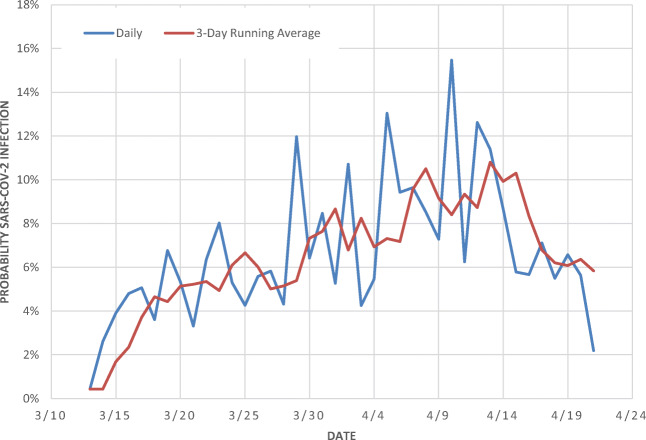
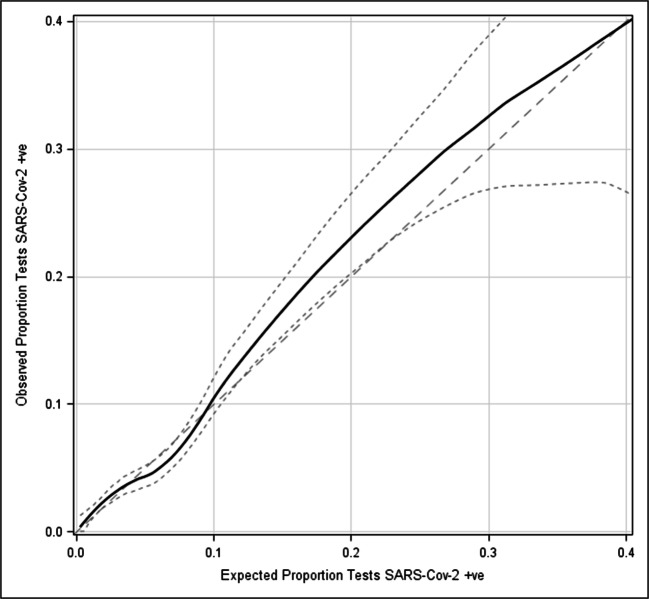
Results: A total of 9172 consecutive people were studied. Overall infection rate was 6.2% but this varied during the study period. SARS-CoV-2 infection likelihood was primarily influenced by contact with a COVID-19 case, fever symptoms, and recent case detection rates. Internal validation found that the SARS-CoV-2 Risk Prediction Score (SCRiPS) performed well with good discrimination (c-statistic 0.736, 95%CI 0.715-0.757) and very good calibration (integrated calibration index 0.0083, 95%CI 0.0048-0.0131). Focusing testing on people whose expected SARS-CoV-2 risk equaled or exceeded the recent case detection rate would increase the number of identified SARS-CoV-2 cases by 63.1% (95%CI 54.5-72.3).
Conclusion: The SCRiPS model accurately estimates the risk of SARS-CoV-2 infection in community-based people undergoing testing. Using SCRiPS can importantly increase SARS-CoV-2 infection identification when testing capacity is limited.
Keywords: COVID-19 disease; SARS-CoV-2; prediction.
Conflict of interest statement
The authors declare that they do not have a conflict of interest.
Figures
References
-
- WHO = World Health Organization; WHO reference number: WHO/2019-nCoV/lab_testing/2020.1. 2020
-
- Day M. Covid-19: identifying and isolating asymptomatic people helped eliminate virus in Italian village. BMJ (Clinical research ed) 2020;368:m1165. - PubMed
-
- Fineberg HV. Ten Weeks to Crush the Curve. N Engl J Med 2020;NEJMe2007263. - PubMed
-
- Jones R. Poor supply of COVID-19 test kits restrained testing, but province still running out. 2020. CBC News. Ref Type: Online Source. https://www.cbc.ca/news/canada/new-brunswick/nb-covid-19-test-supplies-1....
-
- Baird RP. Why widespread Coronavirus testing isn't coming anytime soon. The New Yorker . 2020. Ref Type: Online Source. https://www.newyorker.com/news/news-desk/why-widespread-coronavirus-test....
Publication types
MeSH terms
LinkOut - more resources
Full Text Sources
Medical
Miscellaneous
