


HMGB1 as a therapeutic target in disease
- PMID: 33107103
- PMCID: PMC8104204
- DOI: 10.1002/jcp.30125
HMGB1 as a therapeutic target in disease
Abstract
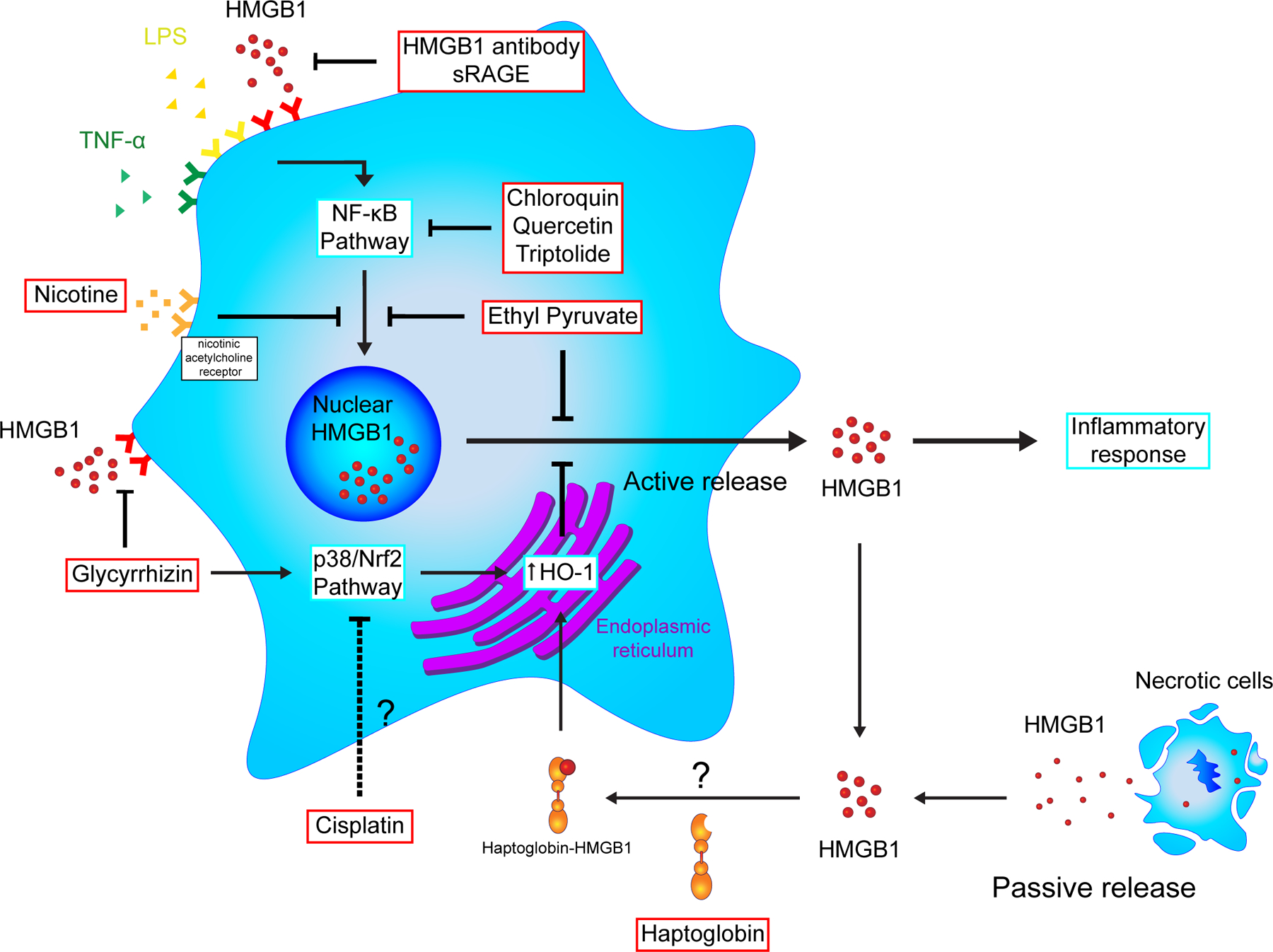
High-mobility group box 1 (HMGB1) was initially recognized as a ubiquitous nuclear protein involved in maintaining the nucleosome integrity and facilitating gene transcription. HMGB1 has since been reevaluated to be a prototypical damage-associated molecular pattern (DAMP) protein, and together with its exogenous counterpart, pathogen-associated molecular pattern (PAMP), completes the body's alarmin system against disturbances in homeostasis. HMGB1 can be released into the extracellular matrix (ECM) by either granulocytes or necrotic cells to serve as a chemotaxis/cytokine during infection, endotoxemia, hypoxia, ischemia-reperfusion events, and cancer. Different isoforms of HMGB1 present with distinctive physiological functions in ECM-fully-reduced HMGB1 (all thiol) acts as the initial damage signal to recruit circulating myeloid cells, disulfide HMGB1 behaves as a cytokine to activate macrophages and neutrophils, and both signals are turned off when HMGB1 is terminally oxidized into the final sulfonate form. Targeting HMGB1 constitutes a favorable therapeutic strategy for inflammation and inflammatory diseases. Antagonists such as ethyl pyruvate inhibit HMGB1 by interfering with its cytoplasmic exportation, while others such as glycyrrhizin directly bind to HMGB1 and render it unavailable for its receptors. The fact that a mixture of different HMGB1 isoforms is present in the ECM poses a challenge in pinpointing the exact role of an individual antagonist. A more discriminative probe for HMGB1 may be necessary to advance our knowledge of HMGB1, HMGB1 antagonists, and inflammatory-related diseases.
Keywords: HMGB1; antagonist; targeted therapy.
© 2020 Wiley Periodicals LLC.
Conflict of interest statement
Disclosure of potential conflict of interest
M.C. has a patent issued for BAP1. M.C and H.Y. have two patents issued for HMGB1. M.C. is a board-certified pathologist who provides consultation for pleural pathology, including medical-legal consultation.
Figures
References
-
- Ayer LM, Senecal JL, Martin L, Dixon GH, & Fritzler MJ (1994). Antibodies to high mobility group proteins in systemic sclerosis. J Rheumatol, 21(11), 2071–2075. - PubMed
Publication types
MeSH terms
Substances
Grants and funding
LinkOut - more resources
Full Text Sources
