


Adiposity is associated with anovulation independent of serum free testosterone: A prospective cohort study
- PMID: 33107110
- PMCID: PMC7878298
- DOI: 10.1111/ppe.12726
Adiposity is associated with anovulation independent of serum free testosterone: A prospective cohort study
Abstract
Background: Obesity, a body mass index (BMI) ≥30 kg/m2 , is linked to infertility, potentially through a greater risk of anovulation due to elevated androgens. Yet, previous studies have not directly assessed the impact of adiposity, or body fat, on anovulation in the absence of clinical infertility.
Objective: To characterise the associations between adiposity and anovulation among women menstruating on a regular basis.
Methods: Women from the EAGeR trial (n = 1200), a randomised controlled trial of low-dose aspirin and pregnancy loss among women trying to conceive, were used to estimate associations between adiposity and incident anovulation. Participants completed baseline questionnaires and anthropometry, and provided blood specimens. Women used fertility monitors for up to six consecutive menstrual cycles, with collection of daily first morning voids for hormone analysis in the first two menstrual cycles for prospective assessment of anovulation. Anovulation was assessed by urine pregnanediol glucuronide or luteinising hormone concentration or the fertility monitor. Weighted mixed-effects log-binomial regression was used to estimate associations between measures of adiposity and incident anovulation, adjusted for free (bioavailable) testosterone, anti-Mullerian hormone (AMH), serum lipids, and demographic and life style factors.
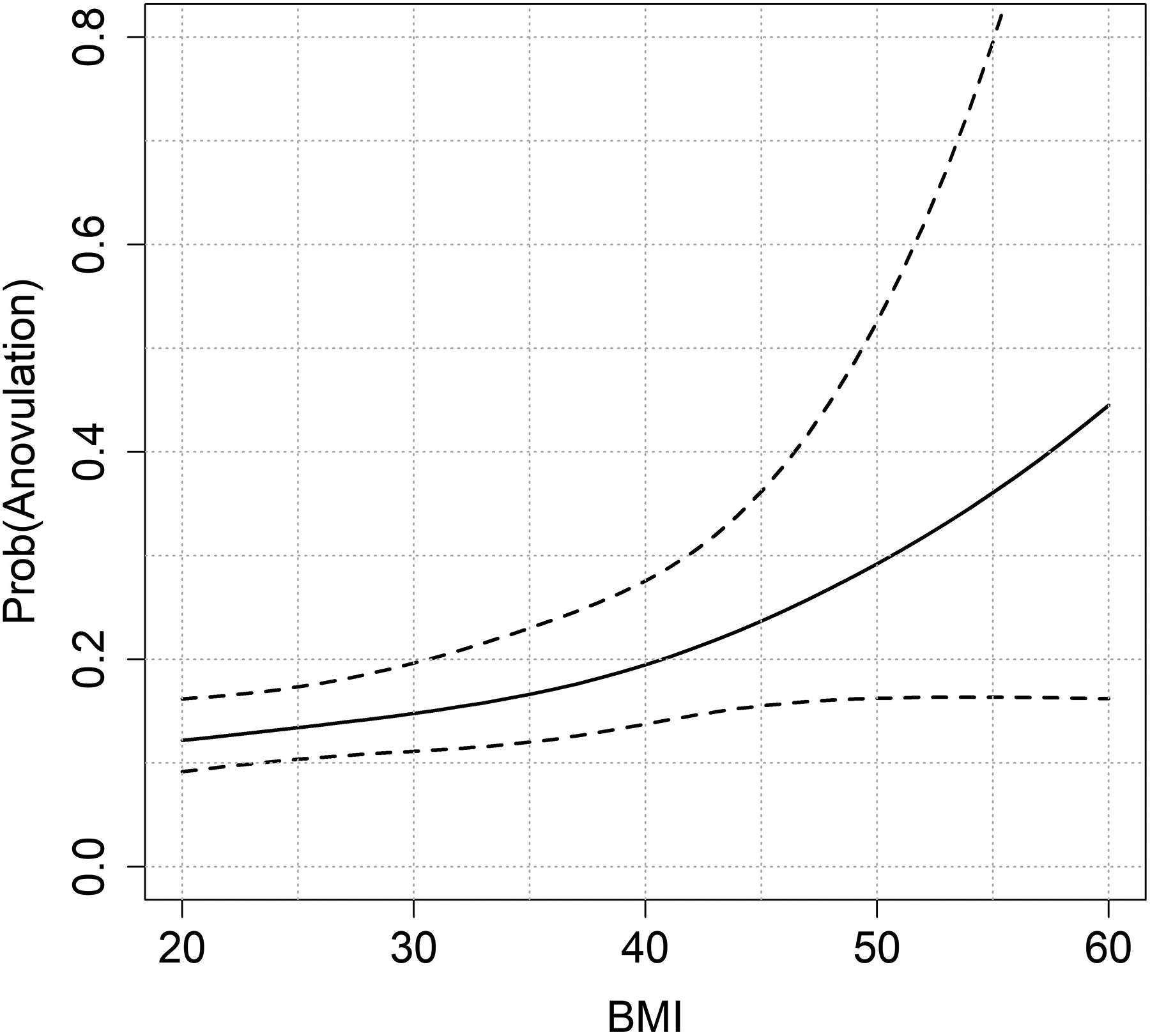
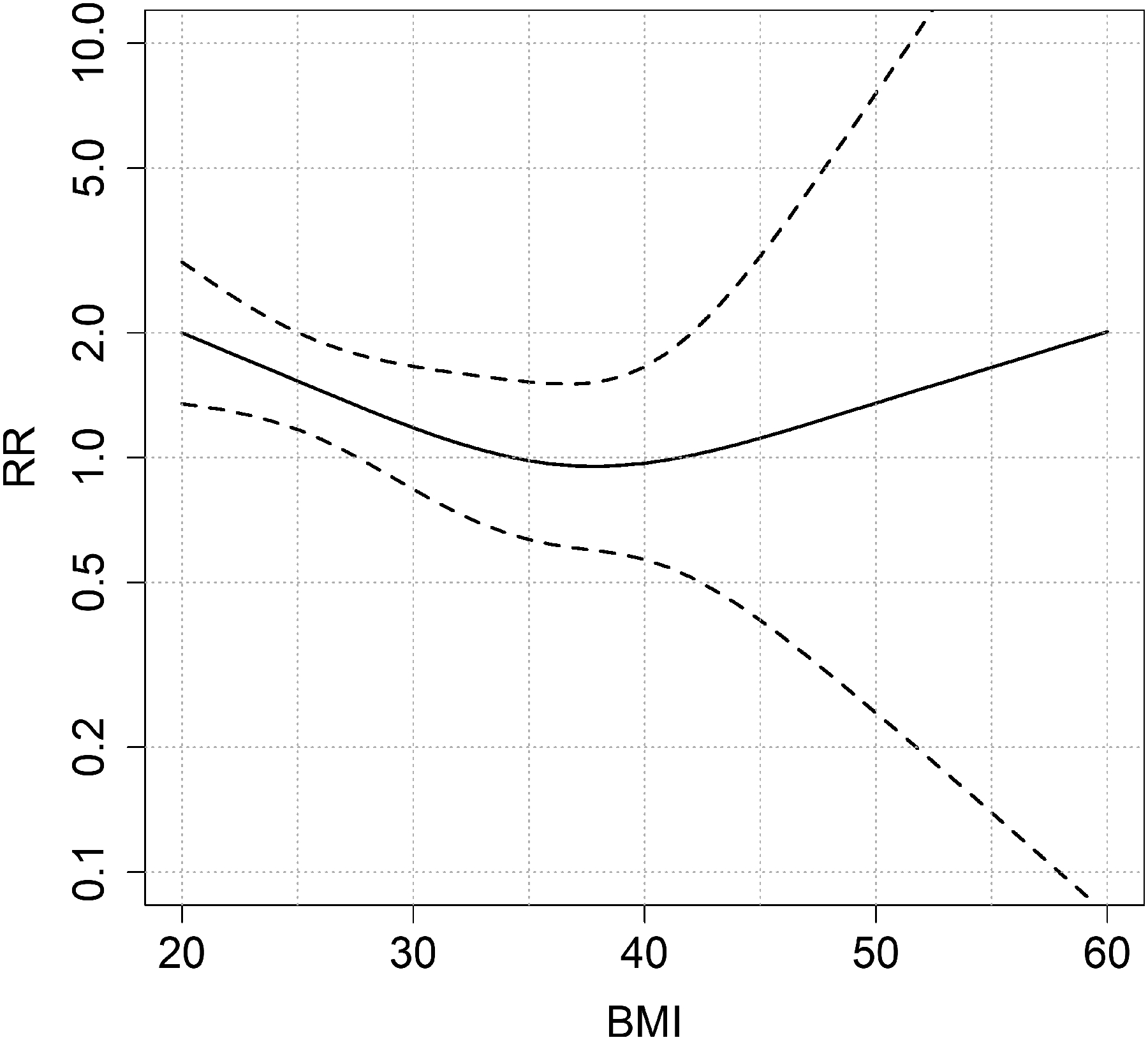
Results: 343 (28.3%) women experienced at least one anovulatory cycle. Anovulation risk was higher per kg/m2 greater BMI (relative risk [RR] 1.03, 95% confidence interval (CI) 1.01, 1.04), cm waist circumference (RR 1.01, 95% CI 1.00, 1.02), mm subscapular skinfold (RR 1.02, 95% CI 1.01, 1.03), and mm middle upper arm circumference (RR 1.04, 95% CI 1.01, 1.06) adjusted for serum free testosterone, AMH, lipids, and other factors.
Conclusions: Adiposity may be associated with anovulation through pathways other than testosterone among regularly menstruating women. This may account in part for reported associations between greater adiposity and infertility among women having menstrual cycles regularly. Understanding the association between adiposity and anovulation might lead to targeted interventions for preventing infertility.
Keywords: adiposity; anovulation; body mass index; female; infertility; obesity; testosterone.
© 2020 John Wiley & Sons Ltd.
Figures
References
-
- Green BB, Weiss NS, Daling JR. Risk of ovulatory infertility in relation to body-weight. Fertility and Sterility. 1988; 50:721–726. - PubMed
-
- Grodstein F, Goldman MB, Cramer DW. Body-mass index and ovulatory infertility. Epidemiology. 1994; 5:247–250. - PubMed
-
- Rich-Edwards JW, Speigelman D, Garland M, Hertzmark E, Hunter DJ, Colditz GA, et al. Physical activity, body mass index, and ovulatory disorder infertility. Epidemiology. 2002; 13:184–190. - PubMed
-
- Rachon D, Teede H. Ovarian function and obesity-interrelationship, impact on women’s reproductive lifespan and treatment options. Molecular and Cellular Endocrinology. 2010; 316:172–179. - PubMed
-
- Nestler JE. Obesity, insulin, sex steroids and ovulation. International Journal of Obesity. 2000; 24:S71–S73. - PubMed
Publication types
MeSH terms
Substances
Grants and funding
- 2014194/DDCF/Doris Duke Charitable Foundation/United States
- HHSN267200603424/Intramural Research Program of the Eunice Kennedy Shriver National Institute of Child Health and Human Development
- HHSN267200603423/Intramural Research Program of the Eunice Kennedy Shriver National Institute of Child Health and Human Development
- Z01 HD008795/ImNIH/Intramural NIH HHS/United States
- HHSN267200603426/Intramural Research Program of the Eunice Kennedy Shriver National Institute of Child Health and Human Development
LinkOut - more resources
Full Text Sources
