Minimally Invasive Spine Surgery: Techniques, Technologies, and Indications
- PMID: 33108835
- PMCID: PMC7595822
- DOI: 10.31616/asj.2020.0384
Minimally Invasive Spine Surgery: Techniques, Technologies, and Indications
Abstract
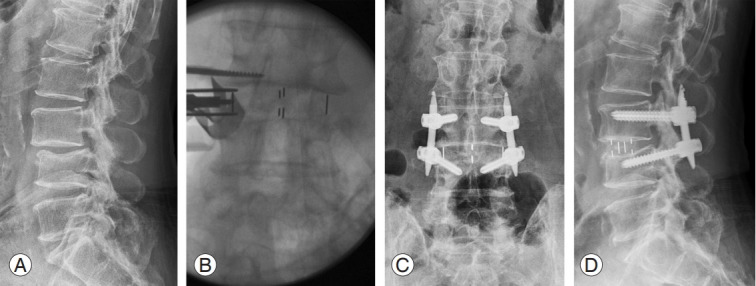
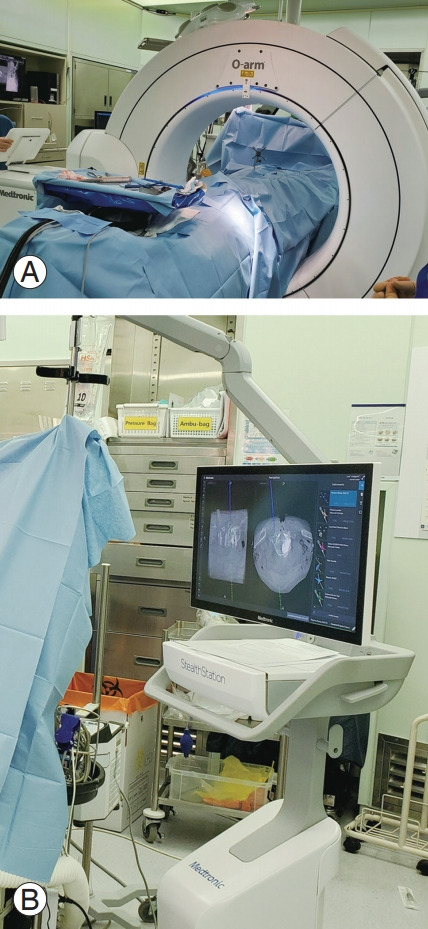
Over the past few decades, interest in minimally invasive spine surgery (MISS) has increased tremendously due to its core principle of minimizing approach-related injury while providing outcomes similar to traditional open spine procedures. With technical and technological advancements, MISS has expanded its utility not only to simple spinal stenosis, but also to complex spinal pathologies such as metastasis, trauma, or adult spinal deformity. In this article, we review the techniques and technology in MISS and discuss the indications, benefits, and limitations of MISS.
Keywords: Endoscopic; Lateral lumbar interbody fusion; Minimally invasive spine surgery; Navigation; Transforaminal lumbar interbody fusion.
Conflict of interest statement
No potential conflict of interest relevant to this article was reported.
Figures

References
-
- Spetzger U, Von Schilling A, Winkler G, Wahrburg J, Konig A. The past, present and future of minimally invasive spine surgery: a review and speculative outlook. Minim Invasive Ther Allied Technol. 2013;22:227–41. - PubMed
-
- Yoon JW, Wang MY. The evolution of minimally invasive spine surgery: JNSPG 75th Anniversary Invited Review Article. J Neurosurg Spine. 2019;30:149–58.
-
- Goldstein CL, Macwan K, Sundararajan K, Rampersaud YR. Perioperative outcomes and adverse events of minimally invasive versus open posterior lumbar fusion: meta-analysis and systematic review. J Neurosurg Spine. 2016;24:416–27. - PubMed
LinkOut - more resources
Full Text Sources
Miscellaneous