


Association between triglyceride glucose-body mass index and non-alcoholic fatty liver disease in the non-obese Chinese population with normal blood lipid levels: a secondary analysis based on a prospective cohort study
- PMID: 33109219
- PMCID: PMC7592551
- DOI: 10.1186/s12944-020-01409-1
Association between triglyceride glucose-body mass index and non-alcoholic fatty liver disease in the non-obese Chinese population with normal blood lipid levels: a secondary analysis based on a prospective cohort study
Abstract
Background: Both triglyceride glucose-body mass index (TyG-BMI) and non-alcoholic fatty liver disease (NAFLD) are linked to insulin resistance (IR). Prospective studies linking TyG-BMI to NAFLD have been limited by short follow-up. This study investigated the longitudinal association between TyG-BMI and NAFLD occurrence in the non-obese Chinese individuals.
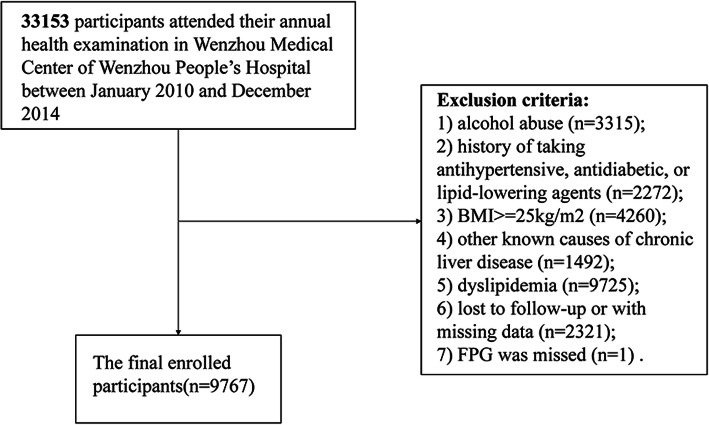
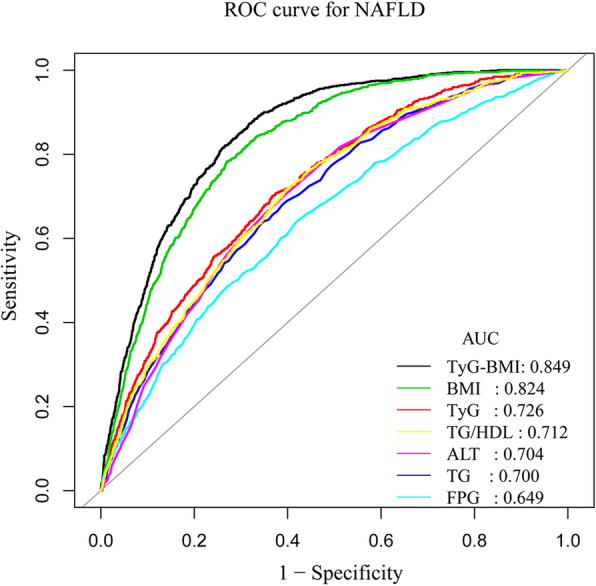
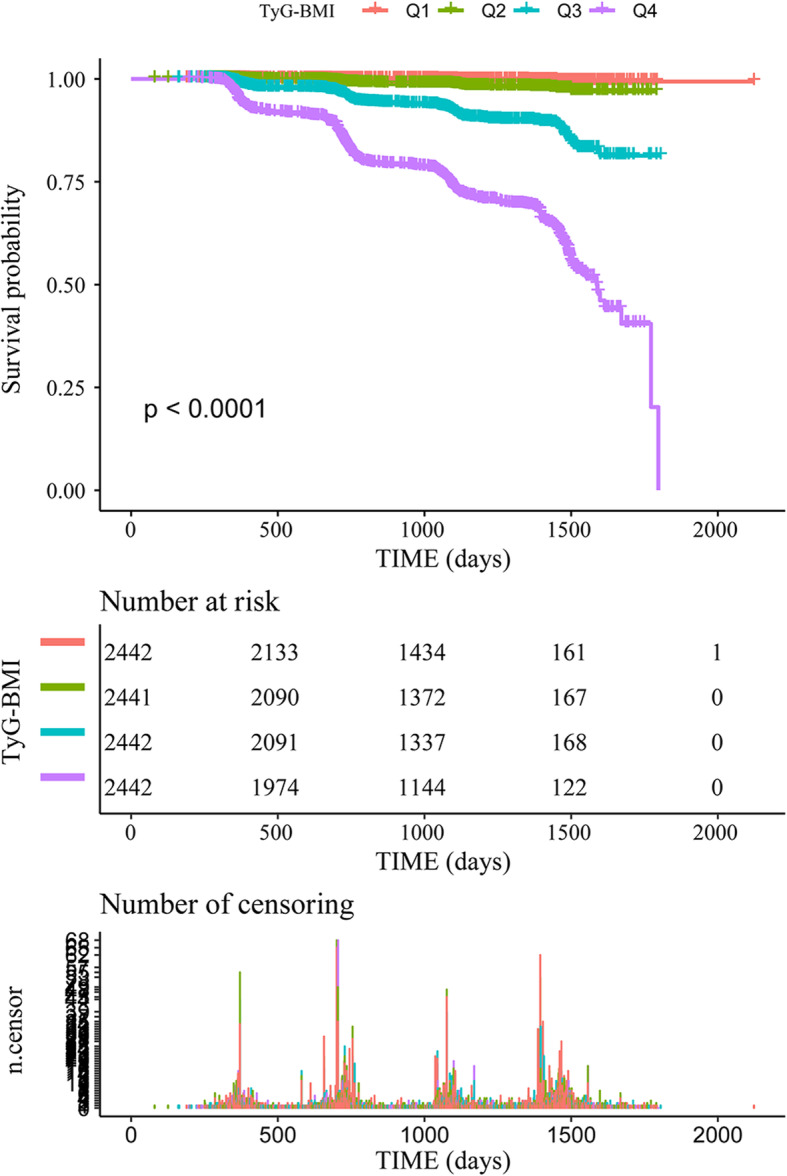
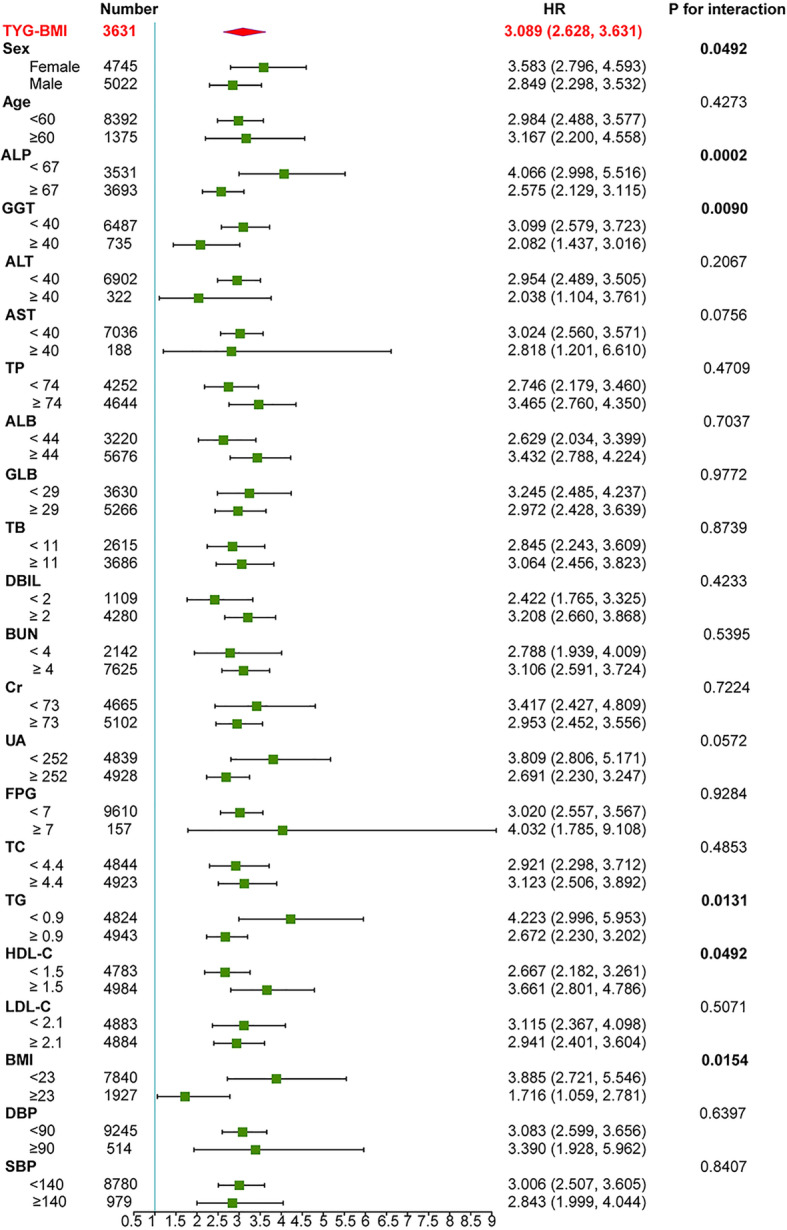
Methods: This study determined TyG-BMI at baseline and the incidence of NAFLD at follow-up and performed a post hoc analysis of a prospective cohort study that involved assessing the risk of NAFLD in non-obese Chinese residents from January 2010 to December 2014. The incidence of NAFLD during the 5-year follow-up was identified as the endpoint. Cox proportional hazards regression analysis was used to evaluate hazard ratios (HRs) and 95% confidence intervals (95% CIs) for the incidence of NAFLD. Receiver operating characteristic (ROC) curve analysis was conducted to estimate the predictive power of TyG-BMI and its components for NAFLD. Subgroup analysis was performed to better understand other factors that may affect the association between TyG-BMI and NAFLD to identify potential special populations.
Results: During the follow-up period, 841 (8.61%) of 9767 non-obese subjects who met the screening criteria were diagnosed with NAFLD. After confounding factors were fully adjusted for, the HR of NAFLD was 3.09 (95% CI 2.63-3.63) per standard deviation (SD) increase in TyG-BMI. Furthermore, TyG-BMI had a strong predictive value (area under ROC = 0.85; 95% CI 0.84-0.86) for the incidence of NAFLD, with a specificity of 0.73 and sensitivity of 0.82. Additionally, in the male population, each SD increase in TyG-BMI was linked to an increased risk of NAFLD (HR = 2.85, 95% CI 2.30-3.53), but the risk was higher in the female population (HR = 3.58, 95% CI 2.80-4.60). Gender and TyG-BMI interacted significantly with NAFLD incidence (P < 0.0001).
Conclusion: In the normolipidaemic and non-obese subset of the Chinese population, an increase in TyG-BMI is related to an increased incidence of NAFLD. TyG-BMI may have clinical significance in identifying groups at high risk of NAFLD.
Keywords: Association; Body mass index; Fasting plasma glucose; Insulin resistance; Non-alcoholic fatty liver disease; Secondary analysis; Triglyceride; Triglyceride glucose body mass index.
Conflict of interest statement
No conflicts of interest.
Figures
References
-
- Younossi ZM, Koenig AB, Abdelatif D, Fazel Y, Henry L, Wymer M. Global epidemiology of nonalcoholic fatty liver disease-meta-analytic assessment of prevalence, incidence, and outcomes. Hepatology. 2016;64:73–84. - PubMed
-
- Khashab MA, Liangpunsakul S, Chalasani N. Nonalcoholic fatty liver disease as a component of the metabolic syndrome. Curr Gastroenterol Rep. 2008;10:73–80. - PubMed
-
- Xia C, Li R, Zhang S, Gong L, Ren W, Wang Z, Li Q. Lipid accumulation product is a powerful index for recognizing insulin resistance in non-diabetic individuals. Eur J Clin Nutr. 2012;66:1035–1038. - PubMed
-
- Kim NH, Kim JH, Kim YJ, Yoo HJ, Kim HY, Seo JA, Kim NH, Choi KM, Baik SH, Choi DS, Kim SG. Clinical and metabolic factors associated with development and regression of nonalcoholic fatty liver disease in nonobese subjects. Liver Int. 2014;34:604–611. - PubMed
MeSH terms
Substances
LinkOut - more resources
Full Text Sources
Medical
Miscellaneous
