. 2020 Oct 27;11(5):e02726-20.
doi: 10.1128/mBio.02726-20.

Estimation of Full-Length TprK Diversity in Treponema pallidum subsp. pallidum

Affiliations

Estimation of Full-Length TprK Diversity in Treponema pallidum subsp. pallidum

Amin Addetia et al. mBio. .

Abstract

Immune evasion and disease progression of Treponema pallidum subsp. pallidum are associated with sequence diversity in the hypervariable outer membrane protein TprK. Previous attempts to study variation within TprK have sequenced at depths insufficient to fully appreciate the hypervariable nature of the protein, failed to establish linkage between the protein's seven variable regions, or were conducted on isolates passed through rabbits. As a consequence, a complete profile of tprK during infection in the human host is still lacking. Furthermore, prior studies examining how T. pallidum subsp. pallidum uses its repertoire of genomic donor sites to generate diversity within the variable regions of the tprK have yielded a partial understanding of this process due to the limited number of tprK alleles examined. In this study, we used short- and long-read deep sequencing to directly characterize full-length tprK alleles from T. pallidum subsp. pallidum collected from early lesions of patients attending two sexually transmitted infection clinics in Italy. We demonstrate that strains collected from cases of secondary syphilis contain significantly more unique variable region sequences and full-length TprK sequences than those from cases of primary syphilis. Our data, combined with recent data available on Chinese T. pallidum subsp. pallidum specimens, show the near-complete absence of overlap in TprK sequences among the 41 specimens profiled to date. We further estimate that the potential antigenic variability carried by TprK rivals that of current estimates of the human adaptive immune system. These data underscore the immunoevasive ability of TprK that allows T. pallidum subsp. pallidum to establish lifelong infection.IMPORTANCE Syphilis continues to be a significant public health issue in both low- and high-income countries, including the United States where the rate of syphilis infection has increased over the past 5 years. Treponema pallidum subsp. pallidum, the causative agent of syphilis, carries the outer membrane protein TprK that undergoes segmental gene conversion to constantly create new sequences. We performed full-length deep sequencing of TprK to examine TprK diversity in clinical T. pallidum subsp. pallidum strains. We then combined our results with data from all samples for which TprK deep sequencing results were available. We found almost no overlap in TprK sequences between different patients. Moreover, our data allowed us to estimate the total number of TprK variants that T. pallidum subsp. pallidum can potentially generate. Our results support how the T. pallidum subsp. pallidum TprK antigenic variation system is an equal adversary of the human immune system leading to pathogen persistence in the host.

Keywords: PacBio; T. pallidum; gene conversion; immune evasion; syphilis; tprK; treponema.


Figures

FIG 1
FIG 1
Full-length TprK phylogeny of all high-confidence protein sequences from 13 patients from Italy. Only intact, high-confidence, full-length TprK sequences derived from PacBio sequencing were used to generate the phylogenetic tree. Each individual is labeled by a different color, the stage of syphilis infection is represented by shape, and the proportion of sequences is shown by node size. None of the 629 full-length TprK sequences were shared between the 13 T. pallidum subsp. pallidum specimens sequenced in this study.
FIG 2
FIG 2
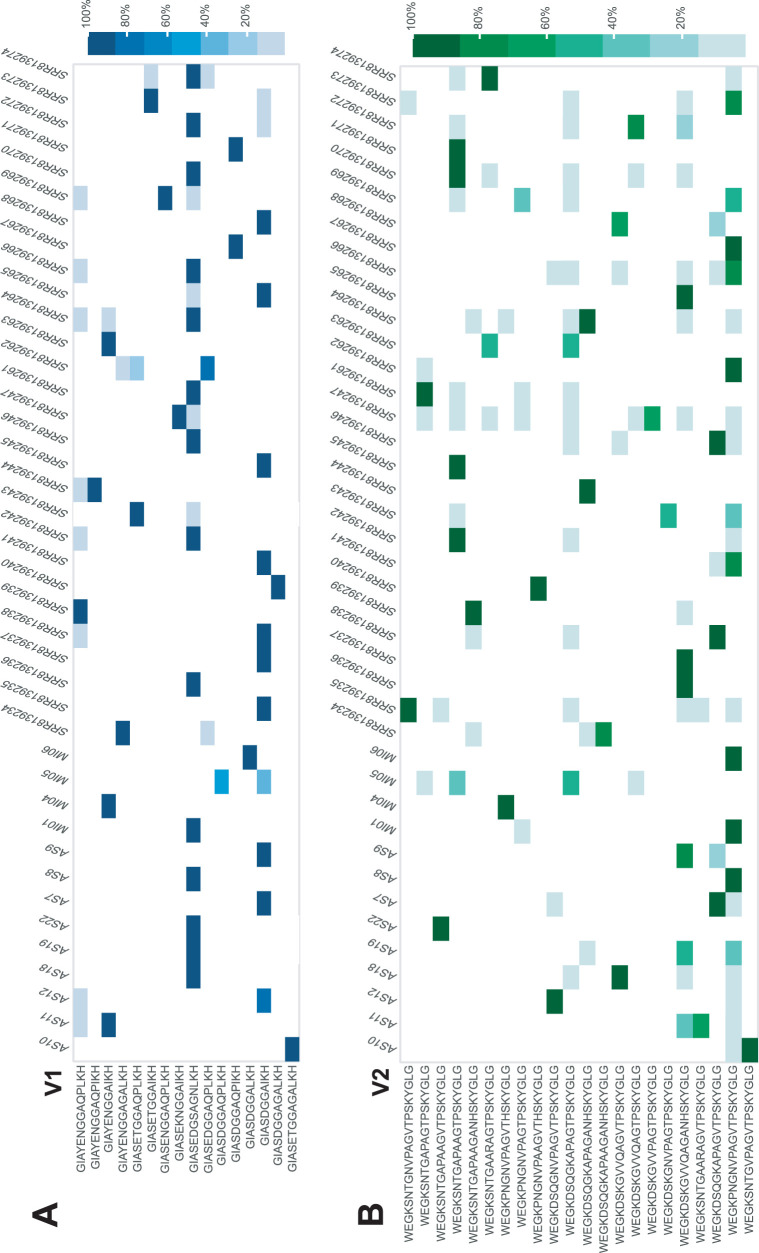
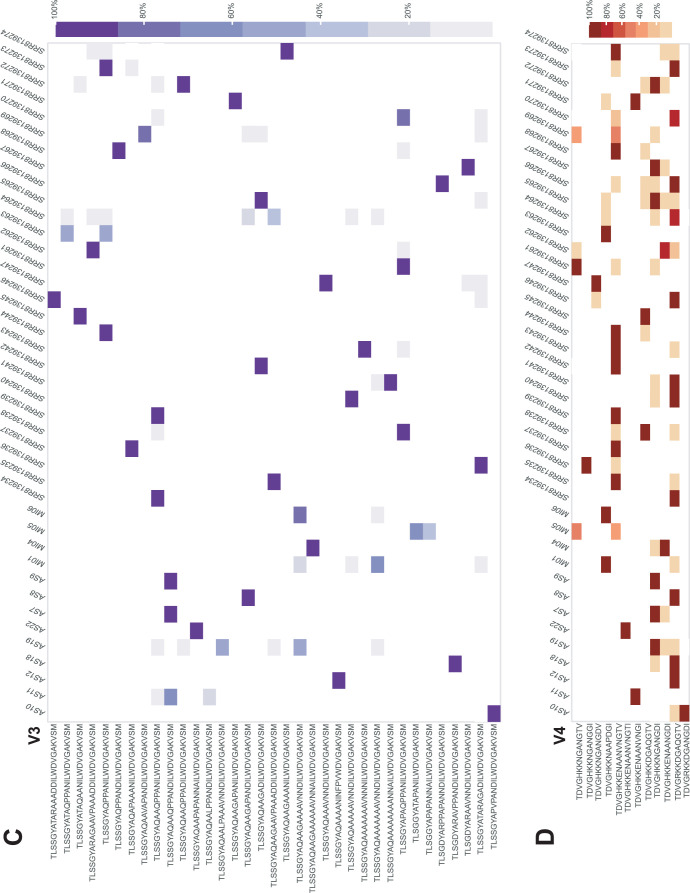
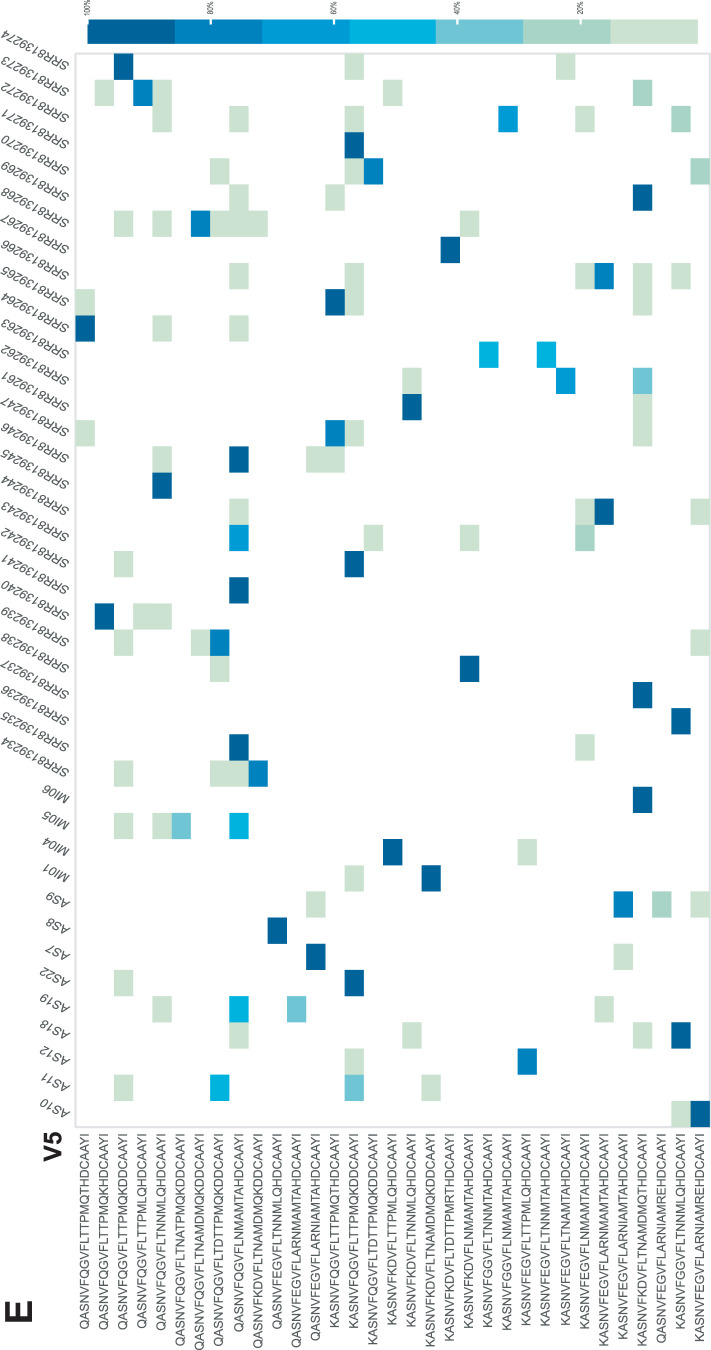
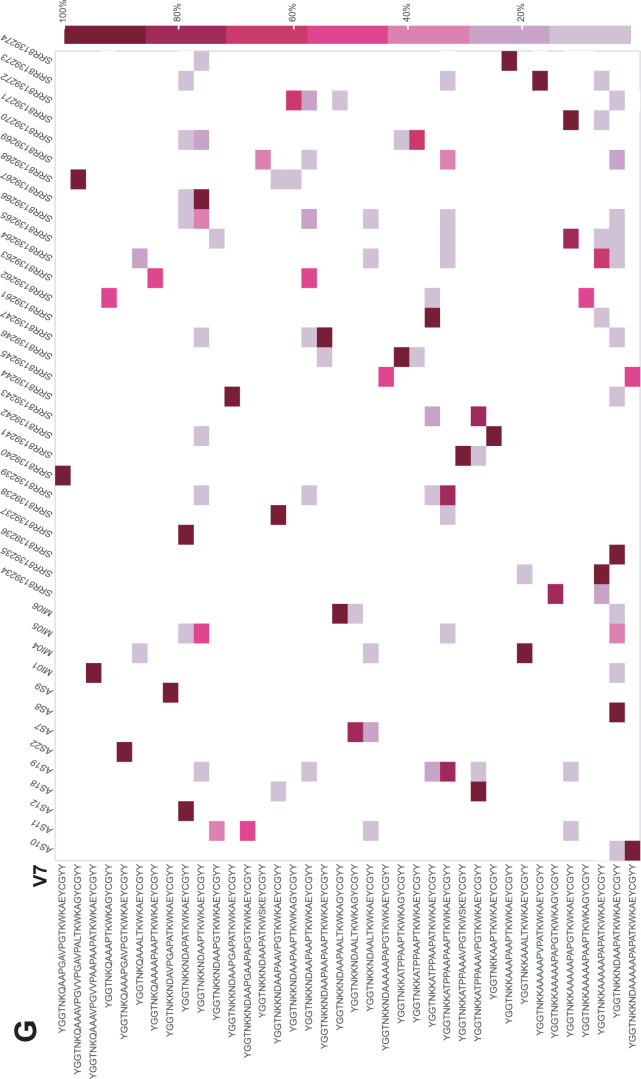
TprK variable region sequence heatmap. Heatmap display of all deep-sequenced tprK from clinical specimens to date, comprising 13 individuals from Italy sequenced here and 28 Chinese individuals from prior work. For print display, only those variable region sequences present at ≥20% frequency within a sample are depicted. Any variable frequencies less than 2% in other samples are not shown. The proportion of sequences is illustrated by color for each heatmap for V1 (A), V2 (B), V3 (C), V4 (D), V5 (E), V6 (F), and V7 (G). A heatmap filtered at a frequency of 1% is provided as an interactive html in Data Set S2.
FIG 2
FIG 2
TprK variable region sequence heatmap. Heatmap display of all deep-sequenced tprK from clinical specimens to date, comprising 13 individuals from Italy sequenced here and 28 Chinese individuals from prior work. For print display, only those variable region sequences present at ≥20% frequency within a sample are depicted. Any variable frequencies less than 2% in other samples are not shown. The proportion of sequences is illustrated by color for each heatmap for V1 (A), V2 (B), V3 (C), V4 (D), V5 (E), V6 (F), and V7 (G). A heatmap filtered at a frequency of 1% is provided as an interactive html in Data Set S2.
FIG 2
FIG 2
TprK variable region sequence heatmap. Heatmap display of all deep-sequenced tprK from clinical specimens to date, comprising 13 individuals from Italy sequenced here and 28 Chinese individuals from prior work. For print display, only those variable region sequences present at ≥20% frequency within a sample are depicted. Any variable frequencies less than 2% in other samples are not shown. The proportion of sequences is illustrated by color for each heatmap for V1 (A), V2 (B), V3 (C), V4 (D), V5 (E), V6 (F), and V7 (G). A heatmap filtered at a frequency of 1% is provided as an interactive html in Data Set S2.
FIG 2
FIG 2
TprK variable region sequence heatmap. Heatmap display of all deep-sequenced tprK from clinical specimens to date, comprising 13 individuals from Italy sequenced here and 28 Chinese individuals from prior work. For print display, only those variable region sequences present at ≥20% frequency within a sample are depicted. Any variable frequencies less than 2% in other samples are not shown. The proportion of sequences is illustrated by color for each heatmap for V1 (A), V2 (B), V3 (C), V4 (D), V5 (E), V6 (F), and V7 (G). A heatmap filtered at a frequency of 1% is provided as an interactive html in Data Set S2.
FIG 2
FIG 2
TprK variable region sequence heatmap. Heatmap display of all deep-sequenced tprK from clinical specimens to date, comprising 13 individuals from Italy sequenced here and 28 Chinese individuals from prior work. For print display, only those variable region sequences present at ≥20% frequency within a sample are depicted. Any variable frequencies less than 2% in other samples are not shown. The proportion of sequences is illustrated by color for each heatmap for V1 (A), V2 (B), V3 (C), V4 (D), V5 (E), V6 (F), and V7 (G). A heatmap filtered at a frequency of 1% is provided as an interactive html in Data Set S2.
FIG 3
FIG 3
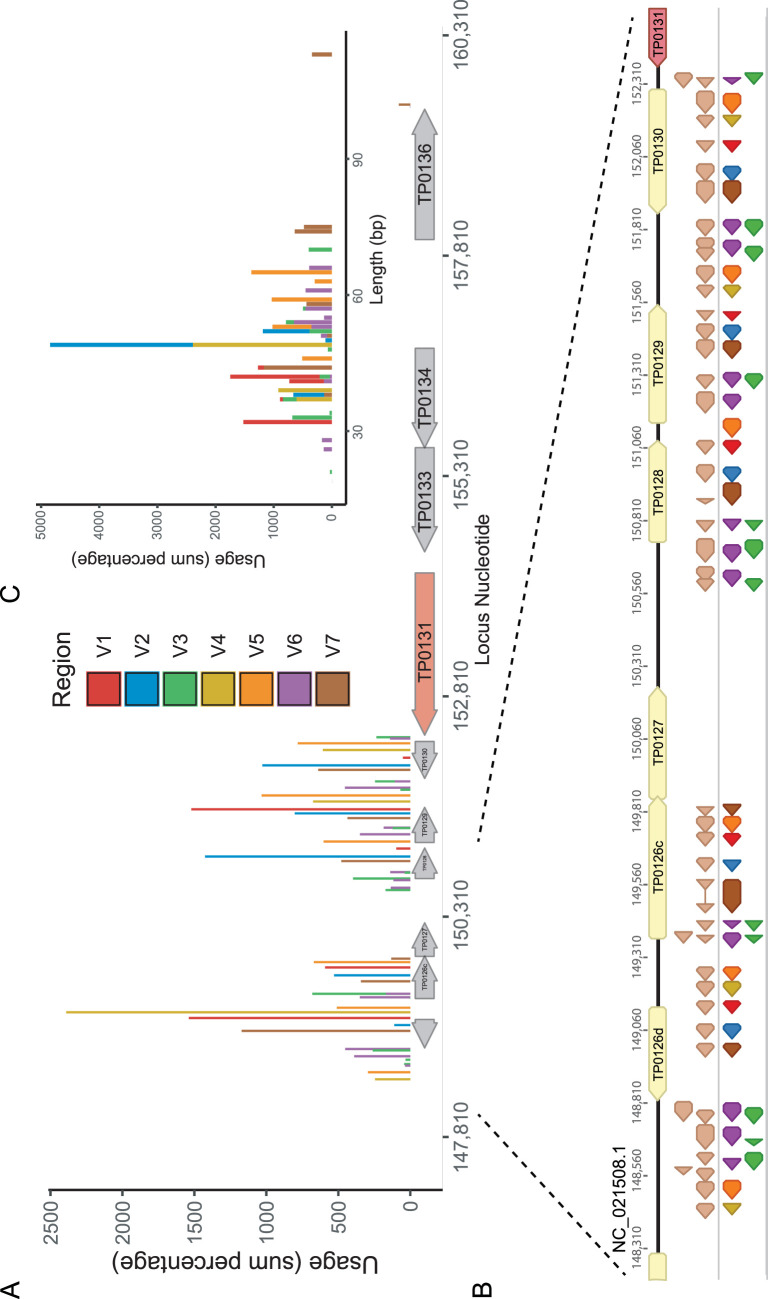
Map of tprK donor sites flanking the tprD locus. Variable region sequences were blastn aligned against a 12.5-kb locus that contained putative tprK donor sites based on manual review. (A) The usage of all 53 donor sites across the tprD locus by variable region is depicted based on the sum of within-sample percentages across all 41 samples. The nucleotide numbering of the tprD locus is based on the reference strain SS14 (NC_021508.1). (B) Zoomed-in depiction of the locus immediately downstream of tprD containing tprK donor sites. Donor sites are in the same orientation as the tprD locus. The light-brown sites include 45 of the 47 donor sites reported previously by Centurion et al. (14). The bottom donor sites include 51 of the 53 donor sites found in this study and are colored based on their associated variable region. (C) Length in nucleotides of the 53 donor sites identified from the analysis of tprK deep sequencing data from 41 clinical T. pallidum subsp. pallidum strains. The usage, represented as a sum percentage, as well as the variable region of each donor site is also depicted. The GFF file of the donor site locus is included as Data Set S3.
FIG 4
FIG 4
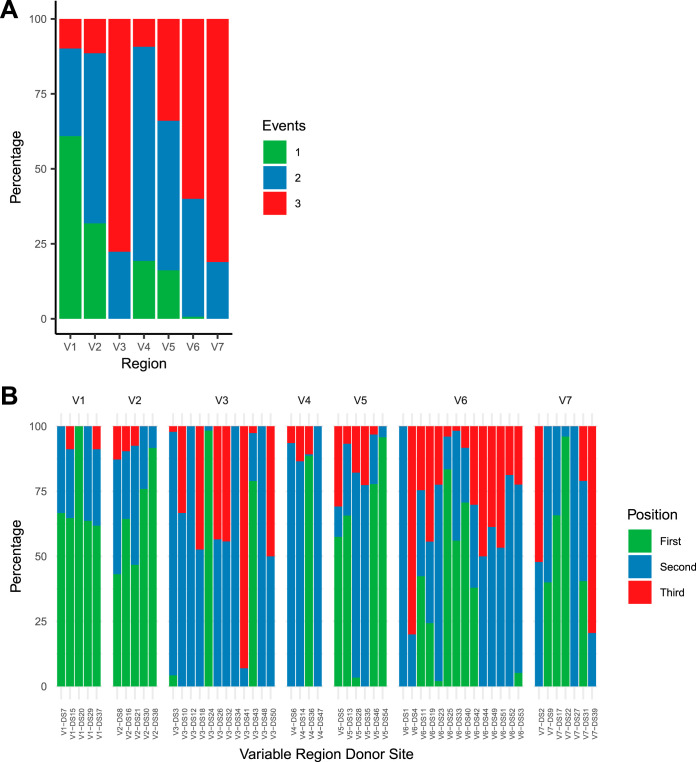
Donor site segments and position by V region. (A) The number of donor site contribution segments in each high-confidence variable region sequence was determined in blastn output across the 41 samples. Usage was determined by the sum percentage of variable region sequences by segment. For instance, V1 has the greatest number of variable region sequences where only one donor site segment is used in a given V region sequence, consistent with its overall lack of diversity. (B) The position of donor site contributions within a variable region sequence was also determined for each donor site (i.e., “first” means the donor site was found to align to the 5′-most segment of the variable region sequence, “second” means the donor site was found to align to the central segment of the variable region sequence, and “third” to the 3′-most segment of the sequence). Within-sample percentages were summed for each variable region in order to adjust for differences in read coverage at each locus between samples. These summed percentages were then adjusted by the total summed percentage to add up to 100% for each variable region.

References

    1. Centers for Disease Control and Prevention. Syphilis surveillance supplement 2013–2017. Centers for Disease Control and Prevention, Atlanta, GA: https://www.cdc.gov/std/stats17/syphilis2017/default.htm.
    1. Centers for Disease Control and Prevention. 2018. Syphilis. Centers for Disease Control and Prevention, Atlanta, GA: https://www.cdc.gov/std/stats18/syphilis.htm.
    1. Ho EL, Lukehart SA. 2011. Syphilis: using modern approaches to understand an old disease. J Clin Invest 121:4584–4592. doi: 10.1172/JCI57173. - DOI - PMC - PubMed
    1. Singh AE, Romanowski B. 1999. Syphilis: review with emphasis on clinical, epidemiologic, and some biologic features. Clin Microbiol Rev 12:187–209. doi: 10.1128/CMR.12.2.187. - DOI - PMC - PubMed
    1. Lukehart SA, Baker-Zander SA, Lloyd RM, Sell S. 1980. Characterization of lymphocyte responsiveness in early experimental syphilis. II. Nature of cellular infiltration and Treponema pallidum distribution in testicular lesions. J Immunol 124:461–467. - PubMed

Publication types

Supplementary concepts