


Clusterin as a Potential Biomarker of Obesity-Related Alzheimer's Disease Risk
- PMID: 33110346
- PMCID: PMC7555556
- DOI: 10.1177/1177271920964108
Clusterin as a Potential Biomarker of Obesity-Related Alzheimer's Disease Risk
Abstract
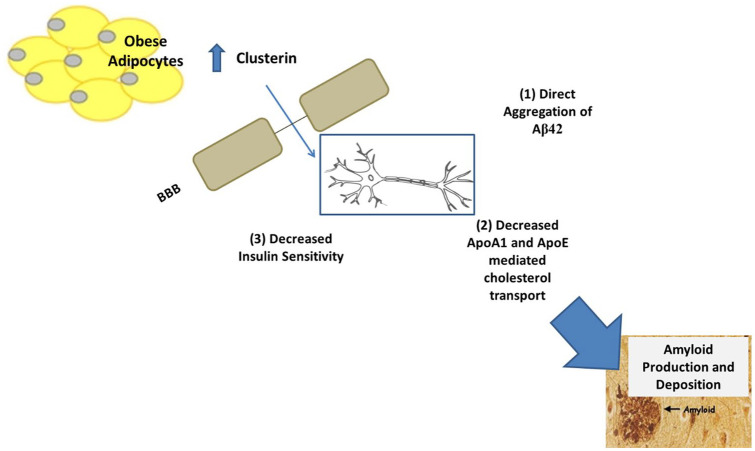
Over 35% of the adult US population is obese. In turn, excess adiposity increases the risk of multiple complications including type 2 diabetes (T2D), insulin resistance, and cardiovascular disease; yet, obesity also independently heightens risk of Alzheimer's Disease (AD), even after adjusting for other important confounding risk factors including blood pressure, sociodemographics, cholesterol levels, smoking status, and Apolipoprotein E (ApoE) genotype. Among patients over the age of 65 with dementia, 37% have coexisting diabetes, and an estimated 7.3% of cases of AD are directly attributable to midlife obesity. Clusterin, also known as apolipoprotein J (ApoJ), is a multifunctional glycoprotein that acts as a molecular chaperone, assisting folding of secreted proteins. Clusterin has been implicated in several physiological and pathological states, including AD, metabolic disease, and cardiovascular disease. Despite long-standing interest in elucidating clusterin's relationship with amyloid beta (Aβ) aggregation/clearance and toxicity, significant knowledge gaps still exist. Altered clusterin expression and protein levels have been linked with cognitive and memory function, disrupted central nervous system lipid flux, as well as pathogenic brain structure; and its role in cardiometabolic disease suggests that it may be a link between insulin resistance, dyslipidemia, and AD. Here, we briefly highlight clusterin's relevance to AD by presenting existing evidence linking clusterin to AD and cardiometabolic disease, and discussing its potential utility as a biomarker for AD in the presence of obesity-related metabolic disease.
Keywords: Alzheimer’s Disease; adipose tissue; amyloid beta; clusterin.
© The Author(s) 2020.
Conflict of interest statement
Declaration of conflicting interests:The author declared no potential conflicts of interest with respect to the research, authorship, and/or publication of this article.
Figures
References
-
- Alzheimer’s Association. Alzheimer’s disease facts and figures [Ebook]. https://www.alz.org/documents_custom/2018-facts-and-figures.pdf. Accessed June 20, 2020.
-
- Barnard ND, Bush AI, Ceccarelli A, et al. Dietary and lifestyle guidelines for the prevention of Alzheimer’s disease. Neurobiol Aging. 2014;35 Suppl 2:S74-S78. - PubMed
Publication types
Grants and funding
LinkOut - more resources
Full Text Sources
Research Materials
Miscellaneous
