


Ocular manifestation, comorbidities, and detection of severe acute respiratory syndrome-coronavirus 2 from conjunctiva in coronavirus disease 2019: A systematic review and meta-analysis
- PMID: 33110745
- PMCID: PMC7585479
- DOI: 10.4103/tjo.tjo_53_20
Ocular manifestation, comorbidities, and detection of severe acute respiratory syndrome-coronavirus 2 from conjunctiva in coronavirus disease 2019: A systematic review and meta-analysis
Abstract
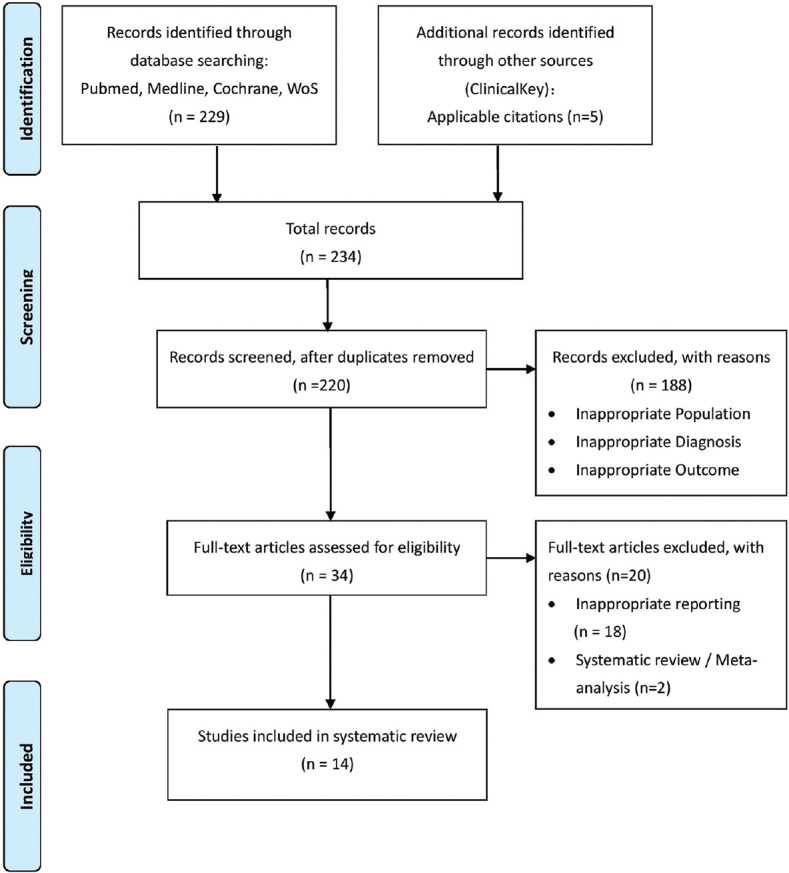
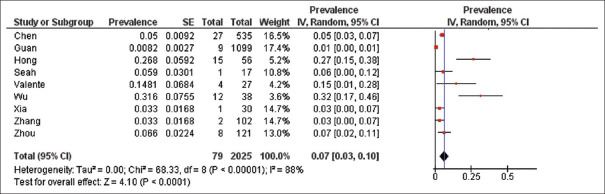
The coronavirus disease 2019 (COVID 19) pandemic has presented major challenges to ophthalmologists. Reports have shown that ocular manifestations can be the first presenting symptoms of COVID 19 infection and conjunctiva may be a portal of entry for the severe acute respiratory syndrome (SARS) associated coronavirus 2 (SARS CoV 2). The purpose of this article is to provide general guidance for ophthalmologists to understand the prevalence of ocular presentation in COVID 19 patients and to reduce the risk of transmission during practice. Relevant studies published in the period of November 1, 2019, and July 15, 2020, regarding ocular manifestations of COVID 19 and detection of SARS CoV 2 in the eye were included in this systematic review and meta analysis. The pooled prevalence of the ocular manifestations has been estimated at 7% (95% confidence interval [CI]: 0.03-0.10) among COVID 19 patients. The pooled detection rate of SARS CoV 2 from conjunctiva was low (1%, 95% CI: 0.00-0.03). Conjunctival symptoms were the most common ocular manifestations in COVID 19, but the positive detection rate of the SARS CoV 2 virus by reverse transcription-polymerase chain reaction of conjunctival tears or secretions remained low. No study has shown a definite transmission of COVID 19 through ocular mucosa or secretions. In summary, ocular manifestations in COVID 19 patients commonly comprise ocular surface symptoms. Although a low prevalence of ocular symptoms was encountered among patients infected by SARS CoV 2, it is imperative for all ophthalmologists to understand the full spectrum of COVID 19 symptoms or signs including those of the eyes as well as to adopt appropriate protective measures during clinical practice.
Keywords: Coronavirus; coronavirus disease 2019; ocular manifestations; ophthalmology; polymerase chain reaction; severe acute respiratory syndrome-coronavirus 2.
Copyright: © 2020 Taiwan J Ophthalmol.
Conflict of interest statement
The authors declare that there are no conflicts of interests of this paper.
Figures
References
-
- WHO Coronavirus Disease (COVID-19) Dashboard. World Health Organization. 2020. [[Last accessed on 2020 Jul 15]]. Available from: https://covid19whoint .
Publication types
LinkOut - more resources
Full Text Sources
Miscellaneous