


Convergent Mixed Methods Exploration of Telehealth in Bariatric Surgery: Maximizing Provider Resources and Access
- PMID: 33111249
- PMCID: PMC7591243
- DOI: 10.1007/s11695-020-05059-1
Convergent Mixed Methods Exploration of Telehealth in Bariatric Surgery: Maximizing Provider Resources and Access
Abstract
Background: Telehealth may be an important care delivery modality in reducing dropout from bariatric surgery programs which is reported globally at approximately 50%.
Methods: In this convergent mixed methods case study of a large, US healthcare system, we examine the impact of telehealth implementation in 2020 on pre-operative bariatric surgery visits and provider perspectives of telehealth use.
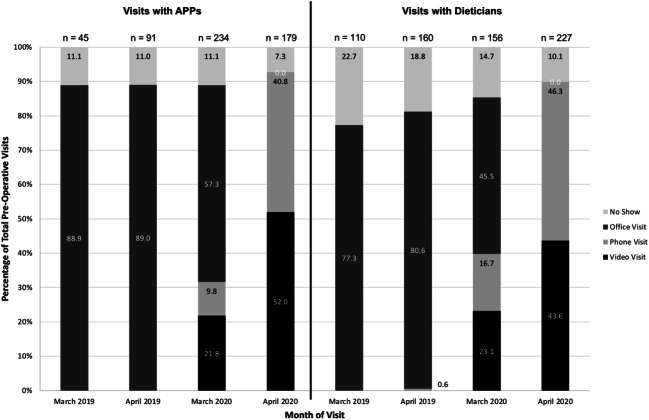
Results: We find that telehealth was significantly associated with a 38% reduction in no-show rate compared with the prior year. Additionally, providers had positive experiences with regard to the appropriateness and feasibility of using telehealth in the pre-operative bariatric surgery process.
Conclusions: Telehealth use in the pre-operative bariatric surgery process may lead to greater efficiency in healthcare resource utilization. Insurance providers and bariatric accreditation bodies globally should consider accepting telehealth visits and self-reported weights when determining coverage decisions to ensure access for patients.
Keywords: Bariatric surgery; Telehealth.
Conflict of interest statement
The authors declare that they have no conflict of interest.
Figures
References
Publication types
MeSH terms
Grants and funding
LinkOut - more resources
Full Text Sources
Medical
