


HOPS and p53: thick as thieves in life and death
- PMID: 33112208
- PMCID: PMC7714459
- DOI: 10.1080/15384101.2020.1838772
HOPS and p53: thick as thieves in life and death
Abstract
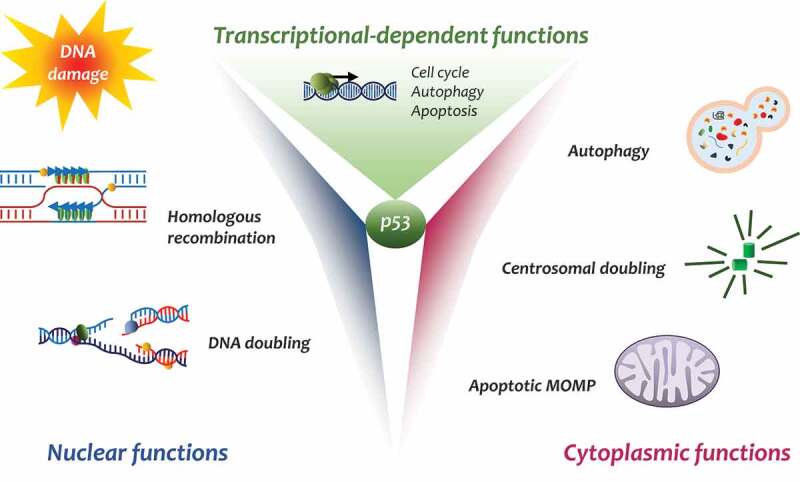
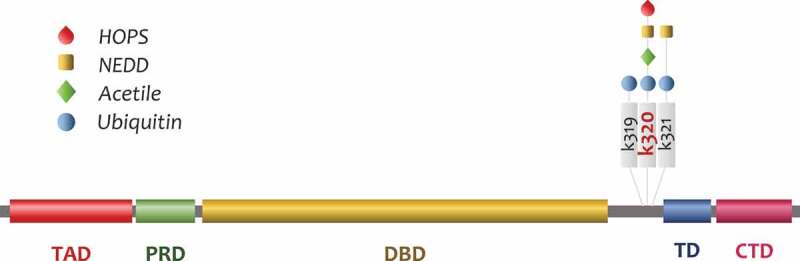
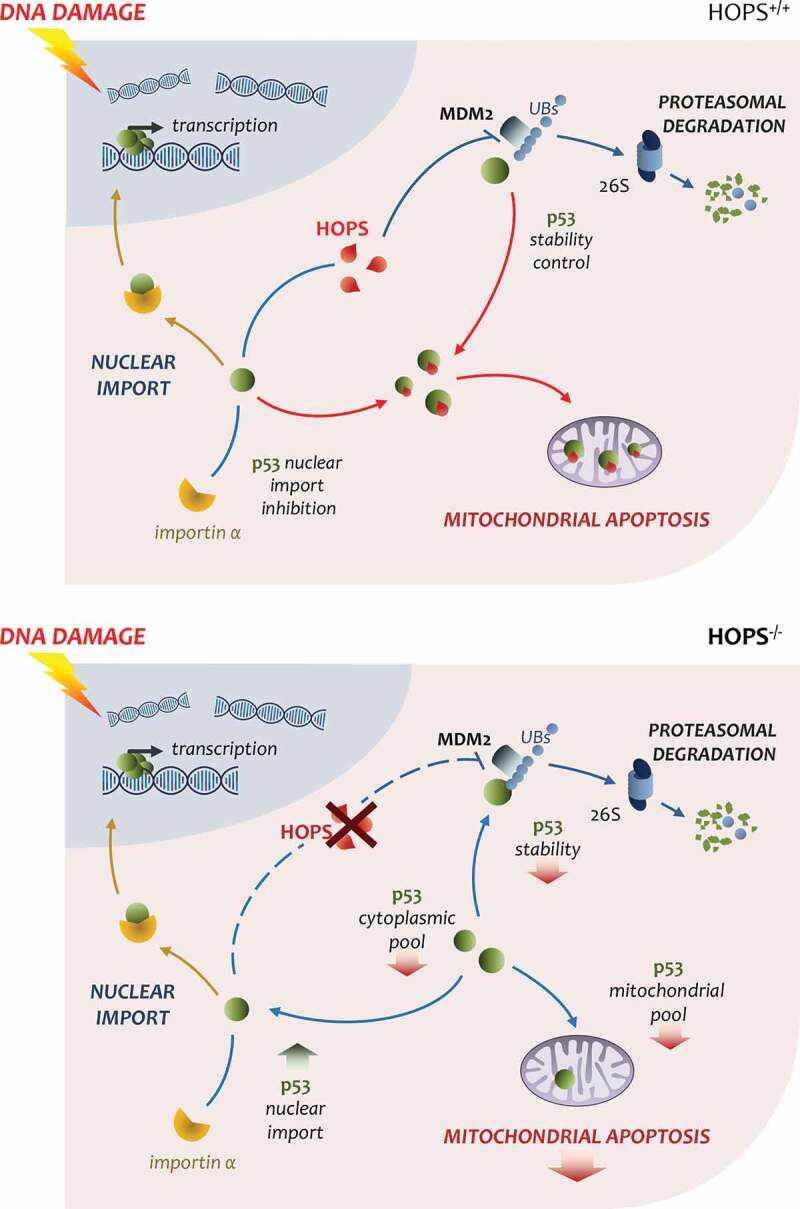
The oncosuppressor protein p53 plays a major role in transcriptionally controlling the expression of a number of genes, which in turn regulates many functions in response to DNA damage, oncogene triggering, oxidative, and additional cell stresses. A developing area of interest in p53 is the studies related to its cytoplasmic function(s). Many investigations revealed the significant role of p53 in the cytoplasm, acting in a transcriptional-independent manner in important processes related to cell homeostasis such as; apoptosis, autophagy, metabolism control, drug, and oxidative stress response. The studies on cytoplasmic p53 have shown intricate mechanisms by which posttranslational modifications allow p53 to perform its cytoplasmic functions. A number of ubiquitins, deubiquitins, and small ubiquitin-like proteins, have a pivotal role in controlling cytoplasmic stability and localization. Recently, HOPS/TMUB1 a novel small ubiquitin-like protein has been described as a vital molecule stabilizing p53 half-life, directing it to the mitochondria and favoring p53-mediated apoptosis. Furthermore, HOPS/TMUB1 competing with importin-α lessens p53 nuclear localization, thereby increasing cytoplasmic concentration. HOPS/TMUB1 as p53 modifiers could be attractive candidates to elucidate apoptosis or other important transcriptional-independent functions which are key in cancer research in order to develop new therapeutic approaches.
Keywords: Apoptosis; Hepatocyte Odd Protein Shuttling (HOPS); Liver regeneration; Mitochondrial Apoptosis; Nucleophosmin (NPM)/p19 Arf; Transmembrane and ubiquitin-like domain containing 1 (TMUB1); Tumor Suppressor Gene; Ubiquitin–Like Protein; p53.
Conflict of interest statement
No potential conflict of interest was reported by the author.
Figures
References
-
- Oren M. Decision making by p53: life, death and cancer. Cell Death Differ. 2003;10:431–442. - PubMed
-
- Muller PA, Vousden KH.. p53 mutations in cancer. Nat Cell Biol. 2013;15:2–8. - PubMed
-
- Vousden KH, Prives C. Blinded by the light: the growing complexity of p53. Cell. 2009;137:413–431. - PubMed
-
- Comel A, Sorrentino G, Capaci V, et al. The cytoplasmic side of p53’s oncosuppressive activities. FEBS Lett. 2014;588:2600–2609. - PubMed
Publication types
MeSH terms
Substances
LinkOut - more resources
Full Text Sources
Research Materials
Miscellaneous
