


Behavior of Callers to a Crisis Helpline Before and During the COVID-19 Pandemic: Quantitative Data Analysis
- PMID: 33112759
- PMCID: PMC7652595
- DOI: 10.2196/22984
Behavior of Callers to a Crisis Helpline Before and During the COVID-19 Pandemic: Quantitative Data Analysis
Abstract
Background: The World Health Organization declared the outbreak of COVID-19 to be an international pandemic in March 2020. While numbers of new confirmed cases of the disease and death tolls are rising at an alarming rate on a daily basis, there is concern that the pandemic and the measures taken to counteract it could cause an increase in distress among the public. Hence, there could be an increase in need for emotional support within the population, which is complicated further by the reduction of existing face-to-face mental health services as a result of measures taken to limit the spread of the virus.
Objective: The objective of this study was to determine whether the COVID-19 pandemic has had any influence on the calls made to Samaritans Ireland, a national crisis helpline within the Republic of Ireland.
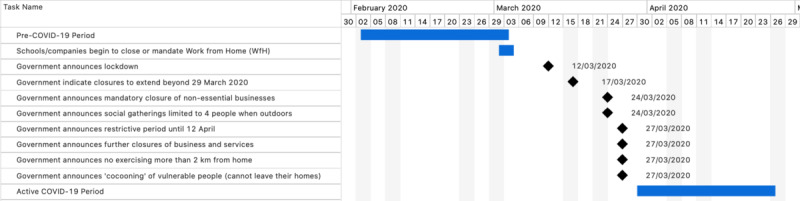
Methods: This study presents an analysis of calls made to Samaritans Ireland in a four-week period before the first confirmed case of COVID-19 (calls=41,648, callers=3752) and calls made to the service within a four-week period after a restrictive lockdown was imposed by the government of the Republic of Ireland (calls=46,043, callers=3147). Statistical analysis was conducted to explore any differences between the duration of calls in the two periods at a global level and at an hourly level. We performed k-means clustering to determine the types of callers who used the helpline based on their helpline call usage behavior and to assess the impact of the pandemic on the caller type usage patterns.
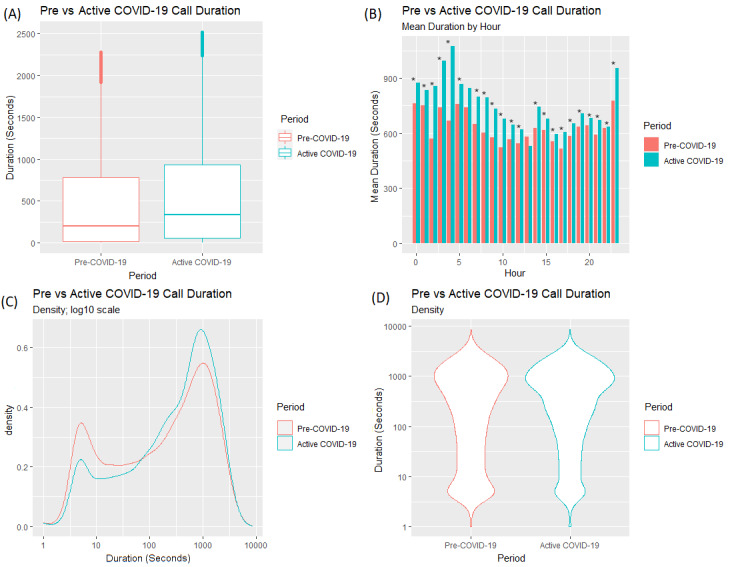
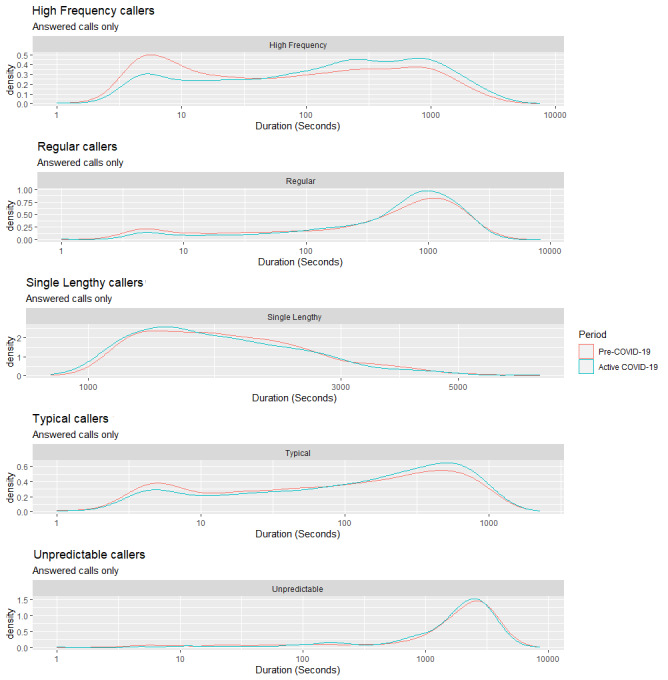
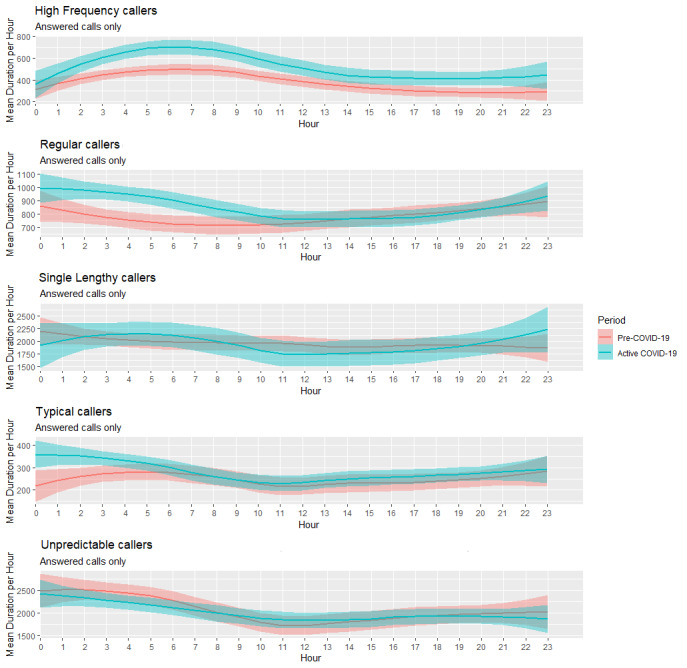
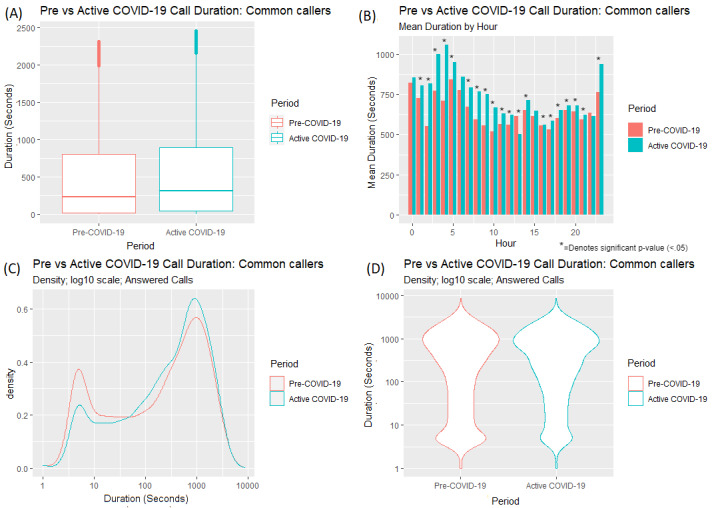
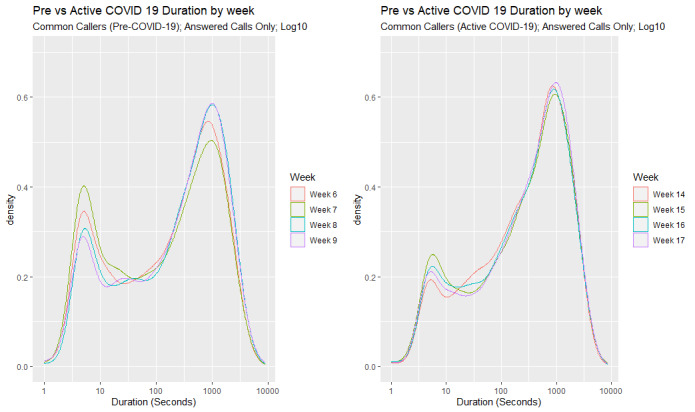
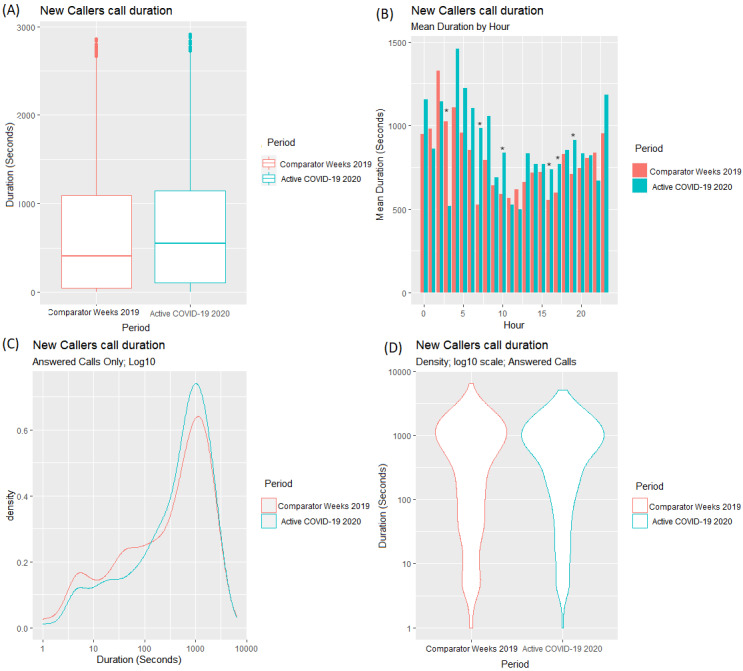
Results: The analysis revealed that calls were of a longer duration in the postlockdown period in comparison with the pre-COVID-19 period. There were changes in the behavior of individuals in the cluster types defined by caller behavior, where some caller types tended to make longer calls to the service in the postlockdown period. There were also changes in caller behavior patterns with regard to the time of day of the call; variations were observed in the duration of calls at particular times of day, where average call durations increased in the early hours of the morning.
Conclusions: The results of this study highlight the impact of COVID-19 on a national crisis helpline service. Statistical differences were observed in caller behavior between the prelockdown and active lockdown periods. The findings suggest that service users relied on crisis helpline services more during the lockdown period due to an increased sense of isolation, worsening of underlying mental illness due to the pandemic, and reduction or overall removal of access to other support resources. Practical implications and limitations are discussed.
Keywords: COVID-19; caller behavior; clustering; coronavirus; crisis helplines; machine learning; mental health; pandemic.
©Robin Turkington, Maurice Mulvenna, Raymond Bond, Edel Ennis, Courtney Potts, Ciaran Moore, Louise Hamra, Jacqui Morrissey, Mette Isaksen, Elizabeth Scowcroft, Siobhan O'Neill. Originally published in JMIR Mental Health (http://mental.jmir.org), 06.11.2020.
Conflict of interest statement
Conflicts of Interest: None declared.
Figures
References
-
- Coronavirus disease (COVID-19) pandemic. World Health Organization. [2020-05-01]. https://www.who.int/emergencies/diseases/novel-coronavirus-2019.
-
- Stress related to catching COVID-19 is highest among 30-59 year-olds. University College London. 2020. Apr 15, [2020-06-04]. https://www.ucl.ac.uk/news/2020/apr/stress-related-catching-covid-19-hig....
-
- COVID-19 Psychological Research Consortium Study. Ulster University. [2020-06-04]. https://www.ulster.ac.uk/coronavirus/research/impact/psychology-study.
-
- Gunnell D, Appleby L, Arensman E, Hawton K, John A, Kapur N, Khan M, O'Connor RC, Pirkis J, COVID-19 Suicide Prevention Research Collaboration Suicide risk and prevention during the COVID-19 pandemic. Lancet Psychiatry. 2020 Jun;7(6):468–471. doi: 10.1016/S2215-0366(20)30171-1. http://europepmc.org/abstract/MED/32330430 - DOI - PMC - PubMed
LinkOut - more resources
Full Text Sources
Miscellaneous
