


Redefining shared symbolic networks during the Gravettian in Western Europe: New data from the rock art findings in Aitzbitarte caves (Northern Spain)
- PMID: 33112862
- PMCID: PMC7592797
- DOI: 10.1371/journal.pone.0240481
Redefining shared symbolic networks during the Gravettian in Western Europe: New data from the rock art findings in Aitzbitarte caves (Northern Spain)
Abstract
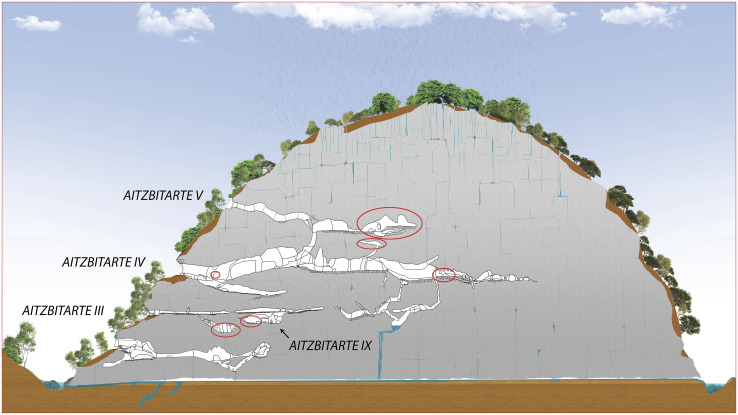
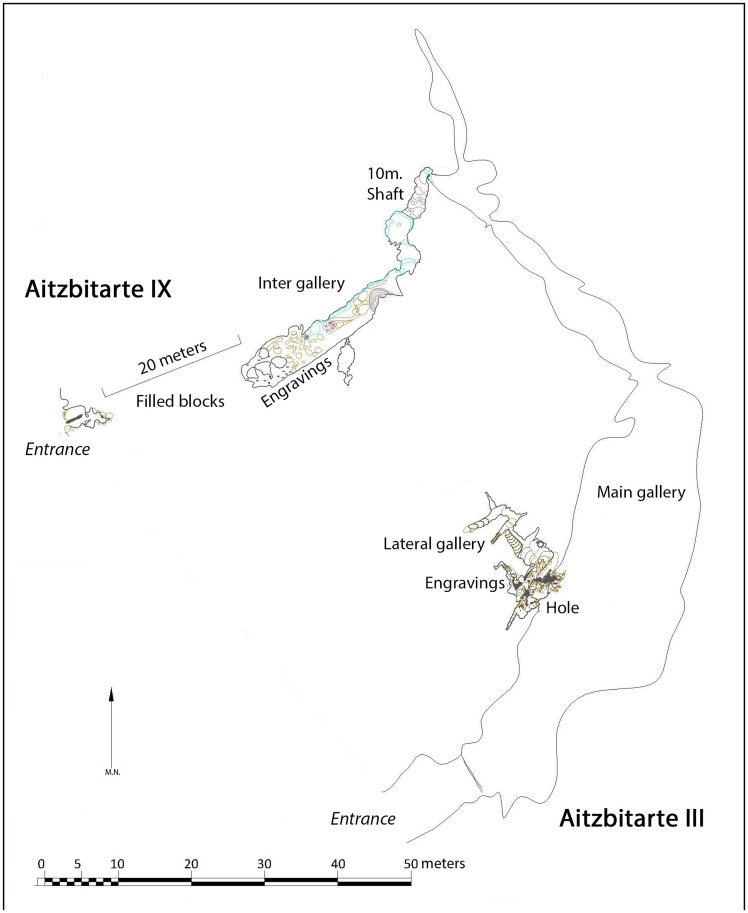
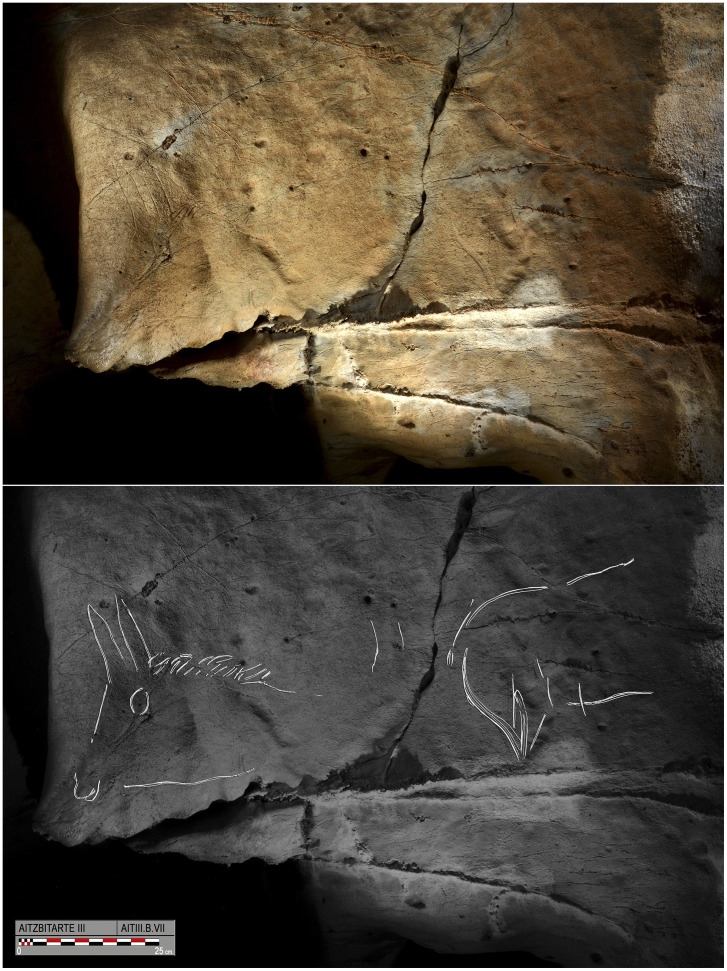
The renewal of the archaeological record, mainly through the discovery of unpublished sites, provides information that sometimes qualifies or even reformulates previous approaches. One of the latter cases is represented by the three new decorated caves found in 2015 in Aitzbitarte Hill. Their exhaustive study shows the presence of engraved animals, mainly bison, with formal characteristics unknown so far in the Palaeolithic art of the northern Iberian Peninsula. However, parallels are located in caves in southern France such as Gargas, Cussac, Roucadour or Cosquer. All of them share very specific graphic conventions that correspond to human occupations assigned basically to the Gravettian cultural complex. The new discovery implies the need to reformulate the iconographic exchange networks currently accepted, as well as their correspondence with other elements of the material culture at the same sites. Thus, we have carried out a multiproxy approach based in statistical analysis. The updated data reveals a greater complexity in artistic expression during the Gravettian that had not been considered so far, and also challenges the traditional isolation that had been granted to Cantabrian symbolic expressions during pre-Magdalenian times.
Conflict of interest statement
The authors have declared that no competing interests exist.
Figures






References
-
- Garate D. New insights into the study of Palaeolithic rock art: Dismantling the ‘Basque Country Void. Journal of Anthropological Research. 2018; 74(2): p. 168–200.
-
- Garate D, Rios-Garaizar J, Rivero O, Elkartea FU. Trois nouvelles grottes ornées à Aitzbitarte (Pays Basque). International Newsletter of Rock Art. 2016; 75: p. 1–5.
-
- Maier A. Population and settlement dynamics from the Gravettian to the Magdalenian. Mitteilungen der Gesellschaft für Urgeschichte. 2017; 26: p. 83–101.
-
- Moreau L. Geißenklösterle. The Swabian Gravettian in its European context. Quartär. 2010; 57: p. 79–93.
-
- Pesesse D. Is it still appropriate to talk about the Gravettian? Data from lithic industries in Western Europe. Quartär. 2017; 64: p. 107–128.
Publication types
MeSH terms
LinkOut - more resources
Full Text Sources
