


Knowledge and barriers of PrEP delivery among diverse groups of potential PrEP users in Central Uganda
- PMID: 33112907
- PMCID: PMC7592843
- DOI: 10.1371/journal.pone.0241399
Knowledge and barriers of PrEP delivery among diverse groups of potential PrEP users in Central Uganda
Abstract
Background: Scale-up of oral pre-exposure prophylaxis (PrEP) for HIV prevention in Uganda began with serodiscordant couples (SDC) and has expanded to other most at-risk populations (MARPs). We explored knowledge, acceptability, barriers and facilitators of PrEP use among potential PrEP users in four MARPs (SDC; men who have sex with men [MSM]; female sex workers [FSW], and fisher folk).
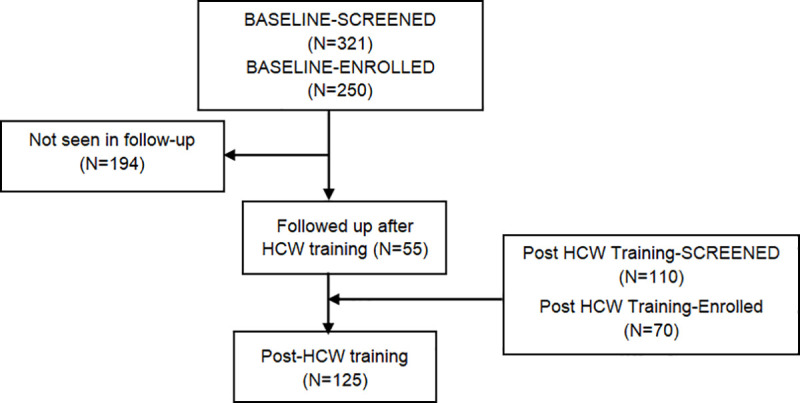
Methods: We administered quantitative surveys to potential PrEP users in multiple settings in Central Uganda at baseline and approximately 9 months after healthcare worker (HCW) training on PrEP.
Results: The survey was completed by 250 potential PrEP users at baseline and 125 after HCW training; 55 completed both surveys. For these 250 participants, mean age was 28.5 years (SD 6.9), 47% were male and 6% were transgender women, with approximately even distribution across MARPs and recruitment locations (urban, peri-urban, and rural). Most (65%) had not heard about PrEP. After HCW training, 24% of those sampled were aware of PrEP, and the proportion of those who accurately described PrEP as "antiretrovirals to be used before HIV exposure" increased from 54% in the baseline survey to 74% in the second survey (p<0.001). The proportion of participants who reported HCW as a source of PrEP information increased after training (59% vs 91%, p<0.001). In both surveys, nearly all participants indicated they were willing to take PrEP if offered. The most common anticipated barriers to PrEP were stigma, transportation, accessibility, busy schedules, and forgetfulness. Closeness to home was a common facilitator for all participant categories.
Conclusions: Initial awareness of PrEP was low, but PrEP knowledge and interest increased among diverse MARPs after HCW training. Demand creation and HCW training will be critical for increasing PrEP awareness among key populations, with support to overcome barriers to PrEP use. These findings should encourage the acceleration of PrEP rollout in Uganda.
Conflict of interest statement
The authors have declared that no competing interests exist.
References
-
- WHO (2018) Updated recommendations on first-line and second-line antiretroviral regimens and post-exposure prophylaxis and recommendations on early infant diagnosis of HIV: interim guidelines: supplement to the 2016 consolidated guidelines on the use of antiretroviral drugs for treating and preventing HIV infection. World Health Organization.
Publication types
MeSH terms
Substances
Grants and funding
LinkOut - more resources
Full Text Sources
Medical
Miscellaneous
