


The microscope drape method to reduce aerosolisation during endoscopic sinus and skull base surgery in the COVID era. How i do it
- PMID: 33112982
- PMCID: PMC7591691
- DOI: 10.1007/s00405-020-06441-6
The microscope drape method to reduce aerosolisation during endoscopic sinus and skull base surgery in the COVID era. How i do it
Abstract
Background: Otolaryngologists are faced with concerning challenges since the onset of the coronavirus disease (COVID-19) pandemic due to significant risk of occupational infection. Transmission can happen during intraoperative exposure to viral particles carried by droplets or aerosols. Endoscopic sinus and skull base surgery are notable for causing aerosolisation, putting healthcare staff at substantial risk.
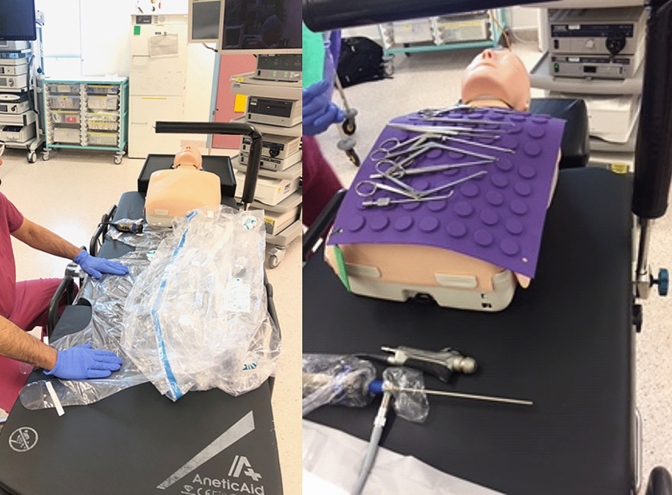
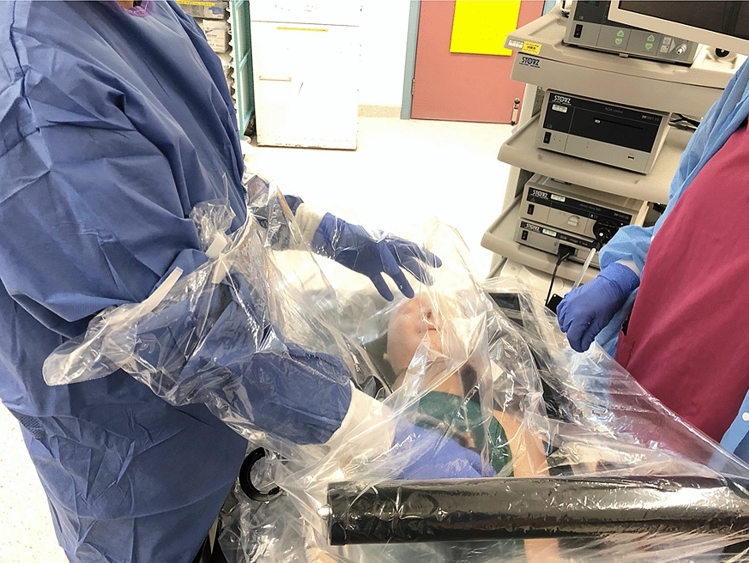
Method: We describe the creation of a tight-seal tent from a microscope drape covering the operative field and the operator's hands with the aim to contain aerosols during transnasal endoscopic surgery.
Conclusion: The microscope drape technique is a simple barrier measure that could potentially improve safety during endoscopic procedures.
Keywords: COVID-19; Endoscopic sinus surgery; FESS; Microscope drape.
Conflict of interest statement
The authors declare that they have no conflict of interest.
Figures
References
MeSH terms
LinkOut - more resources
Full Text Sources
Medical
