


More than Pneumonia: Distinctive Features of SARS-Cov-2 Infection. From Autopsy Findings to Clinical Implications: A Systematic Review
- PMID: 33114061
- PMCID: PMC7690727
- DOI: 10.3390/microorganisms8111642
More than Pneumonia: Distinctive Features of SARS-Cov-2 Infection. From Autopsy Findings to Clinical Implications: A Systematic Review
Abstract
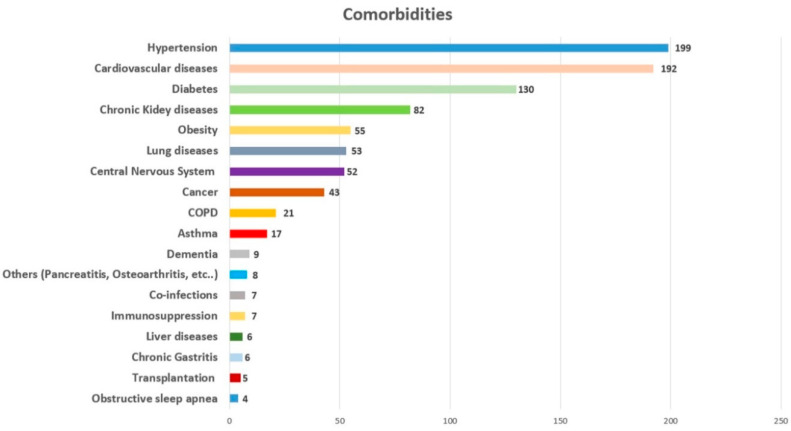
Despite safety recommendations for the management of corpses with COVID-19 infection and the high number of deaths worldwide, the post-mortem investigation rate is extremely low as well as the scientific contributions describing the pathological features. The first results of post-mortem investigations provided interesting findings and contributed to promoting unexplored therapeutic approaches and new frontiers of research. A systematic review is provided with the aim of summarizing all autopsy studies up to February 2020 in which a complete post-mortem investigation in patients with COVID-19 disease was performed, focusing on histopathological features. We included case reports, case series, retrospective and prospective studies, letters to the editor, and reviews. A total of 28 studies fulfilled the inclusion criteria, producing a pooled dataset of 407 full autopsies. Analyzing the medical history data, only 12 subjects had died without any comorbidities (for 15 cases the data were not available). The post-mortem investigation highlighted that acute respiratory distress syndrome (ARDS) and multiple organ failure represent the main clinical features of COVID-19 disease, often leading to pulmonary thromboembolism and superimposed bronchopneumonia. The discussed data showed a strict relationship among the inflammatory processes, diffuse alveolar, and endothelial damage. In light of these results, the full autopsy can be considered as the gold standard to investigate unknown infections or pathogens resulting in death.
Keywords: COVID-19; acute kidney injury (AKI); acute respiratory distress syndrome (ARDS); autopsy; cytokine storm; diffuse alveolar damage (DAD); microthrombosis.
Conflict of interest statement
The authors declare no conflict of interest.
References
-
- Centers for Disease Control and Prevention Collection and Submission of Postmortem Specimens from Deceased Persons with Known or Suspected COVID-19. [(accessed on 18 August 2020)]; Available online: https://eaaf.org/wp-content/uploads/covid19-PDFs/EEUU/CDC-guidance-postm....
-
- Osborn M., Lucas S.B., Stewart R., Swift B., Youd E. Autopsy Practice Relating to Possible Cases of COVID-19 (2019-nCov, Novel Coronavirus from China 2019/2020) [(accessed on 18 August 2020)]; Available online: https://www.rcpath.org/uploads/assets/d5e28baf-5789-4b0f-acecfe370eee622....
-
- Basso C., Calabrese F., Sbaraglia M., Del Vecchio C., Carretta G., Saieva A., Donato D., Flor L., Crisanti A., Tos A.P.D. Feasibility of postmortem examination in the era of COVID-19 pandemic: The experience of a Northeast Italy University Hospital. Virchows Arch. 2020;477:341–347. doi: 10.1007/s00428-020-02861-1. - DOI - PMC - PubMed
-
- Fineschi V., Aprile A., Aquila I., Arcangeli M., Asmundo A., Bacci M., Cingolani M., Cipolloni L., D’Errico S., de Casamassimi I., et al. Management of the corpse with suspect, probable or confirmed COVID-19 respiratory infection—Italian interim recommendations for personnel potentially exposed to material from corpses, including body fluids, in morgue structures, during autopsy practice. Pathol. J. Ital. Soc. Anat. Pathol. Diagn. Cytopathol. 2020;112:64–77. - PMC - PubMed
Publication types
LinkOut - more resources
Full Text Sources
Miscellaneous
