. 2020 Oct 23;20(21):6031.
doi: 10.3390/s20216031.

Internet of Things and Machine Learning for Healthy Ageing: Identifying the Early Signs of Dementia

Affiliations

Internet of Things and Machine Learning for Healthy Ageing: Identifying the Early Signs of Dementia

Farhad Ahamed et al. Sensors (Basel). .

Abstract

Identifying the symptoms of the early stages of dementia is a difficult task, particularly for older adults living in residential care. Internet of Things (IoT) and smart environments can assist with the early detection of dementia, by nonintrusive monitoring of the daily activities of the older adults. In this work, we focus on the daily life activities of adults in a smart home setting to discover their potential cognitive anomalies using a public dataset. After analysing the dataset, extracting the features, and selecting distinctive features based on dynamic ranking, a classification model is built. We compare and contrast several machine learning approaches for developing a reliable and efficient model to identify the cognitive status of monitored adults. Using our predictive model and our approach of distinctive feature selection, we have achieved 90.74% accuracy in detecting the onset of dementia.

Keywords: IoT in dementia care; IoT in healthcare; dementia; dementia and smart environment; internet of things; machine learning.


Conflict of interest statement

The authors declare no conflict of interest.

Figures
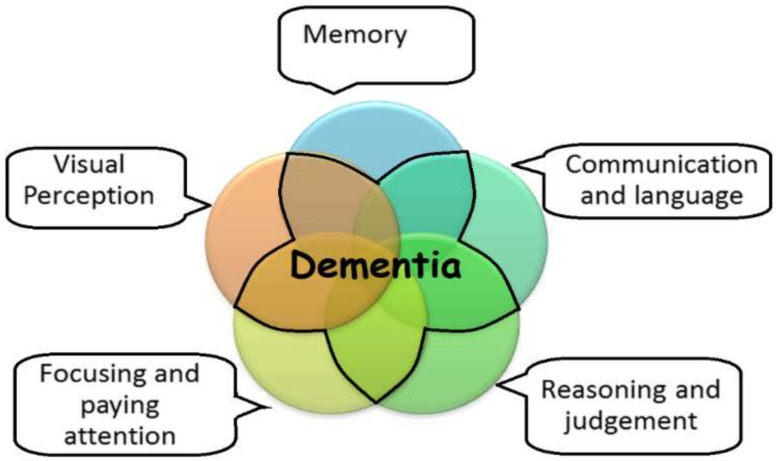
Figure 1
Figure 1
Five core symptomatic areas linked to dementia.
Figure 2
Figure 2
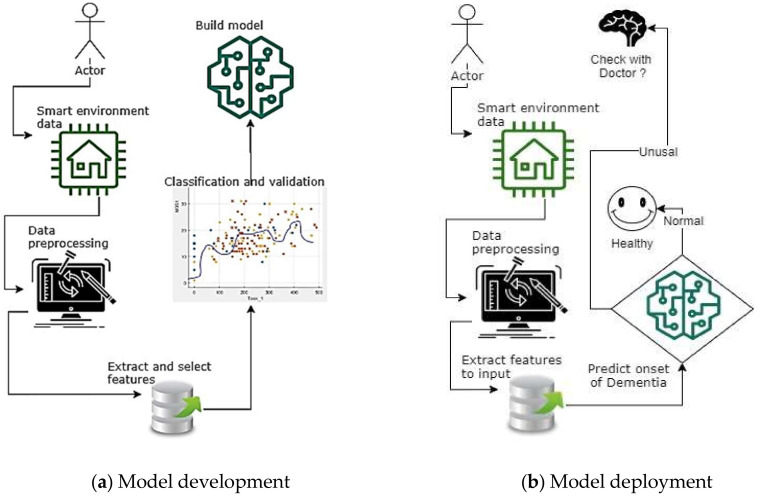
Flowchart of the system to identify the onset of dementia.
Figure 3
Figure 3
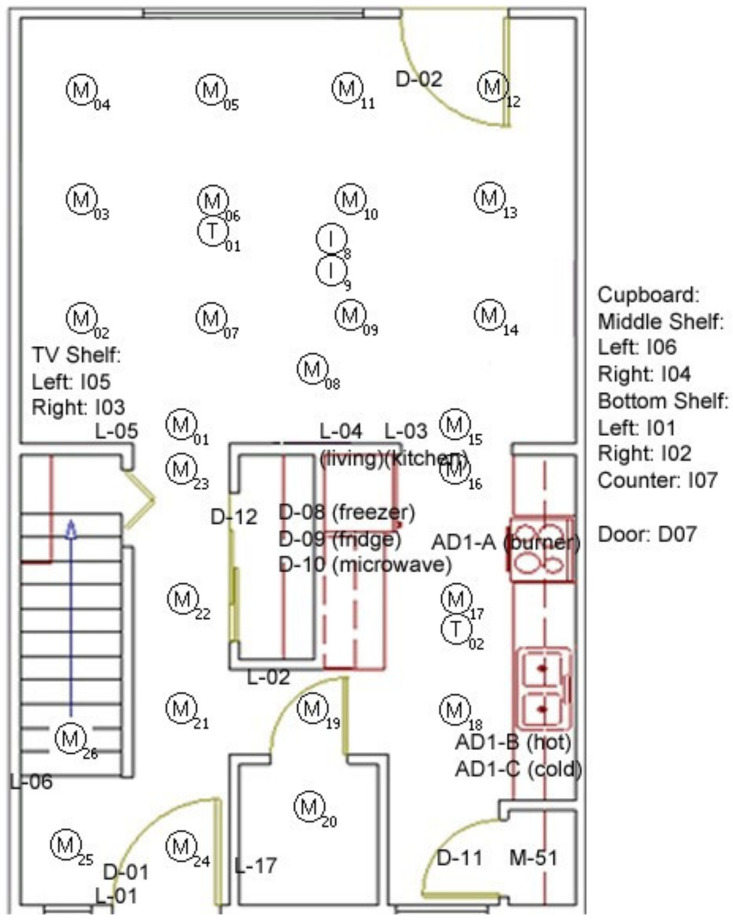
Layout of the IoT sensors in CASAS dataset.
Figure 4
Figure 4
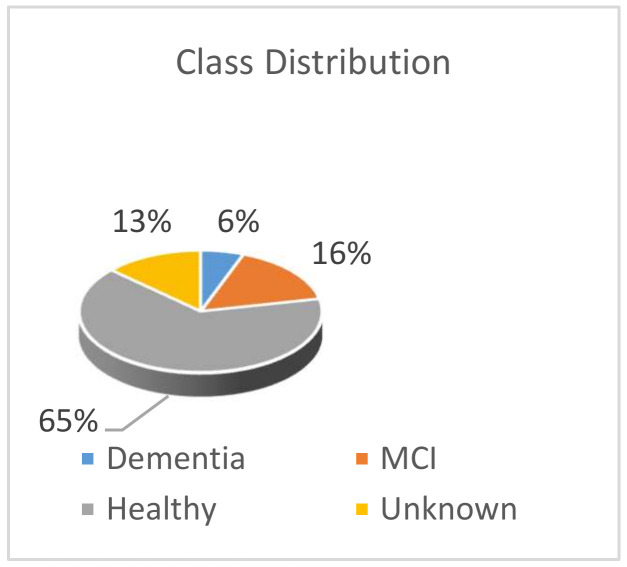
CASAS data class distribution of total participants.
Figure 5
Figure 5
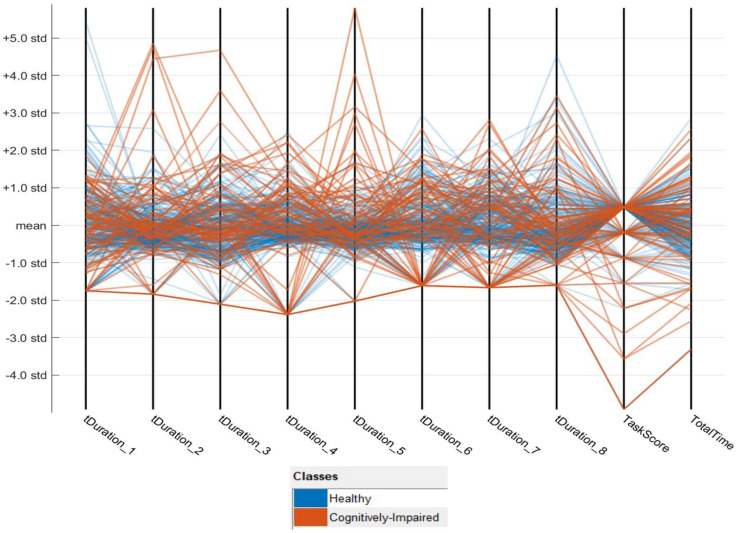
Parallel coordinates plot of cognitively impaired vs healthy using standard deviation.
Figure 6
Figure 6
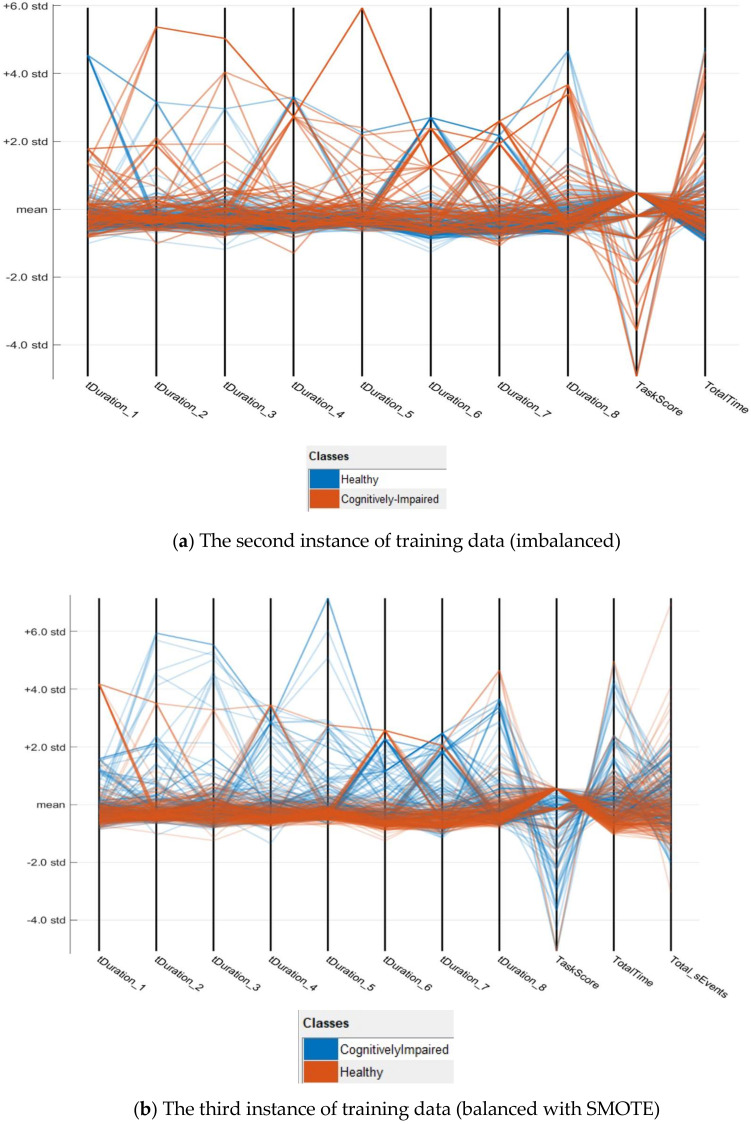
Parallel coordinates plots of cognitively impaired vs. healthy using standard deviation after replacing the missing values. (a) The second instance of training data (imbalanced) (b) The third instance of training data (balanced with SMOTE)
Figure 7
Figure 7
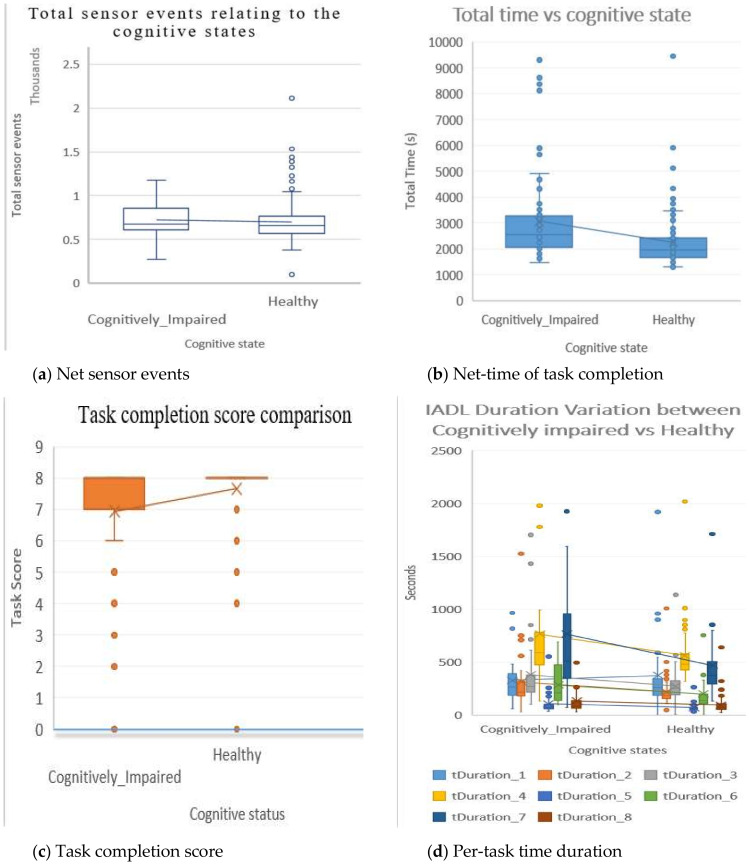
Patterns in the dataset on various parameters. (a) Net sensor events; (b) Net-time of task completion (c) Task completion score (d) Per-task time duration
Figure 8
Figure 8
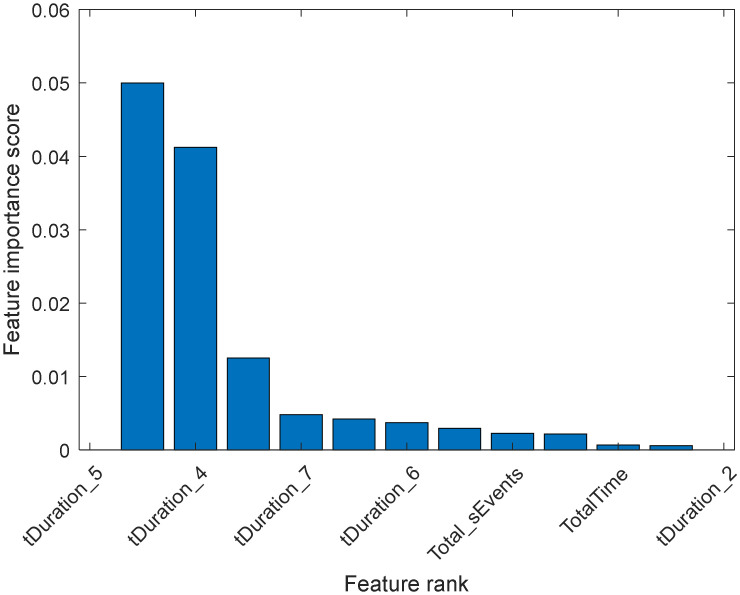
Feature ranking amongst pre-selected features.
Figure 9
Figure 9
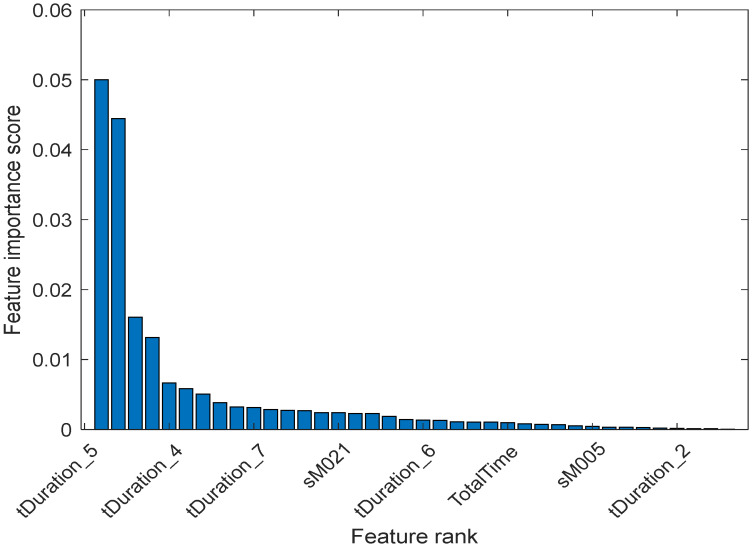
All the feature ranking based on importance score.

References

    1. Moradi E., Pepe A., Gaser C., Huttunen H., Tohka J. Alzheimer’s Disease Neuroimaging Initiative. Machine learning framework for early MRI-based Alzheimer’s conversion prediction in MCI subjects. Neuroimage. 2015;104:398–412. doi: 10.1016/j.neuroimage.2014.10.002. - DOI - PMC - PubMed
    1. Adeli H., Ghosh-Dastidar S., Dadmehr N. A spatio-temporal wavelet-chaos methodology for EEG-based diagnosis of Alzheimer’s disease. Neurosci. Lett. 2008;444:190–194. doi: 10.1016/j.neulet.2008.08.008. - DOI - PubMed
    1. Cichocki A., Shishkin S.L., Musha T., Leonowicz Z., Asada T., Kurachi T. EEG filtering based on blind source separation (BSS) for early detection of Alzheimer’s disease. Clin. Neurophysiol. 2005;116:729–737. doi: 10.1016/j.clinph.2004.09.017. - DOI - PubMed
    1. Jack C.R., Petersen R.C., Xu Y.C., O’Brien P.C., Smith G.E., Ivnik R.J., Boeve B.F., Waring S.C., Tangalos E.G., Kokmen E. Prediction of AD with MRI-based hippocampal volume in mild cognitive impairment. Neurology. 1999;52:1397. doi: 10.1212/WNL.52.7.1397. - DOI - PMC - PubMed
    1. Kim K.-J., Hassan M.M., Na S.-H., Huh E.-N. Dementia wandering detection and activity recognition algorithm using tri-axial accelerometer sensors; Proceedings of the 4th International Conference on Ubiquitous Information Technologies & Applications; Fukuoka, Japan. 20–22 December 2009; pp. 1–5.