


Women's experiences of receiving a diagnosis of premenstrual dysphoric disorder: a qualitative investigation
- PMID: 33115437
- PMCID: PMC7594422
- DOI: 10.1186/s12905-020-01100-8
Women's experiences of receiving a diagnosis of premenstrual dysphoric disorder: a qualitative investigation
Abstract
Background: Premenstrual dysphoric disorder (PMDD) is a complex and disabling condition that affects women of reproductive age, characterised by severe physical and psychological symptoms that occur cyclically and remit following the onset of menses. As the psychological nature and consequences of PMDD often seem indistinguishable from symptoms of other mental health difficulties, this condition presents distinct diagnostic challenges for healthcare professionals. Therefore, this study aimed to explore women's experiences of both having PMDD and of receiving this diagnosis.
Methods: Participant recruitment took place in the United Kingdom during 2018. Seventeen women who had been diagnosed with PMDD by a medical specialist and met the clinical criteria for PMDD on the premenstrual symptoms screening tool were interviewed. The data from these semi-structured interviews were audio-recorded, transcribed and inductively analysed using reflexive thematic analysis.
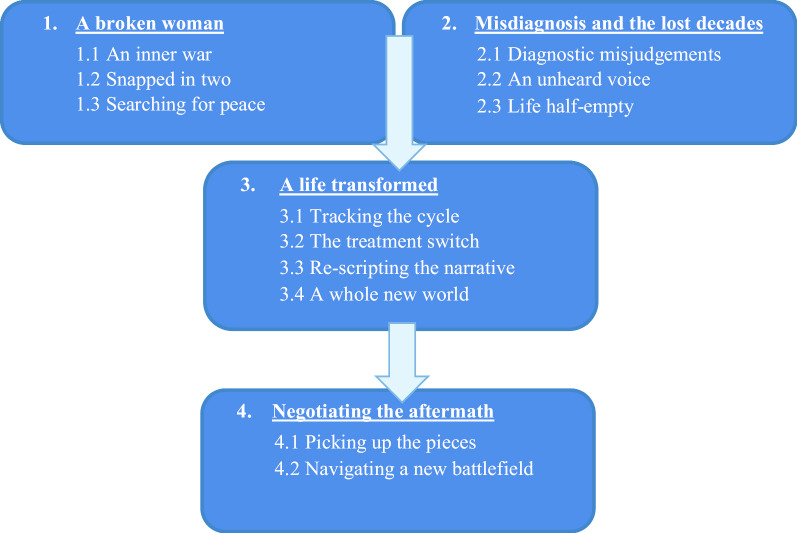
Results: Twelve subthemes were identified and organised around four main themes: (1) A broken woman, (2) Misdiagnosis and the lost decades, (3) A life transformed and (4) Negotiating the aftermath.
Conclusions: The findings of this study highlight the critical importance of the accurate and timely detection of PMDD, with the aim of preventing women from experiencing severe and prolonged psychological distress. In order to achieve this, there needs to be a greater understanding and awareness of PMDD within both the medical and lay communities, alongside training for healthcare practitioners in PMDD assessment.
Keywords: Misdiagnosis; PMDD; Qualitative methodology; Women’s health.
Conflict of interest statement
The authors declare that they have no competing interests.
Figures
References
-
- Salamat S, Ismail KM, O’Brien S. Premenstrual syndrome. J Reprod Med. 2008;18(2):29–32.
-
- Halbreich U, Borenstein J, Pearlstein T, Kahn LS. The prevalence, impairment, impact, and burden of premenstrual dysphoric disorder (PMS/PMDD) Psychoneuroendocrinology. 2003;28:1–23. - PubMed
MeSH terms
LinkOut - more resources
Full Text Sources
Medical
Research Materials
Miscellaneous
