. 2020 Oct 28;12(567):eabb7656.
doi: 10.1126/scitranslmed.abb7656.

A modified drug regimen clears active and dormant trypanosomes in mouse models of Chagas disease

Affiliations

A modified drug regimen clears active and dormant trypanosomes in mouse models of Chagas disease

Juan M Bustamante et al. Sci Transl Med. .

Abstract

A major contributor to treatment failure in Chagas disease, caused by infection with the protozoan parasite Trypanosoma cruzi, is that current treatment regimens do not address the drug insensitivity of transiently dormant T. cruzi amastigotes. Here, we demonstrated that use of a currently available drug in a modified treatment regimen of higher individual doses, given less frequently over an extended treatment period, could consistently extinguish T. cruzi infection in three mouse models of Chagas disease. Once per week administration of benznidazole at a dose 2.5 to 5 times the standard daily dose rapidly eliminated actively replicating parasites and ultimately eradicated the residual, transiently dormant parasite population in mice. This outcome was initially confirmed in "difficult to cure" mouse infection models using immunological, parasitological, and molecular biological approaches and ultimately corroborated by whole organ analysis of optically clarified tissues using light sheet fluorescence microscopy (LSFM). This tool was effective for monitoring pathogen load in intact organs, including detection of individual dormant parasites, and for assessing treatment outcomes. LSFM-based analysis also suggested that dormant amastigotes of T. cruzi may not be fully resistant to trypanocidal compounds such as benznidazole. Collectively, these studies provide important information on the phenomenon of dormancy in T. cruzi infection in mice, demonstrate methods to therapeutically override dormancy using a currently available drug, and provide methods to monitor alternative therapeutic approaches for this, and possibly other, low-density infectious agents.


Conflict of interest statement

Competing interests: The Authors declare no competing interests.

Figures

Fig. 1.
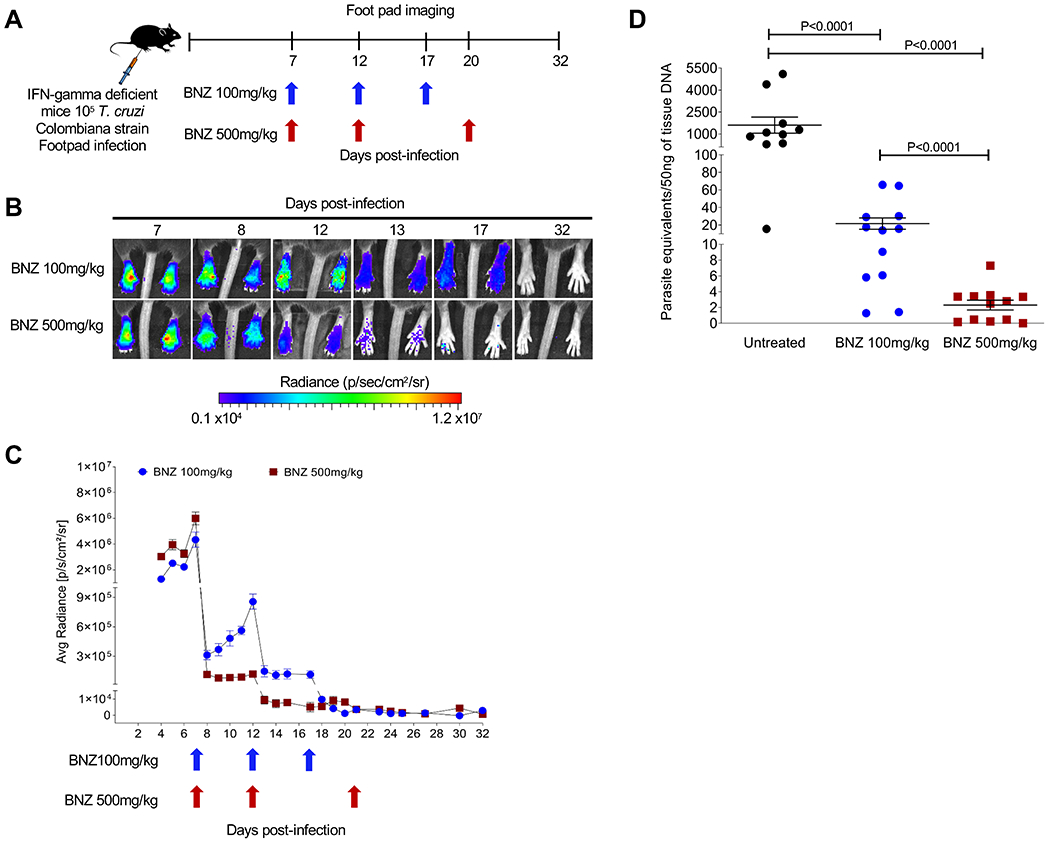
Fig. 1.. Effect of varying the frequency and dosage of BNZ administration on the control of T. cruzi infection in mice.
(A) Schematic of infection, treatment and footpad imaging. IFN-gamma deficient mice (5 mice in each group) were infected in the footpads with 105 trypomastigotes of the Luciferase-expressing Colombiana strain of T. cruzi and treated at indicated time points with either 100 or 500mg/kg oral BNZ. (B) Representative images showing footpad bioluminescent signal before and after treatment. The heat map is on a log10 scale and indicates the intensity of bioluminescence from low (blue) to high (red). (C) Parasite bioluminescence quantification following D-luciferin injection was measured at various times post-treatment in the footpads of mice infected and treated. Each data point represents the mean of 8 footpads bioluminescence from four mice expressed on a logarithmic scale. After subtraction of the background signal, the average radiance measurements (photons/second /cm2/sr) were quantified. Data are shown as mean ± standard error of the mean. (D) T. cruzi DNA determined by quantitative real time polymerase chain reaction in footpads of untreated or treated mice at 12 days post-infection (5 days post-treatment). C57BL/6 wild-type mice (10-12 mice in each group) were infected in the footpads with 103 trypomastigotes of the Brazil strain of T. cruzi and left untreated or treated at day 2 post-infection with a single dose of BNZ at 100 or 500mg/kg concentration. A statistically significant difference was set at p=0.05.
Fig. 2.
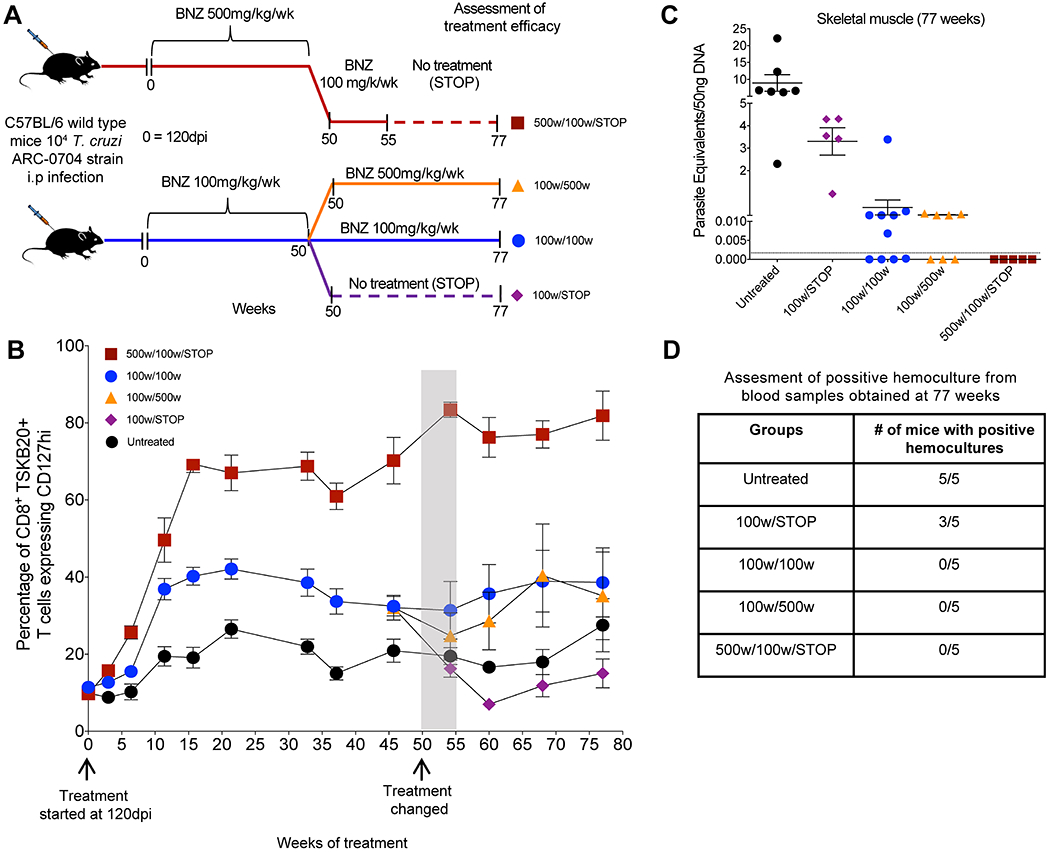
Fig. 2.. A weekly BNZ treatment regimen of 500 mg/kg cures mice chronically infected with T. cruzi.
(A) Schematic of infection, treatment and assessment of treatment efficacy. C57BL/6 wild-type mice (14-15 mice in each group) were infected intraperitoneally with 104 trypomastigotes of the ARC-0704 strain of T. cruzi and left untreated or treated weekly, starting at 120 days post-infection, with BNZ at 100 or 500mg/kg concentration over 50 weeks. At 50 weeks of treatment mice treated with 500mg/kg/wk were switched to a regimen of 100mg/kg/wk of BNZ from week 50 to 55, followed by a cessation of treatment at 55 weeks and termination of the experiment at week 77 (500w/100w/STOP). The mice receiving 100mg/kg/wk of BNZ were divided in three groups on week 50 of treatment; one group was switched to a 500mg/kg/wk of BNZ until week 77 (100w/500w); a second group continued with the same regimen of 100mg/kg/wk of BNZ until week 77 (100w/100w), and in the third group the 100mg/kg/wk treatment was stopped at week 55 (100w/STOP). In all the groups the experiment was terminated at 77 weeks of treatment. (B) Expression of the Tcm marker CD127 in blood on CD8+ TSKB20-tetramer+ T cells from mice untreated and undergoing different weekly treatment regimens. Data are shown as mean ± standard error of the mean. Arrows indicate the initiation of the treatment (120dpi= week 0) and week 50 where changes in the treatment regimens occurred for the treated groups (see description in A). The area in gray denotes 5 weeks corresponding to weeks 50-55 where the mice previously treated with BNZ at 500mg/kg/wk were switched to 100mg/kg/wk (see description in A). (C) T. cruzi DNA isolated from skeletal muscle of untreated or treated mice at 77 weeks from experiment depicted in (A-B) and assayed by qPCR. A statistically significant difference was set at p=0.05. (D) Blood from these mice collected at 77 weeks was submitted to hemoculture assays and analyzed for parasite growth for >60 days.
Fig. 3.
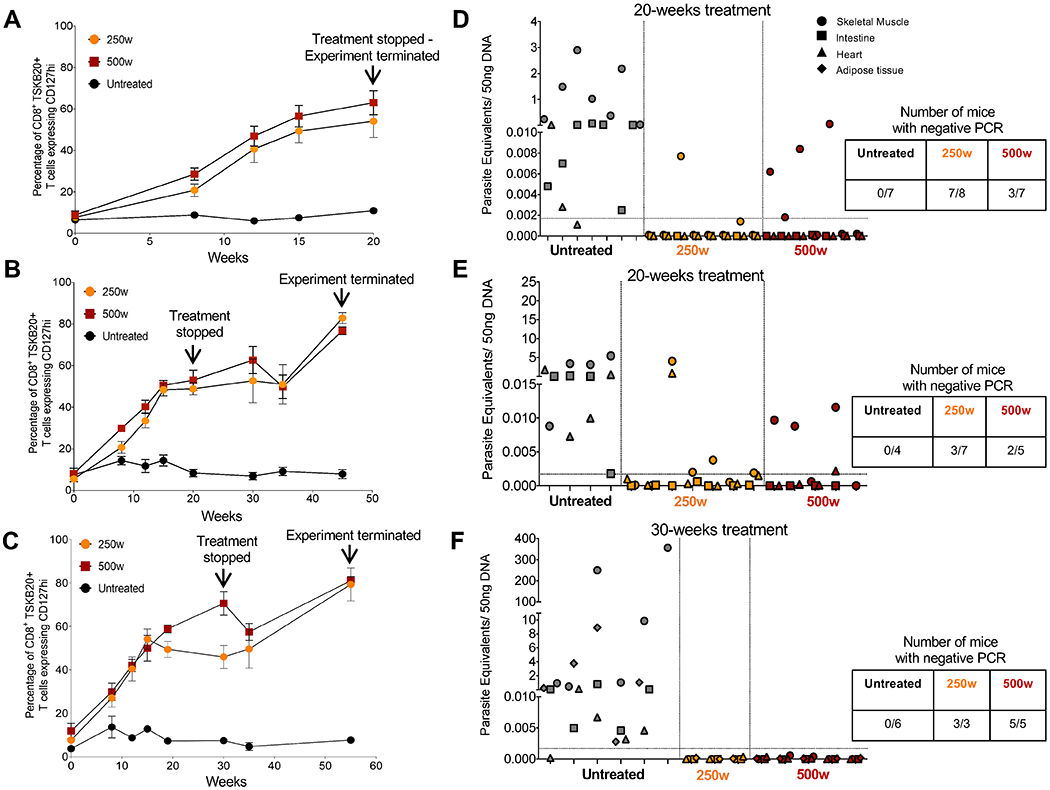
Fig. 3.. Curative effects of BNZ of weekly dosing using 2.5X - 5X the standard daily dose in chronic T. cruzi infection.
C57BL/6 wild-type mice (3-8 mice in each group) were infected intraperitoneally with 104 trypomastigotes of the Colombiana strain of T. cruzi and left untreated or treated weekly, starting at 180 days post-infection (day 0), with BNZ at 250 or 500mg/kg concentration over 20 (A, B, D, and E) or 30 weeks (C and F). Treatment was stopped at week 20 or 30 and assessment of treatment efficacy was carried out at week 20, 45 or 55 as indicated. (A-C) Expression of the Tcm marker CD127 on blood CD8+ TSKB20-tetramer+ T cells from mice untreated and treated with BNZ at 250 or 500mg/kg/wk. Data are shown as mean ± standard error of the mean. (D-F) Detection of T. cruzi DNA in samples of skeletal muscle, intestine, heart and adipose tissue of untreated or treated mice at 20, 45 and 55 weeks and assayed by qPCR. Each x-axis hash marks tissues from an individual animal.
Fig. 4.
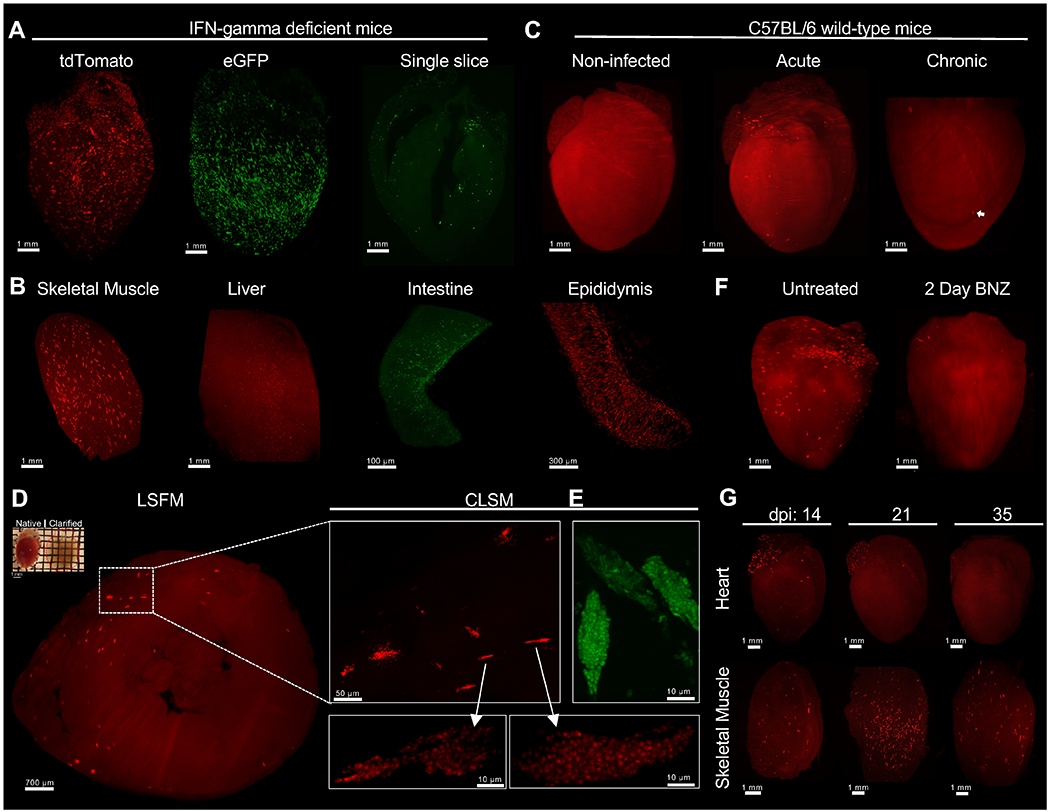
Fig. 4.. Light-sheet fluorescence microscopy enables T. cruzi infection tracking in whole-organs after CUBIC tissue clarification.
C57BL/6 wild-type or IFN-gamma-deficient mice were intraperitoneally infected with 2 ×10⁵ T. cruzi tdTomato-expressing Colombiana or eGFP-expressing Brazil strains. At different time points, mice were euthanized, perfused with PBS, PFA and CUBIC clarifying cocktails. After organ collection, clarification was continued using CUBIC reagents and finally prepared for LSFM imaging. (A and B) 3D reconstruction of IFN-gamma-deficient mice organs infected with tdTomato-expressing Colombiana (red) or eGFP-expressing Brazil (green) T. cruzi strains in the acute phase of the infection. A single optical slice of a clarified heart showing the detection of eGFP-expressing parasites (green) throughout the organ. Amastigote nests (bright red) can be differentiated from tissue-autofluorescence background (red). Low tissue autofluoresense was maintained to allow for the identification of complete organ morphology. (C) 3D reconstruction of the heart of C57BL/6 wild-type mice uninfected and infected with tdTomato-expressing Colombiana parasites in the acute and chronic phase of the infection. Arrow indicates an amastigote nest. (D) Confirmation of amastigote nests by confocal microscopy. A CUBIC-clarified heart from an acutely infected, IFN-gamma-deficient mouse (upper left) was sliced transversely in a 1mm slice and multiple z-stack images were obtained by LSFM. Enlarged region of interest (ROI) shows nests containing tdTomato or (E) eGFP-expressing amastigotes and trypomastigotes using CLSM. (F) C57BL/6 wild-type mice infected with 2 ×10⁵ tdTomato-expressing Colombiana strain trypomastigotes were left untreated or treated with 2 daily doses (on days 18 and 19 post infection) of BNZ at 100mg/kg concentration. On day 20 mice were euthanized, perfused and the heart was clarified and prepared for LSFM. (G) C57BL/6 wild-type mice were infected with 5 ×10⁵ T. cruzi tdTomato-expressing Colombiana strain trypomastigotes. On day 14, 21 and 35 post-infection, mice were euthanized, skeletal muscle and heart were excised and clarified.
Fig. 5.
Fig. 5.. Weekly doses of 500 mg/kg of BNZ is sufficient to eliminate T. cruzi in heart and skeletal muscle.
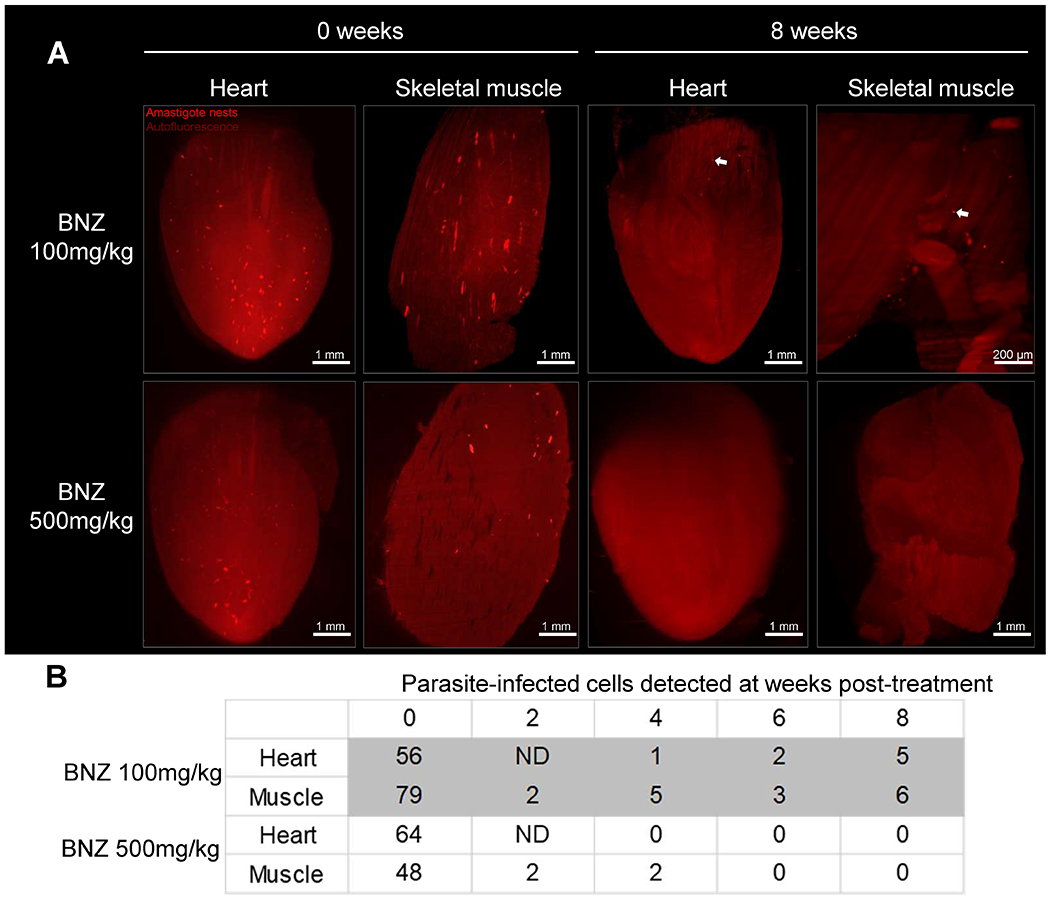
C57BL/6 wild-type mice were intraperitoneally infected with 4×10⁶ tdTomato-expressing Colombiana trypomastigotes of T. cruzi and treated weekly for 7 weeks, with 100 or 500 mg/kg of BNZ, starting at 5 days post-infection. At each indicated time point, one mouse per group was sacrificed, perfused and heart and skeletal muscle were dissected, clarified and scanned using LSFM. (A) 3D reconstructions of heart and skeletal muscle showing amastigote nests (red) in untreated (0 weeks) and treated (8 weeks) mice. Arrows indicate amastigote nests. (B) Automated quantification of total T. cruzi amastigote nests in tissue 3D reconstructions. ND = not determined.
Fig. 6.
Fig. 6.. Active and dormant parasites decline after weekly treatment with 500mg/kg of BNZ.
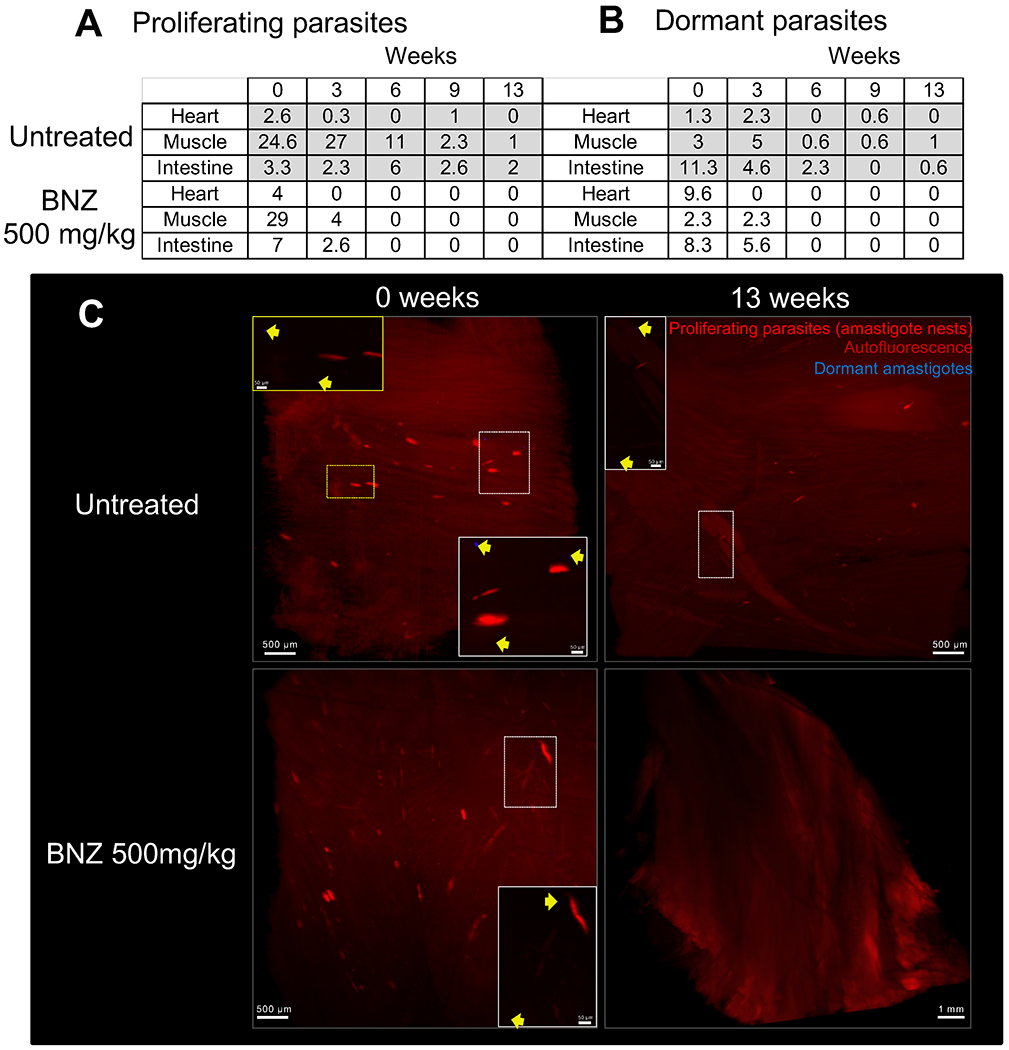
C57BL/6 wild-type mice (15 mice/group) were intraperitoneally infected with 4 ×10⁶ trypomastigotes of the tdTomato-expressing Colombiana strain of T. cruzi stained with DiR near-infrared dye. Mice were untreated or treated weekly, starting 37 days post-infection, with BNZ at 500mg/kg concentration over 12 weeks. On weeks 0, 3, 6, 9 and 13, 3 mice per group were euthanized and perfused. After dissection of the heart, muscle and intestine tissues were clarified and scanned by LSFM. (A) Automated quantification of total tdTomato-positive parasite nests in 3D reconstructions of the heart, skeletal muscle and intestine of mice untreated and treated with 500mg/kg of BNZ. The results correspond to the average number of nests in tissue samples from 3 individual mice (Table S1A). (B) Automated quantification of total DiR-positive dormant parasites. The results correspond to the average number of dormant parasites in tissue samples from 3 individual mice (Table S1B). (C) Representative 3D reconstructions of skeletal muscle showing tdTomato-positive parasite nests (red) and DiR-positive dormant individual amastigotes (blue) in untreated (0 weeks) and treated (13 weeks) mice. Yellow arrows indicate DiR-positive dormant amastigotes.

References

    1. Schofield CJ, Jannin J, Salvatella R, The future of Chagas disease control. Trends Parasitol 22, 583–588 (2006). - PubMed
    1. Hotez PJ, Molyneux DH, Fenwick A, Kumaresan J, Sachs SE, Sachs JD, Savioli L, Control of neglected tropical diseases. N Engl J Med 357, 1018–1027 (2007). - PubMed
    1. WHO, Chagas disease in Latin America: an epidemiological update based on 2010 estimates. WHO Weekly Epidemiological Record (WER) 90, 33–44 (2015). - PubMed
    1. Rodriques Coura J, de Castro SL, A critical review on Chagas disease chemotherapy. Memorias do Instituto Oswaldo Cruz 97, 3–24 (2002). - PubMed
    1. Urbina JA, Specific chemotherapy of Chagas disease: relevance, current limitations and new approaches. Acta tropica 115, 55–68 (2010). - PubMed

Publication types

Substances