


Multimorbidity of chronic non-communicable diseases in low- and middle-income countries: A scoping review
- PMID: 33117722
- PMCID: PMC7573723
- DOI: 10.1177/2235042X20961919
Multimorbidity of chronic non-communicable diseases in low- and middle-income countries: A scoping review
Abstract
Background: Multimorbidity is rising in low- and middle-income countries (LMICs). However, the evidence on its epidemiology from LMICs settings is limited and the available literature has not been synthesized as yet.
Objectives: To review the available evidence on the epidemiology of multimorbidity in LMICs.
Methods: PubMed, Scopus, PsycINFO and Grey literature databases were searched. We followed the PRISMA-ScR reporting guideline.
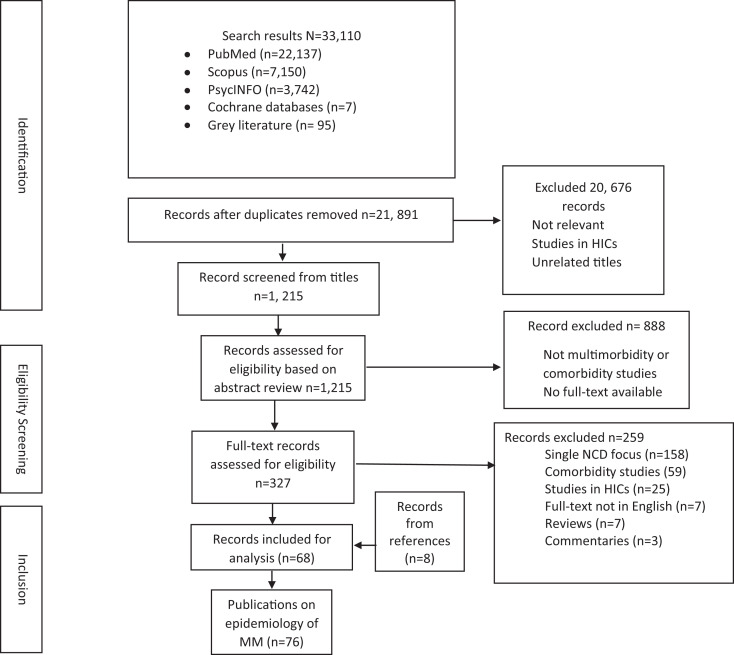
Results: Of 33, 110 articles retrieved, 76 studies were eligible for the epidemiology of multimorbidity. Of these 76 studies, 66 (86.8%) were individual country studies. Fifty-two (78.8%) of which were confined to only six middle-income countries: Brazil, China, South Africa, India, Mexico and Iran. The majority (n = 68, 89.5%) of the studies were crosssectional in nature. The sample size varied from 103 to 242, 952. The largest proportion (n = 33, 43.4%) of the studies enrolled adults. Marked variations existed in defining and measuring multimorbidity. The prevalence of multimorbidity in LMICs ranged from 3.2% to 90.5%.
Conclusion and recommendations: Studies on the epidemiology of multimorbidity in LMICs are limited and the available ones are concentrated in few countries. Despite variations in measurement and definition, studies consistently reported high prevalence of multimorbidity. Further research is urgently required to better understand the epidemiology of multimorbidity and define the best possible interventions to improve outcomes of patients with multimorbidity in LMICs.
Keywords: LMICs; Multimorbidity; epidemiology; scoping.
© The Author(s) 2020.
Conflict of interest statement
Declaration of conflicting interests: The author(s) declared no potential conflicts of interest with respect to the research, authorship, and/or publication of this article.
Figures
References
-
- Aiden H. Multimorbidity. Understanding the challenge. A report for the Richmond Group of Charities. Report, January 2018.
-
- WHO. Multimorbidity: technical series on safer primary care. Geneva: World Health Organization, 2016.
Publication types
Grants and funding
LinkOut - more resources
Full Text Sources
