


Tumor necrosis factor antagonists for paradoxical inflammatory reactions in the central nervous system tuberculosis: Case report and review
- PMID: 33120751
- PMCID: PMC7581161
- DOI: 10.1097/MD.0000000000022626
Tumor necrosis factor antagonists for paradoxical inflammatory reactions in the central nervous system tuberculosis: Case report and review
Abstract
Rationale: Paradoxical reaction/immune reconstitution inflammatory syndrome is common in patients with central nervous system tuberculosis. Management relies on high-dose corticosteroids and surgery when feasible.
Patient concern: We describe 2 cases of HIV-negative patients with corticosteroid-refractory paradoxical reactions of central nervous system tuberculosis.
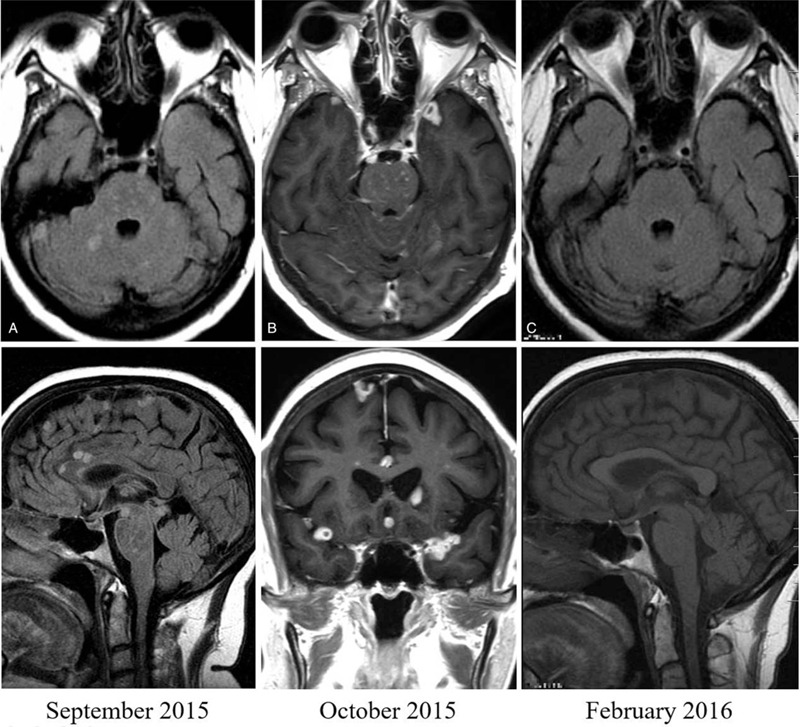
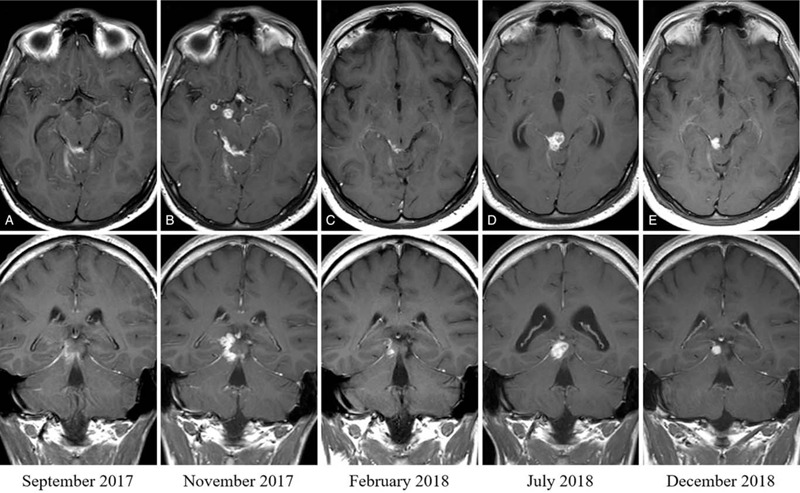
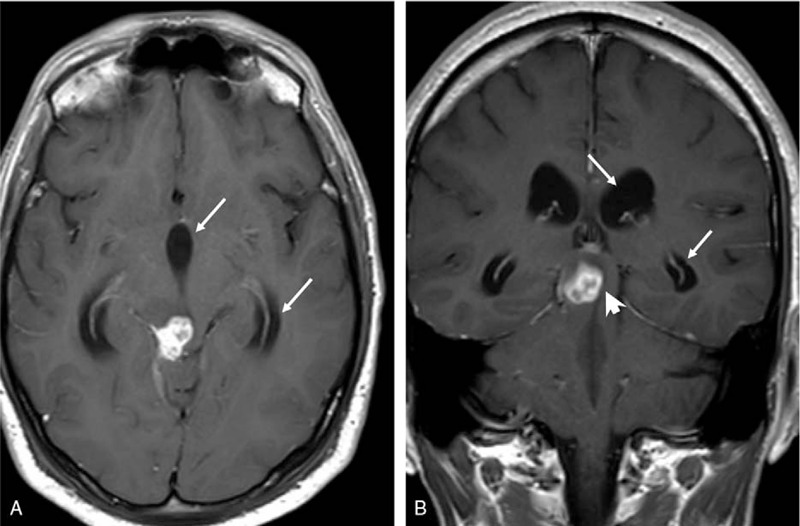
Diagnoses: The 2 patients experienced clinical impairment shortly after starting therapy for TB, and magnetic resonance imaging showed the presence of tuberculomas, leading to the diagnosis of a paradoxical reaction.
Interventions: We added infliximab, an anti-tumor necrosis factor (TNF)-alpha monoclonal antibody, to the dexamethasone.
Outcomes: Both patients had favorable outcomes, 1 achieving full recovery but 1 suffering neurologic sequelae.
Lessons: Clinicians should be aware of the risk of paradoxical reactions/immune reconstitution inflammatory syndrome when treating patients with tuberculosis of the central nervous system and should consider the prompt anti-TNF-α agents in cases not responding to corticosteroids.
Conflict of interest statement
The authors do not have conflicts of interests to disclose.
Figures
References
-
- Thwaites GE, van Toorn R, Schoeman J. Tuberculous meningitis: more questions, still too few answers. Lancet Neurol 2013;12:999–1010. - PubMed
-
- Pepper DJ, Marais S, Maartens G, et al. Neurologic manifestations of paradoxical tuberculosis-associated immune reconstitution inflammatory syndrome: a case series. Clin Infect Dis 2009;48:e96–107. - PubMed
-
- Pfeffer K. Biological functions of tumor necrosis factor cytokines and their receptors. Cytokine Growth Factor Rev 2003;14:185–91. - PubMed
-
- Babu GN, Kumar A, Kalita J, et al. Proinflammatory cytokine levels in the serum and cerebrospinal fluid of tuberculous meningitis patients. Neurosci Lett 2008;436:48–51. - PubMed
Publication types
MeSH terms
Substances
LinkOut - more resources
Full Text Sources
