


Does acute promyelocytic leukemia patient with the STAT5B/RARa fusion gene respond well to decitabine?: A case report and literature review
- PMID: 33120845
- PMCID: PMC7581092
- DOI: 10.1097/MD.0000000000022923
Does acute promyelocytic leukemia patient with the STAT5B/RARa fusion gene respond well to decitabine?: A case report and literature review
Abstract
Rationale: Most acute promyelocytic leukemia (APL) patients respond to all-trans-retinoic acid (ATRA)and have a good prognosis. However, variants APL who carry PLZF/RARа, STAT5B/RARа, and STAT3/RARа are insensitive to ATRA and have poor prognoses. The standard treatment for variants APL is still unclear due to the small sample size.
Patient concerns: Here we reported a Chinese male who was admitted to our hospital with the complaint of rib pain, dyspnea, and fever (37.5°C). Blood tests showed leukopenia (1.83 × 10/L), anemia (hemoglobin 73 g/L), and thrombocytopenia (54 × 10/L). Prothrombin time and activated partial thromboplastin time were normal.
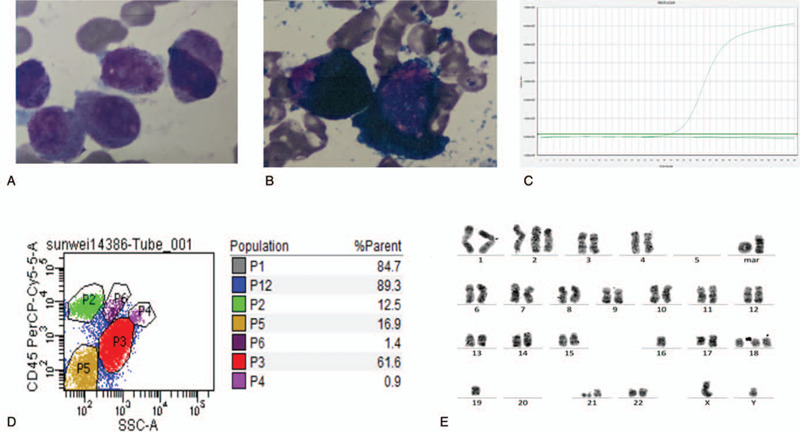
Diagnoses: The patient was diagnosed as STAT5b-RARa-positive APL based on the clinical and laboratory findings.
Interventions: ATRA was used immediately for induction treatment, then he was treated with ATRA + arsenic trioxide and got the severe cardiac insufficiency. Subsequently, consolidation chemotherapy was added with ATRA + Huangdai tablets + idarubicin and decitabine, cytarabine, aclamycin (DCAG).
Outcomes: The patient relapsed soon after his first molecular complete remission (CRm), fortunately, he got a second CRm with DCAG. He has survived for more than 9 months and remains CRm, now he is looking for a suitable donor to prepare for hematopoietic stem cell transplantation (HSCT).
Lessons: APL patients with STAT5B-RARa is not only resistant to ATRA, but also to conventional combination chemotherapy such as daunorubicin and cytarabine/idarubicin and cytarabine or other regimens. Relapse and extramedullary infiltration is common, HSCT is a effective treatment, and the best time for HSCT is after the first CR. It should be noted that this patient got CRm with DCAG after relapse, so the role of decitabine in APL with STAT5B-RARa needs to be considered.
Conflict of interest statement
The authors have no conflicts of interest to disclose.
Figures
References
-
- Tomita A, Kiyoi H, Naoe T. Mechanisms of action and resistance to all-trans retinoic acid (ATRA) and arsenic trioxide (As2O3) in acute promyelocytic leukemia. Int J Hematol 2013;97:717–25. - PubMed
-
- Adams J, Nassiri M. Acute promyelocytic leukemia: a review and discussion of variant translocations. Arch Pathol Lab Med 2015;139:1308–13. - PubMed
-
- Arnould C, Philippe C, Bourdon V, et al. The signal transducer and activator of transcription STAT5b gene is a new partner of retinoic acid receptor alpha in acute promyelocytic-like leukaemia. Hum Mol Genet 1999;8:1741–9. - PubMed
-
- Strehl S, Konig M, Boztug H, et al. All-trans retinoic acid and arsenic trioxide resistance of acute promyelocytic leukemia with the variant STAT5B-RARA fusion gene. Leukemia 2013;27:1606–10. - PubMed
-
- Kusakabe M, Suzukawa K, Nanmoku T, et al. Detection of the STAT5B-RARА fusion transcript in acute promyelocytic leukemia with the normal chromosome 17 on G-banding. Eur J Haematol 2008;80:444–7. - PubMed
Publication types
MeSH terms
Substances
LinkOut - more resources
Full Text Sources
Miscellaneous
