


Antioxidants in Plants: A Valorization Potential Emphasizing the Need for the Conservation of Plant Biodiversity in Cuba
- PMID: 33121046
- PMCID: PMC7693031
- DOI: 10.3390/antiox9111048
Antioxidants in Plants: A Valorization Potential Emphasizing the Need for the Conservation of Plant Biodiversity in Cuba
Abstract
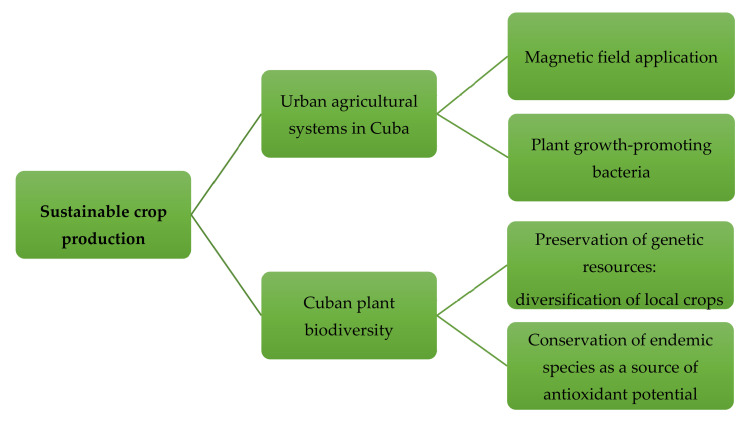
Plants are phytochemical hubs containing antioxidants, essential for normal plant functioning and adaptation to environmental cues and delivering beneficial properties for human health. Therefore, knowledge on the antioxidant potential of different plant species and their nutraceutical and pharmaceutical properties is of utmost importance. Exploring this scientific research field provides fundamental clues on (1) plant stress responses and their adaptive evolution to harsh environmental conditions and (2) (new) natural antioxidants with a functional versatility to prevent and treat human pathologies. These natural antioxidants can be valorized via plant-derived foods and products. Cuba contains an enormously rich plant biodiversity harboring a great antioxidant potential. Besides opening new avenues for the implementation of sustainable agroecological practices in crop production, it will also contribute to new strategies to preserve plant biodiversity and simultaneously improve nature management policies in Cuba. This review provides an overview on the beneficial properties of antioxidants for plant protection and human health and is directed to the valorization of these plant antioxidants, emphasizing the need for biodiversity conservation.
Keywords: Cuba; antioxidants; crop production; human health; nutraceutical; pharmaceutical; plant biodiversity; plant protection; secondary metabolites.
Conflict of interest statement
The authors declare no conflict of interest. The funders had no role in the design of the study; in the collection, analyses, or interpretation of data; in the writing of the manuscript, or in the decision to publish the results.
Figures
References
-
- Gou L., Zhuo C., Lu S., Guo Z. A Universal Stress Protein from Medicago falcata (MfUSP1) confers multiple stress tolerance by regulating antioxidant defense and proline accumulation. Environ. Exp. Bot. 2020;178:104168. doi: 10.1016/j.envexpbot.2020.104168. - DOI
Publication types
Grants and funding
LinkOut - more resources
Full Text Sources
