Stem Cells for the Regeneration of Tendon and Ligament: A Perspective
- PMID: 33122471
- PMCID: PMC7691853
- DOI: 10.15283/ijsc20091
Stem Cells for the Regeneration of Tendon and Ligament: A Perspective
Abstract
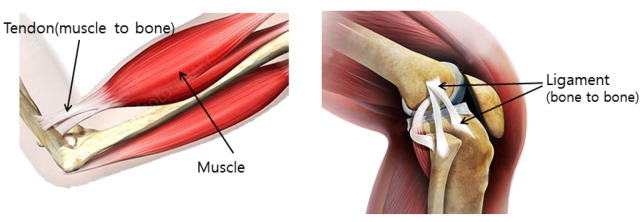
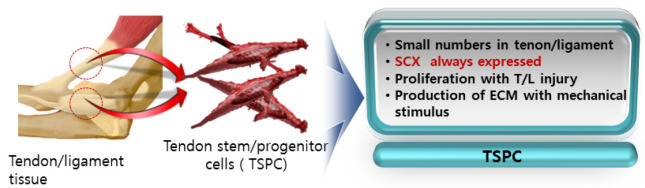
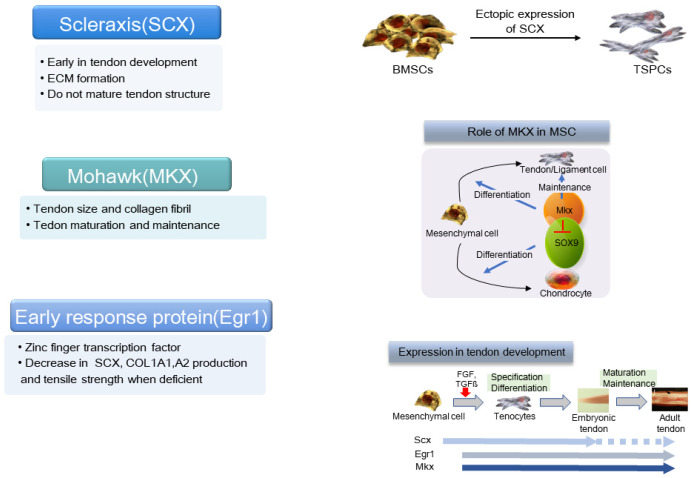
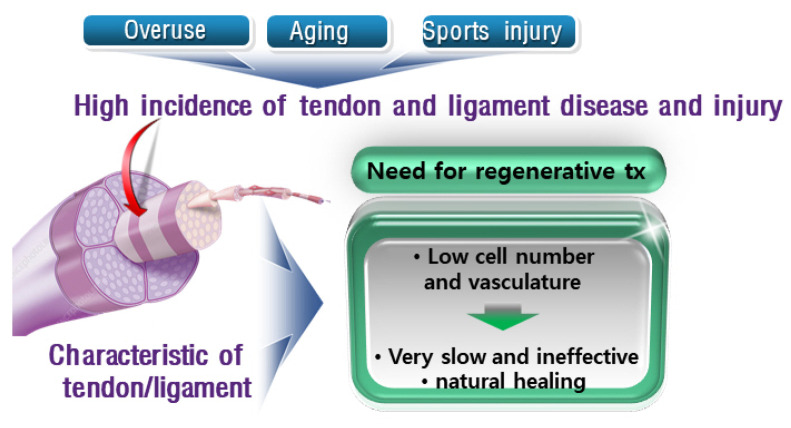
Tendons are structures that connect muscles to the bones in our body and transmit the force generated by contraction of the muscles to the bones. Ligaments are structures that connect bones to bones, with histological properties similar to tendons. In tendon and ligament tissue, there are very small amounts of cells similar to mesenchymal stem cells (MSCs) called tendon stem/progenitor cells (TSPCs), or tenogenic stem cells. While the role of specific growth factors and transcription factors is well established in the osteogenic and chondrogenic differentiation of stem cells, a consensus has not been established for tenogenic differentiation. Injuries to tendons and ligaments are very common, but natural healing is very slow and inefficient due to limited vascularization. Currently, there is no adequate method for restoring extensive tendon or ligament defects. Procedures addressing the unmet need for regeneration of these tissues are needed. In this review, the current knowledge, as well as the authors' ideas and perspective on stem cell and regenerative medicine for tendon and ligament defects are presented.
Keywords: Ligaments; Osteogenesis; Tendon stem/progenitor cells; Tendons; Tenogenesis.
Conflict of interest statement
The authors have no conflicting financial interest.
Figures
References
Publication types
LinkOut - more resources
Full Text Sources