


Immunesenescence: A Predisposing Risk Factor for the Development of COVID-19?
- PMID: 33123152
- PMCID: PMC7573102
- DOI: 10.3389/fimmu.2020.573662
Immunesenescence: A Predisposing Risk Factor for the Development of COVID-19?
Abstract
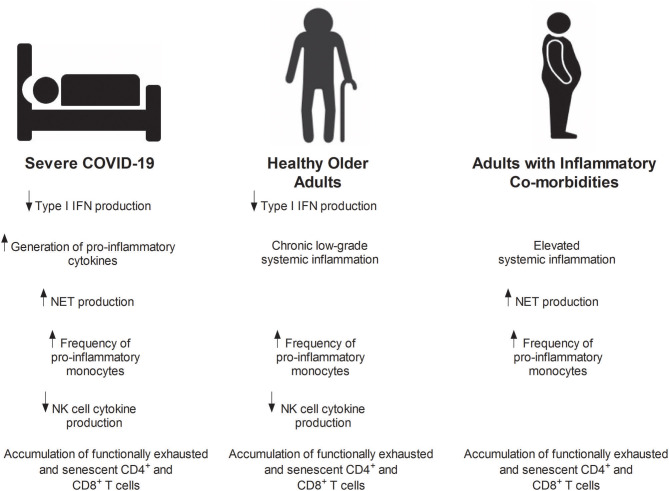
Bearing a strong resemblance to the phenotypic and functional remodeling of the immune system that occurs during aging (termed immunesenescence), the immune response to severe acute respiratory syndrome coronavirus 2 (SARS-CoV-2), the causative agent of Coronavirus disease 2019 (COVID-19), is characterized by an expansion of inflammatory monocytes, functional exhaustion of lymphocytes, dysregulated myeloid responses and the presence of highly activated senescent T cells. Alongside advanced age, male gender and pre-existing co-morbidities [e.g., obesity and type 2 diabetes (T2D)] are emerging as significant risk factors for COVID-19. Interestingly, immunesenescence is more profound in males when compared to females, whilst accelerated aging of the immune system, termed premature immunesenescence, has been described in obese subjects and T2D patients. Thus, as three distinct demographic groups with an increased susceptibility to COVID-19 share a common immune profile, could immunesenescence be a generic contributory factor in the development of severe COVID-19? Here, by focussing on three key aspects of an immune response, namely pathogen recognition, elimination and resolution, we address this question by discussing how immunesenescence may weaken or exacerbate the immune response to SARS-CoV-2. We also highlight how aspects of immunesenescence could render potential COVID-19 treatments less effective in older adults and draw attention to certain therapeutic options, which by reversing or circumventing certain features of immunesenescence may prove to be beneficial for the treatment of groups at high risk of severe COVID-19.
Keywords: COVID-19; SARS-Cov_2; aging; immune dysfunction; immunesenescence; inflammaging.
Copyright © 2020 Hazeldine and Lord.
Figures
References
-
- World Health Organisation Coronavirus Disease (COVID-19) Situation Report-14. (2020). Available online at: https://www.who.int/docs/default-source/coronaviruse/situation-reports/2.... (accessed June 17, 2020).
Publication types
MeSH terms
LinkOut - more resources
Full Text Sources
Miscellaneous
