. 2020:7:54.
doi: 10.20517/2347-9264.2020.150. Epub 2020 Oct 16.

Inflammation as an orchestrator of cutaneous scar formation: a review of the literature

Affiliations

Inflammation as an orchestrator of cutaneous scar formation: a review of the literature

Traci A Wilgus. Plast Aesthet Res. 2020.

Abstract

Inflammation is a key phase in the cutaneous wound repair process. The activation of inflammatory cells is critical for preventing infection in contaminated wounds and results in the release of an array of mediators, some of which stimulate the activity of keratinocytes, endothelial cells, and fibroblasts to aid in the repair process. However, there is an abundance of data suggesting that the strength of the inflammatory response early in the healing process correlates directly with the amount of scar tissue that will eventually form. This review will summarize the literature related to inflammation and cutaneous scar formation, highlight recent discoveries, and discuss potential treatment modalities that target inflammation to minimize scarring.

Keywords: Inflammation; macrophage; mast cell; neutrophil; scar; skin; wound healing.


Conflict of interest statement

Conflicts of interest The author declared that there are no conflicts of interest.

Figures
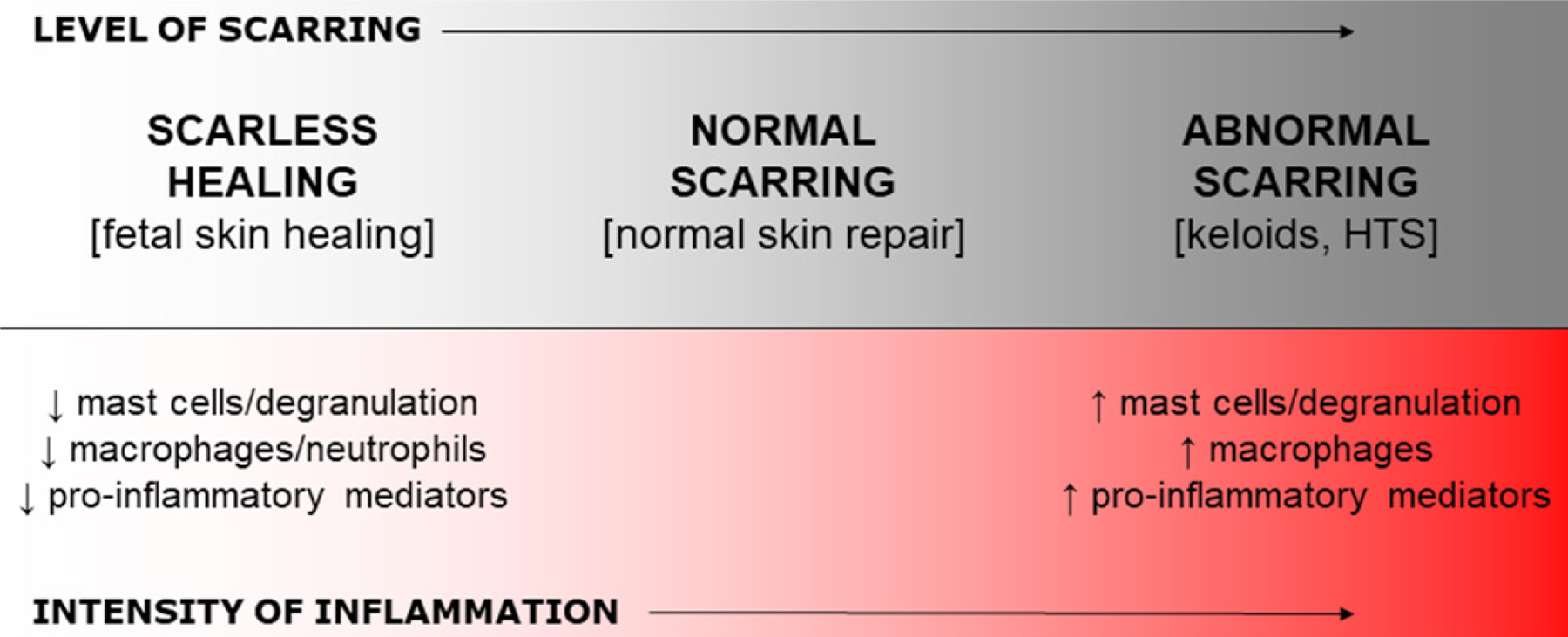
Figure 1.
Figure 1.
Summary of the relationship between scarring and inflammation. Most studies published to date indicate that the robustness of the inflammatory response resulting from skin injury correlates with the amount of scar tissue that will be produced, with low levels of inflammation in scarless wounds and high levels of inflammation in cases of abnormal or excessive scarring
Figure 2.
Figure 2.
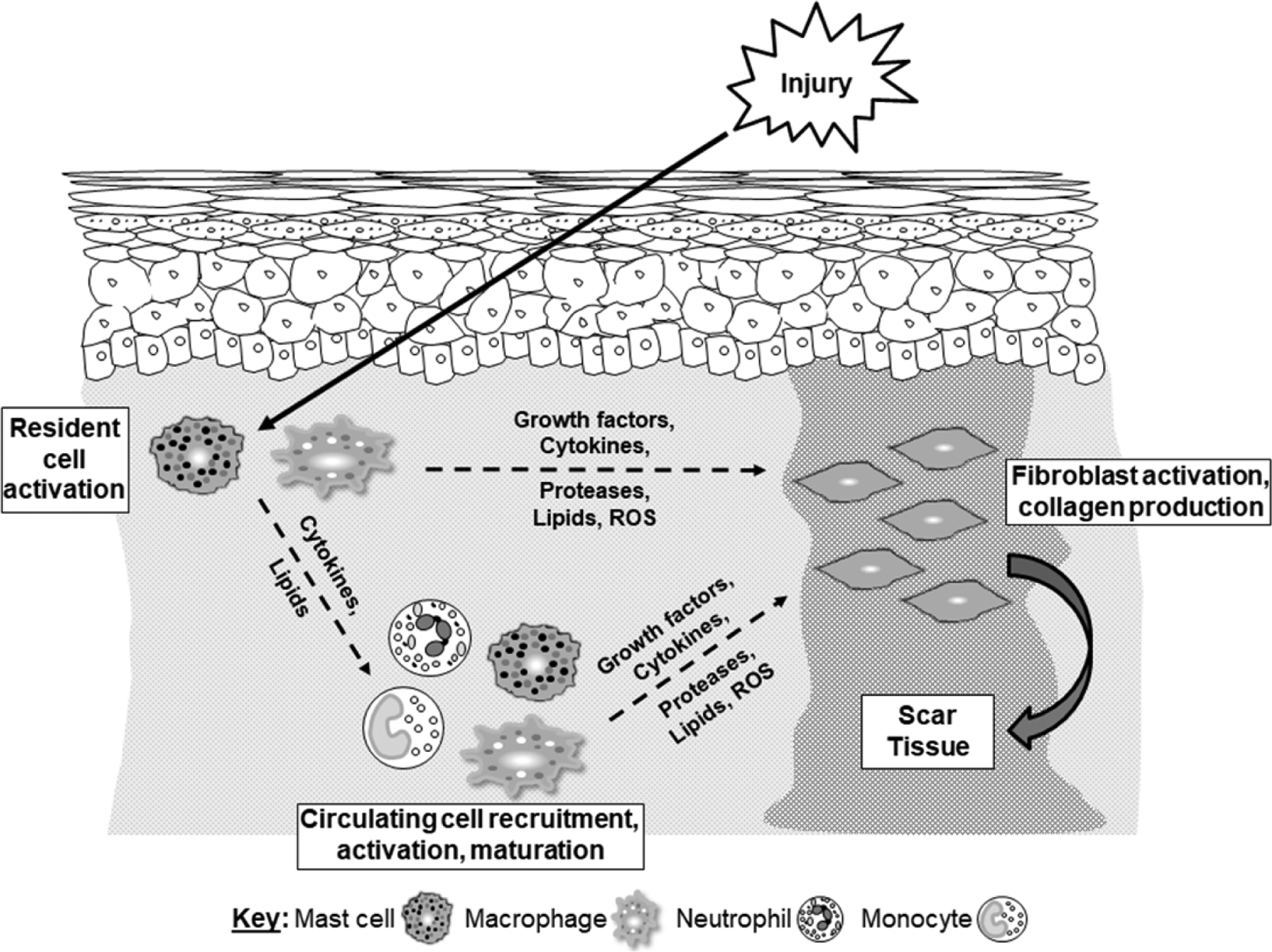
Summary of cellular interactions leading to cutaneous scar formation. When the skin is damaged, an inflammatory response is induced. Initially, resident inflammatory cells (e.g., mast cells and macrophages) in the dermis are activated. These activated cells secrete molecules that stimulate fibroblast activity and promote collagen production and scar tissue deposition. The resident cell-derived mediators, particularly cytokines (and chemokines) as well as lipids, stimulate the recruitment of circulating inflammatory cells (e.g., neutrophils, monocytes, and mast cell precursors) into the tissue. These cells become activated, and in some cases mature (monocytes become macrophages and mast cell precursors become mature mast cells), leading to even higher local levels of mediators that stimulate fibroblast activity and perpetuate scar tissue production. Several types of mediators produced by inflammatory cells have been linked to scar formation, including growth factors (TGF-β1), cytokines/chemokines [interleukin (IL)-6, IL-17, IL-33, MCP-1, SDF-1, OPN], proteases (mast cell chymase/tryptase, neutrophil elastase), lipids (PGE2), and reactive oxygen species or ROS (H2O2)

References

    1. Eming SA, Martin P, Tomic-Canic M. Wound repair and regeneration: mechanisms, signaling, and translation. Sci Transl Med 2014;6:265sr6. - PMC - PubMed
    1. Gurtner GC, Werner S, Barrandon Y, Longaker MT. Wound repair and regeneration. Nature 2008;453:314–21. - PubMed
    1. Martin P. Wound healing--aiming for perfect skin regeneration. Science 1997;276:75–81. - PubMed
    1. Aarabi S, Longaker MT, Gurtner GC. Hypertrophic scar formation following burns and trauma: new approaches to treatment. PLoS Med 2007;4:e234. - PMC - PubMed
    1. Corr DT, Gallant-Behm CL, Shrive NG, Hart DA. Biomechanical behavior of scar tissue and uninjured skin in a porcine model. Wound Repair Regen 2009;17:250–9. - PubMed

LinkOut - more resources