


Nivolumab and Ipilimumab in Metastatic Uveal Melanoma: Results From a Single-Arm Phase II Study
- PMID: 33125309
- PMCID: PMC8257877
- DOI: 10.1200/JCO.20.00605
Nivolumab and Ipilimumab in Metastatic Uveal Melanoma: Results From a Single-Arm Phase II Study
Abstract
Purpose: Metastatic uveal melanoma has poor overall survival (OS) and no approved systemic therapy options. Studies of single-agent immunotherapy regimens have shown minimal benefit. There is the potential for improved responses with the use of combination immunotherapy.
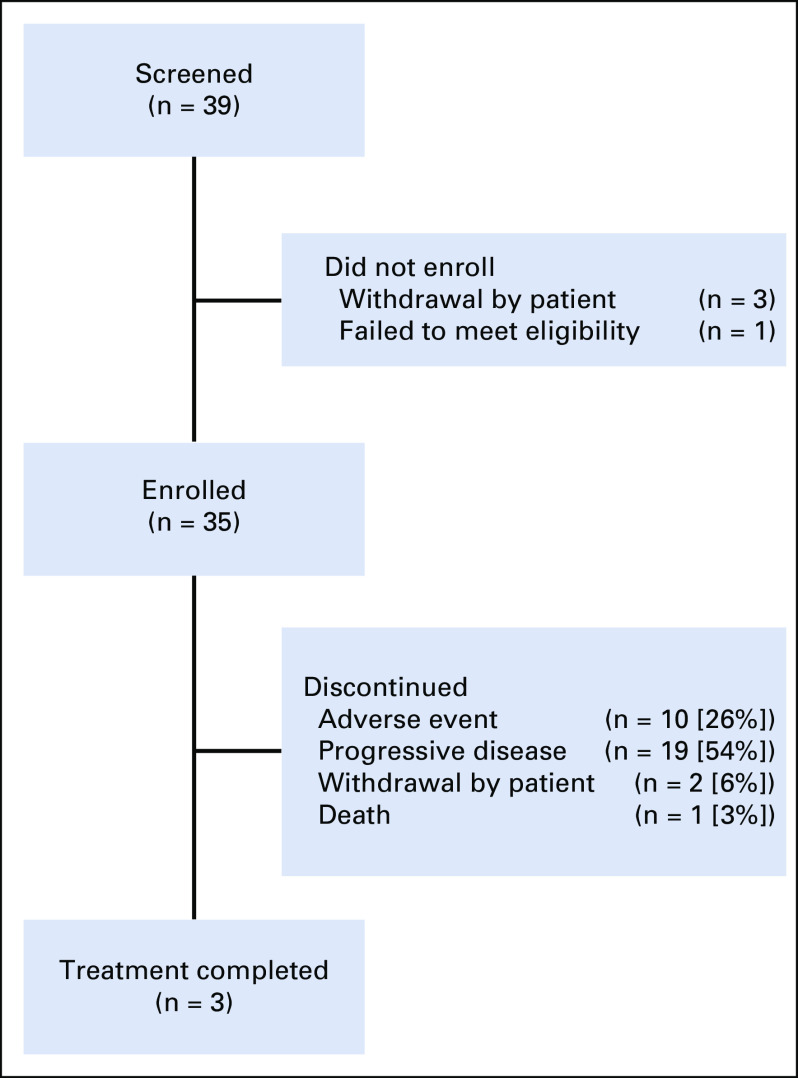
Patients and methods: We conducted a phase II study of nivolumab with ipilimumab in patients with metastatic uveal melanoma. Any number of prior treatments was permitted. Patients received nivolumab 1 mg/kg and ipilimumab 3 mg/kg for four cycles, followed by nivolumab maintenance therapy for up to 2 years. The primary outcome of the study was overall response rate (ORR) as determined by RECIST 1.1 criteria. Progression-free survival (PFS), OS, and adverse events were also assessed.
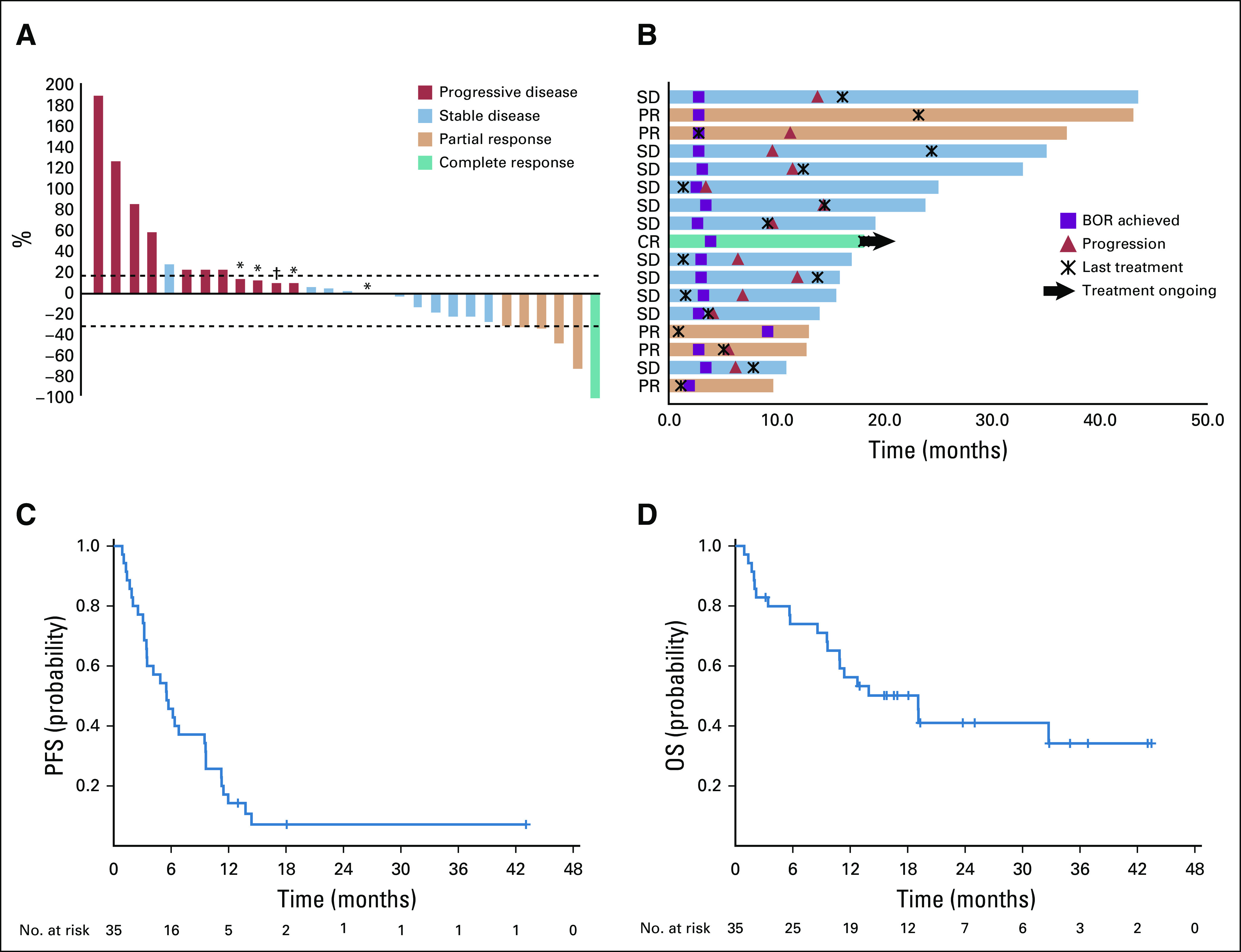
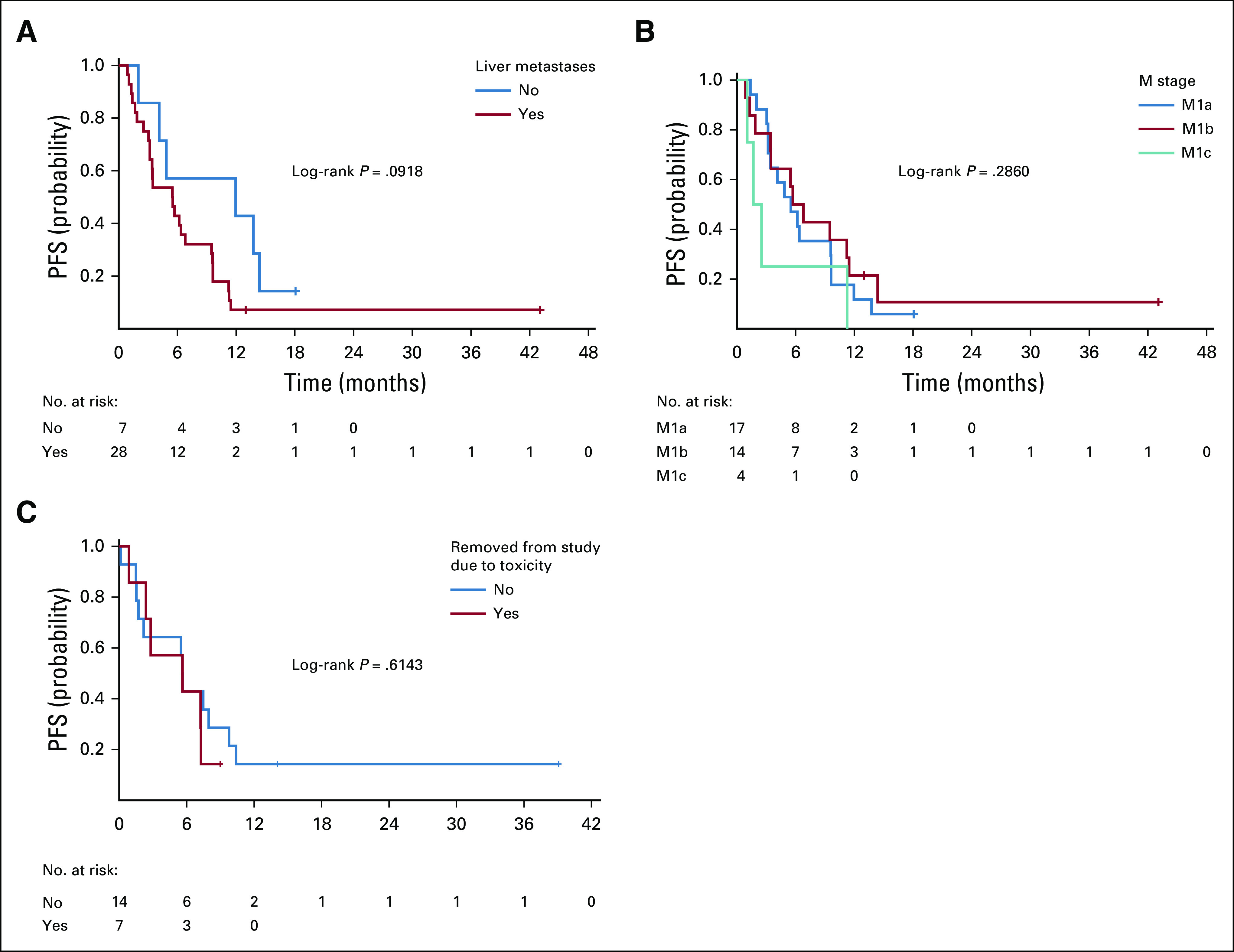
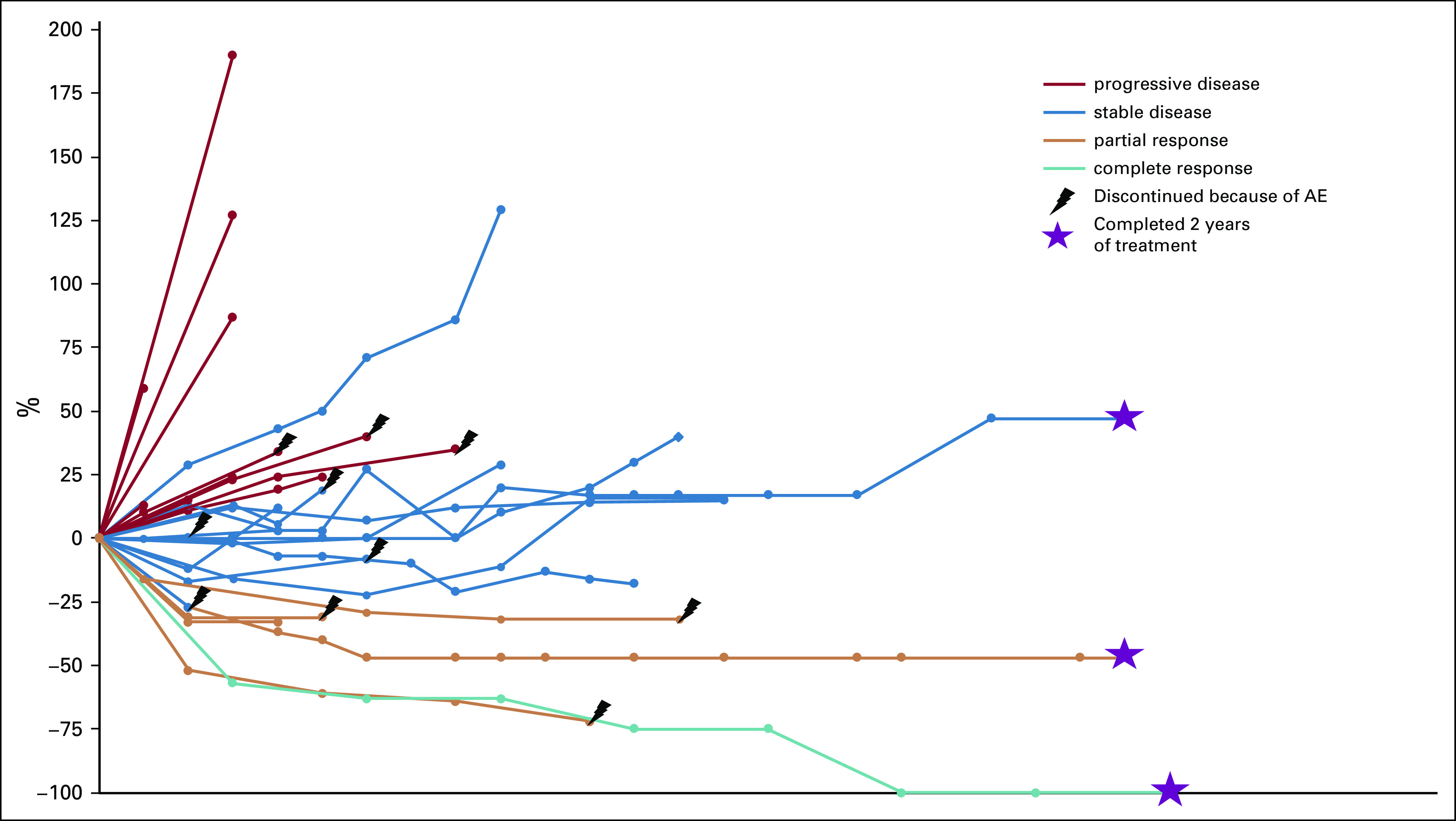
Results: Thirty-five patients were enrolled, and 33 patients were evaluable for efficacy. The ORR was 18%, including one confirmed complete response and five confirmed partial responses. The median PFS was 5.5 months (95% CI, 3.4 to 9.5 months), and the median OS was 19.1 months (95% CI, 9.6 months to NR). Forty percent of patients experienced a grade 3-4 treatment-related adverse event.
Conclusion: The combination regimen of nivolumab plus ipilimumab demonstrates activity in metastatic uveal melanoma, with deep and sustained confirmed responses.
Trial registration: ClinicalTrials.gov NCT01585194.
Figures
Comment in
-
Dual Immunological Checkpoint Blockade for Uveal Melanoma.J Clin Oncol. 2021 Feb 20;39(6):554-556. doi: 10.1200/JCO.20.03274. Epub 2021 Jan 8. J Clin Oncol. 2021. PMID: 33417487 No abstract available.
References
-
- Singh AD, Turell ME, Topham AK: Uveal melanoma: Trends in incidence, treatment, and survival. Ophthalmology 118:1881-1885, 2011 - PubMed
-
- McLaughlin CC, Wu XC, Jemal A, et al. : Incidence of noncutaneous melanomas in the U.S. Cancer 103:1000-1007, 2005 - PubMed
-
- Rietschel P, Panageas KS, Hanlon C, et al. : Variates of survival in metastatic uveal melanoma. J Clin Oncol 23:8076-8080, 2005 - PubMed
-
- Tsai KK, Bollin KB, Patel SP: Obstacles to improving outcomes in the treatment of uveal melanoma. Cancer 124:2693-2703, 2018 - PubMed
Publication types
MeSH terms
Substances
Associated data
Grants and funding
LinkOut - more resources
Full Text Sources
Other Literature Sources
Medical
