


Reviewing the current methods of assessing hydration in athletes
- PMID: 33126891
- PMCID: PMC7602338
- DOI: 10.1186/s12970-020-00381-6
Reviewing the current methods of assessing hydration in athletes
Abstract
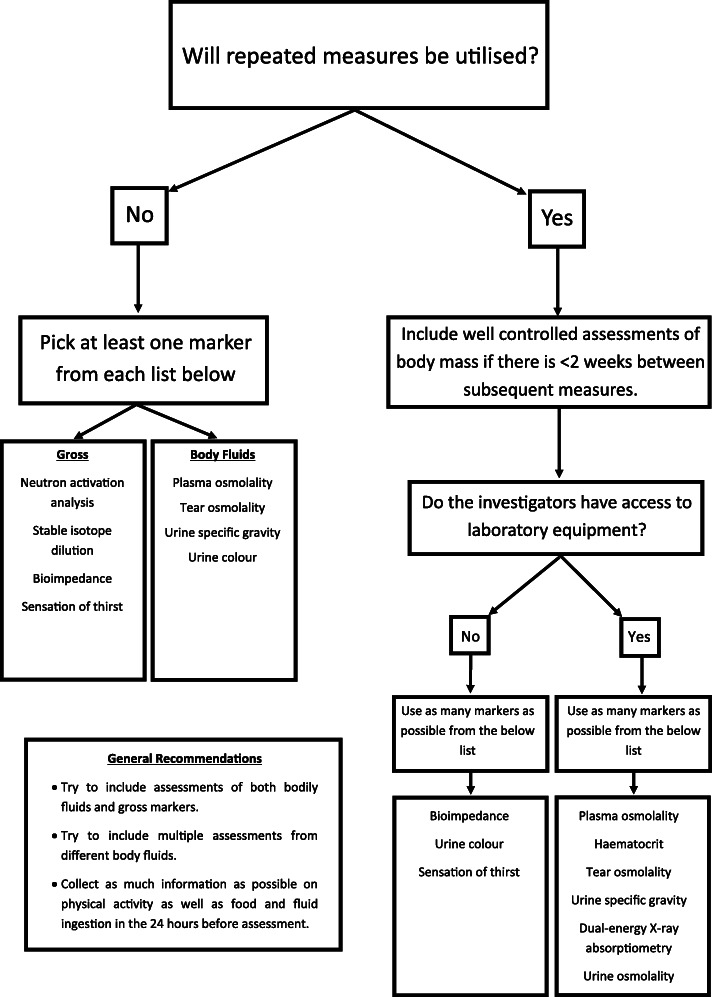
Background: Despite a substantial body of research, no clear best practice guidelines exist for the assessment of hydration in athletes. Body water is stored in and shifted between different sites throughout the body complicating hydration assessment. This review seeks to highlight the unique strengths and limitations of various hydration assessment methods described in the literature as well as providing best practice guidelines.
Main body: There is a plethora of methods that range in validity and reliability, including complicated and invasive methods (i.e. neutron activation analysis and stable isotope dilution), to moderately invasive blood, urine and salivary variables, progressing to non-invasive metrics such as tear osmolality, body mass, bioimpedance analysis, and sensation of thirst. Any single assessment of hydration status is problematic. Instead, the recommended approach is to use a combination, which have complementary strengths, which increase accuracy and validity. If methods such as salivary variables, urine colour, vital signs and sensation of thirst are utilised in isolation, great care must be taken due to their lack of sensitivity, reliability and/or accuracy. Detailed assessments such as neutron activation and stable isotope dilution analysis are highly accurate but expensive, with significant time delays due to data analysis providing little potential for immediate action. While alternative variables such as hormonal and electrolyte concentration, bioimpedance and tear osmolality require further research to determine their validity and reliability before inclusion into any test battery.
Conclusion: To improve best practice additional comprehensive research is required to further the scientific understanding of evaluating hydration status.
Keywords: Dehydration; Fluid; Hydration; Hypohydration; Water balance.
Conflict of interest statement
The authors declare that they have no competing interests.
Figures
References
-
- Horswill CA, Janas LM. Hydration and health. Am J Lifestyle Med. 2011;5(4):304–315. doi: 10.1177/1559827610392707. - DOI
-
- Cheuvront SN, Sawka MN. Hydration assessment of athletes. Sports Sci Exchange. 2005;18(2):1–6.
-
- Cheuvront SN, Kenefick RW. Dehydration: physiology, assessment, and performance effects. Compr Physiol. 2014;4:257–85. - PubMed
Publication types
MeSH terms
Substances
LinkOut - more resources
Full Text Sources
Medical
