


Long non-coding RNAs (lncRNAs) in spermatogenesis and male infertility
- PMID: 33126901
- PMCID: PMC7599102
- DOI: 10.1186/s12958-020-00660-6
Long non-coding RNAs (lncRNAs) in spermatogenesis and male infertility
Abstract
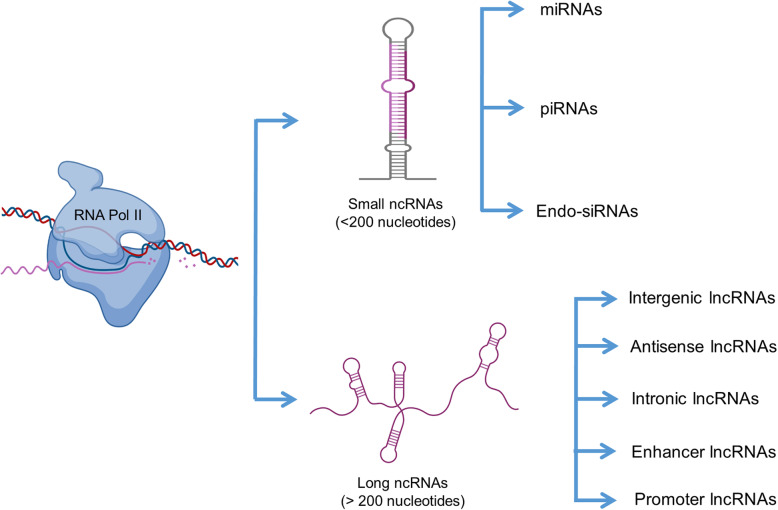
Background: Long non-coding RNAs (lncRNAs) have a size of more than 200 bp and are known to regulate a host of crucial cellular processes like proliferation, differentiation and apoptosis by regulating gene expression. While small noncoding RNAs (ncRNAs) such as miRNAs, siRNAs, Piwi-interacting RNAs have been extensively studied in male germ cell development, the role of lncRNAs in spermatogenesis remains largely unknown.
Objective: In this article, we have reviewed the biology and role of lncRNAs in spermatogenesis along with the tools available for data analysis.
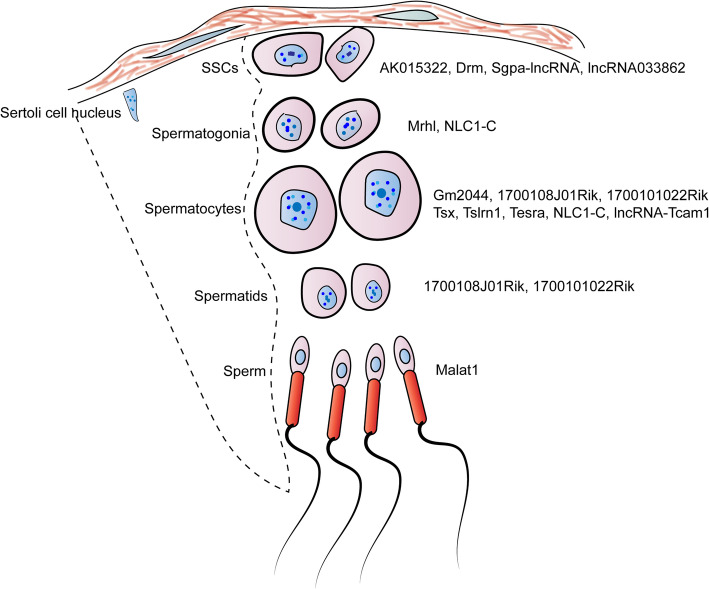
Results and conclusions: Till date, three microarray and four RNA-seq studies have been undertaken to identify lncRNAs in mouse testes or germ cells. These studies were done on pre-natal, post-natal, adult testis, and different germ cells to identify lncRNAs regulating spermatogenesis. In case of humans, five RNA-seq studies on different germ cell populations, including two on sperm, were undertaken. We compared three studies on human germ cells to identify common lncRNAs and found 15 lncRNAs (LINC00635, LINC00521, LINC00174, LINC00654, LINC00710, LINC00226, LINC00326, LINC00494, LINC00535, LINC00616, LINC00662, LINC00668, LINC00467, LINC00608, and LINC00658) to show consistent differential expression across these studies. Some of the targets of these lncRNAs included CENPB, FAM98B, GOLGA6 family, RPGR, TPM2, GNB5, KCNQ10T1, TAZ, LIN28A, CDKN2B, CDKN2A, CDKN1A, CDKN1B, CDKN1C, EZH2, SUZ12, VEGFA genes. A lone study on human male infertility identified 9879 differentially expressed lncRNAs with three (lnc32058, lnc09522, and lnc98497) of them showing specific and high expression in immotile sperm in comparison to normal motile sperm. A few lncRNAs (Mrhl, Drm, Spga-lncRNAs, NLC1-C, HongrES2, Tsx, LncRNA-tcam1, Tug1, Tesra, AK015322, Gm2044, and LncRNA033862) have been functionally validated for their roles in spermatogenesis. Apart from rodents and humans, studies on sheep and bull have also identified lncRNAs potentially important for spermatogenesis. A number of these non-coding RNAs are strong candidates for further research on their roles in spermatogenesis.
Keywords: Long non-coding RNA; Male infertility; Spermatogenesis; Transcriptome; lncRNA; lncRNA databases; lncRNA regulation.
Conflict of interest statement
All authors have declared to have no competing interests.
Figures
References
-
- Hombach S, Kretz M. Non-coding RNAs: Classification, Biology and Functioning. In: Slaby O., Calin G. (eds) Non-coding RNAs in Colorectal Cancer. Advances in Experimental Medicine and Biology. Cham Springer; 2016;937. - PubMed
Publication types
MeSH terms
Substances
Grants and funding
LinkOut - more resources
Full Text Sources
Medical
Research Materials
Miscellaneous
