


COVID-19-related treatment service disruptions among people with single- and polysubstance use concerns
- PMID: 33127196
- PMCID: PMC7577266
- DOI: 10.1016/j.jsat.2020.108180
COVID-19-related treatment service disruptions among people with single- and polysubstance use concerns
Abstract
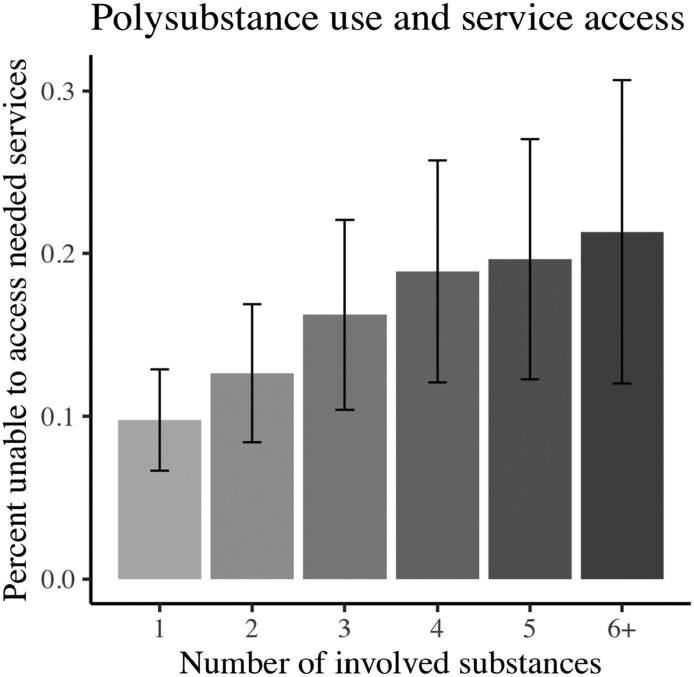
Individuals with substance use disorders (SUDs), including those in long-term recovery, and their loved ones are facing rapid changes to treatment and support services due to COVID-19. To assess these changes, the Addiction Policy Forum fielded a survey to their associated patient and family networks between April 27 and May 13, 2020. Individuals who reported a history of use of multiple substances were more likely to report that COVID-19 has affected their treatment and service access, and were specifically more likely to report both use of telehealth services and difficulties accessing needed services. These findings suggest that individuals with a history of using multiple substances may be at greater risk for poor outcomes due to COVID-19, even in the face of expansion of telehealth service access.
Keywords: Addictive behaviors; COVID-19; Polysubstance use; Substance-related disorders; Telemedicine; Treatment access.
Copyright © 2020 Elsevier Inc. All rights reserved.
Figures
References
-
- Bojdani, E., Rajagopalan, A., Chen, A., Gearin, P., Olcott, W., Shankar, V., Cloutier, A., Solomon, H., Naqvi, N. Z., Batty, N., Festin, F., Tahera, D., Chang, G., & DeLisi, L. E. (2020). COVID-19 pandemic: Impact on psychiatric care in the United States. Psychiatry Research, 289, 113069. Advance online publication. doi: 10.1016/j.psychres.2020.113069. - DOI - PMC - PubMed
MeSH terms
Grants and funding
LinkOut - more resources
Full Text Sources
Other Literature Sources
Medical
Miscellaneous
