Microbiome-derived metabolome as a potential predictor of response to cancer immunotherapy
- PMID: 33127655
- PMCID: PMC7604862
- DOI: 10.1136/jitc-2020-001383
Microbiome-derived metabolome as a potential predictor of response to cancer immunotherapy
Abstract
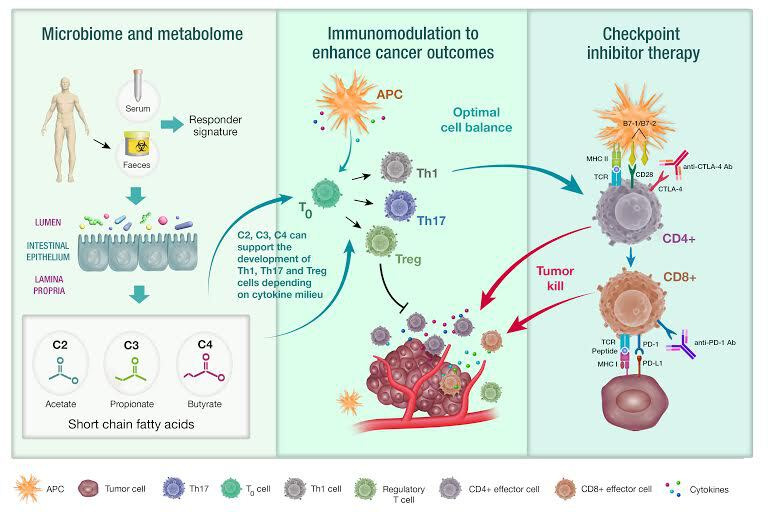
Cancer immunotherapy with checkpoint blockade has become standard of care treatment for numerous cancer types. Despite this, robust predictive biomarkers are lacking. There is increasing evidence that the host microbiome is a predictor of immunotherapy response, although the optimal host microbiome has not been defined. Metabolomics is a new area of medicine that aims to analyze the metabolic profile of a biological system. The microbiome-derived metabolome (fecal and serum) represents the end products of microbial metabolism and these may be functionally more important than the distinct bacterial species that comprise a favorable microbiome. Short-chain fatty acids (SCFA) are metabolites produced by gut microbiota and have a role in T cell homeostasis, including differentiation of regulatory T cells. Recent studies have confirmed differential expression of SCFA for immunotherapy responders compared with non-responders. We propose that the microbiome metabolome, with a focus on SCFA may be a novel predictive biomarker for immunotherapy efficacy.
Keywords: biomarkers; immunotherapy; metabolic networks and pathways; tumor.
© Author(s) (or their employer(s)) 2020. Re-use permitted under CC BY-NC. No commercial re-use. See rights and permissions. Published by BMJ.
Conflict of interest statement
Competing interests: None declared.
Figures
References
-
- Mastrangelo A, Barbas C. Chronic Diseases and Lifestyle Biomarkers Identification by Metabolomics : Sussulini A, Metabolomics: from Fundamentals to clinical applications. advances in experimental medicine and biology. 965 Springer, Cham, 2017. - PubMed
MeSH terms
Substances
LinkOut - more resources
Full Text Sources
Medical