


Do fine particulate air pollution (PM2.5) exposure and its attributable premature mortality differ for immigrants compared to those born in the United States?
- PMID: 33129853
- PMCID: PMC8079555
- DOI: 10.1016/j.envres.2020.110387
Do fine particulate air pollution (PM2.5) exposure and its attributable premature mortality differ for immigrants compared to those born in the United States?
Abstract
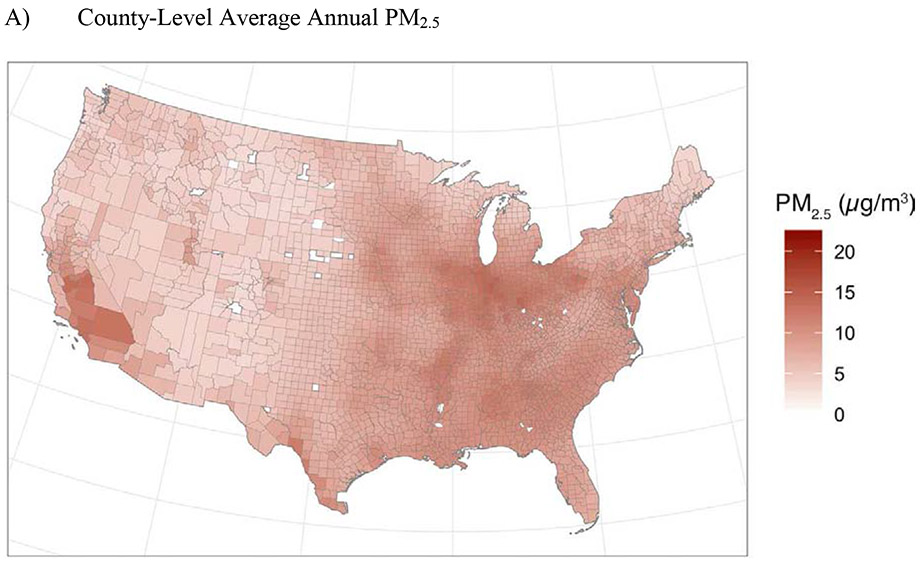
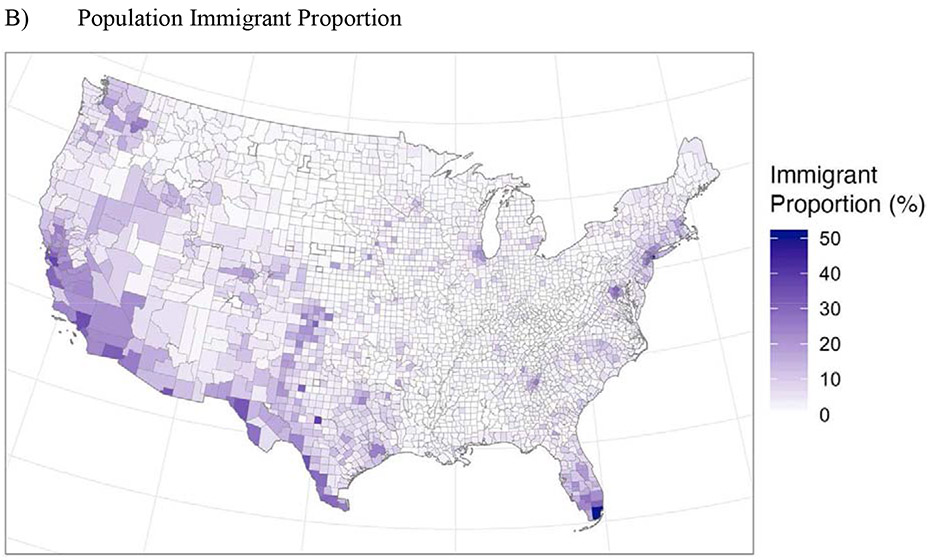
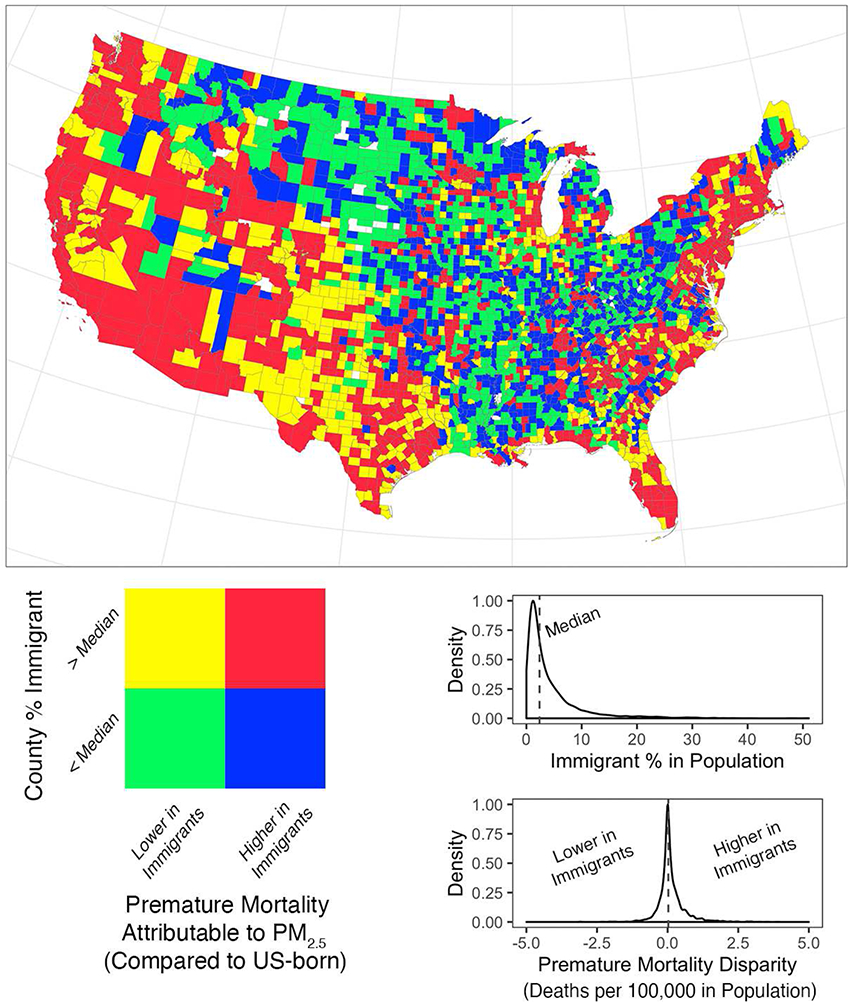
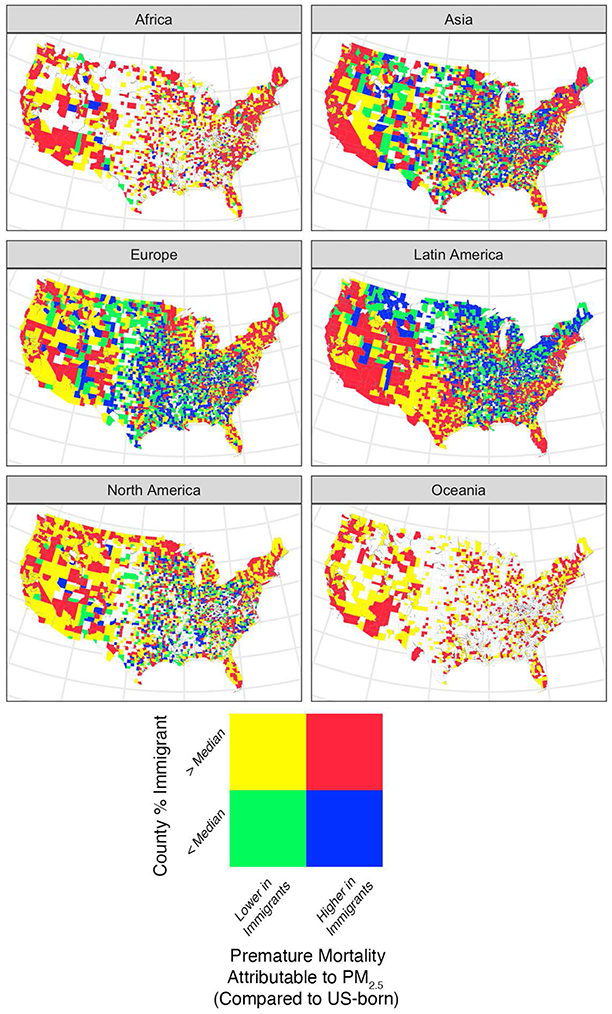
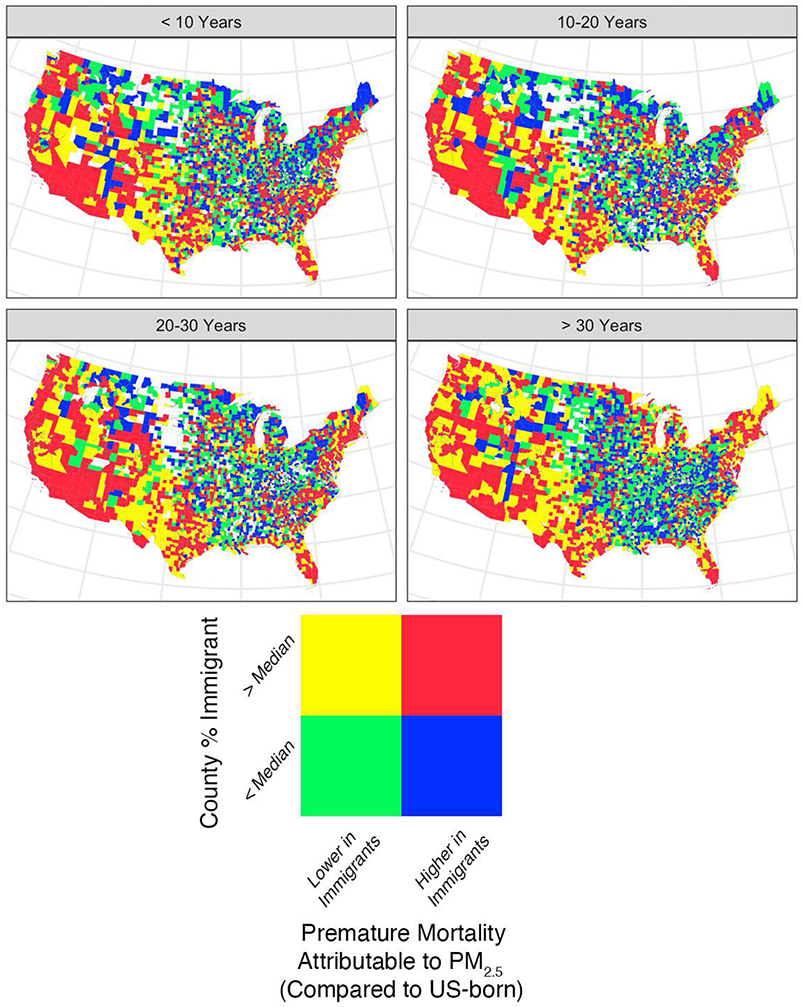
In the United States (US), immigrants constitute a considerable and growing proportion of the general population. Compared to the US-born, immigrants have differential health risks, and it is unclear if environmental exposures contribute. In this work, we estimated disparities between immigrants and the US-born in fine particulate matter (PM2.5) exposure and attributable premature mortality, including by region of origin and time since immigration. With PM2.5 estimates from a validated model at ~1 km2 spatial resolution and residential Census tract population data, we calculated the annual area-weighted average PM2.5 exposure for immigrants overall, the US-born, and immigrants separately by geographic region of origin and time since immigration. We then calculated the premature mortality attributed to PM2.5 for each population group, assessing disparities by immigrant status in PM2.5 exposure and attributable premature mortality in the US as a whole and in each US county to evevaluate spatial heterogeneity. Overall, immigrants were exposed to slightly higher PM2.5 (0.36 μg/m3, 3.8%) than the US-born. This exposure difference translates to 2.11 more premature deaths attributable to PM2.5 per 100,000 in population for immigrants compared to the US-born in 2010. Immigrant - US-born disparities in PM2.5 and attributable premature mortality were more severe among immigrants originating from Asia, Africa, and Latin America than those from Europe, Oceania, and North America. Disparities between immigrant groups by time since immigration were comparatively small. Sensitivity analyses using 2000 data and a non-linear set of PM2.5 attributable mortality coefficients identified similar patterns. Our findings suggest that environmental exposure disparities, such as in PM2.5, may contribute to immigrant health disparities in the US.
Keywords: Air pollution; Environmental justice; Health disparity; Immigrant health; PM2.5.
Copyright © 2020 Elsevier Inc. All rights reserved.
Conflict of interest statement
Declaration of interests
The authors declare that they have no known competing financial interests or personal relationships that could have appeared to influence the work reported in this paper.
Figures
References
-
- Arandia G, et al. , 2012. Diet and acculturation among Hispanic/Latino older adults in the United States: a review of literature and recommendations. J Nutr Gerontol Geriatr. 31, 16–37. - PubMed
-
- Argeseanu Cunningham S, et al. , 2008. Health of foreign-born people in the United States: a review. Health Place. 14, 623–35. - PubMed
-
- Baird J, et al. , 2008. Immigrant Settlement Patterns: The Role of Metropolitan Characteristics. Sociological Inquiry. 78, 310–334.
-
- Brook RD, et al. , 2010. Particulate matter air pollution and cardiovascular disease: An update to the scientific statement from the American Heart Association. Circulation. 121, 2331–78. - PubMed
-
- Brugge D, et al. , 2000. An environmental health survey of residents in Boston Chinatown. J Immigr Health. 2, 97–111. - PubMed
Publication types
MeSH terms
Substances
Grants and funding
LinkOut - more resources
Full Text Sources
Other Literature Sources
Medical
