Review
. 2021 Jan 1:264:118676.
doi: 10.1016/j.lfs.2020.118676. Epub 2020 Oct 28.

Is highly expressed ACE 2 in pregnant women "a curse" in times of COVID-19 pandemic?

Affiliations
Review

Is highly expressed ACE 2 in pregnant women "a curse" in times of COVID-19 pandemic?

Ankit Dhaundiyal et al. Life Sci. .

Abstract

Angiotensin-converting enzyme 2 (ACE 2) is a membrane-bound enzyme that cleaves angiotensin II (Ang II) into angiotensin (1-7). It also serves as an important binding site for SARS-CoV-2, thereby, facilitating viral entry into target host cells. ACE 2 is abundantly present in the intestine, kidney, heart, lungs, and fetal tissues. Fetal ACE 2 is involved in myocardium growth, lungs and brain development. ACE 2 is highly expressed in pregnant women to compensate preeclampsia by modulating angiotensin (1-7) which binds to the Mas receptor, having vasodilator action and maintain fluid homeostasis. There are reports available on Zika, H1N1 and SARS-CoV where these viruses have shown to produce fetal defects but very little is known about SARS-CoV-2 involvement in pregnancy, but it might have the potential to interact with fetal ACE 2 and enhance COVID-19 transmission to the fetus, leading to fetal morbidity and mortality. This review sheds light on a path of SARS-CoV-2 transmission risk in pregnancy and its possible link with fetal ACE 2.

Keywords: ACE 2; Pregnancy and fetal transmission; SARS-CoV-2.


Figures

Unlabelled Image
Graphical abstract
Fig. 1
Fig. 1
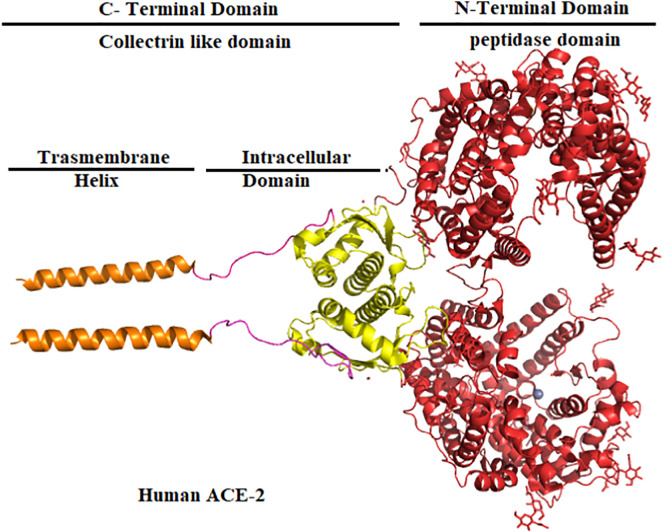
Structure of the ACE 2 N-Terminal which contains peptidase domain (red) and C-Terminal domain contains collectrin like a domain that includes intracellular domain (yellow) with chain (pink) and transmembrane helix (orange). (For interpretation of the references to colour in this figure legend, the reader is referred to the web version of this article.)
Fig. 2
Fig. 2
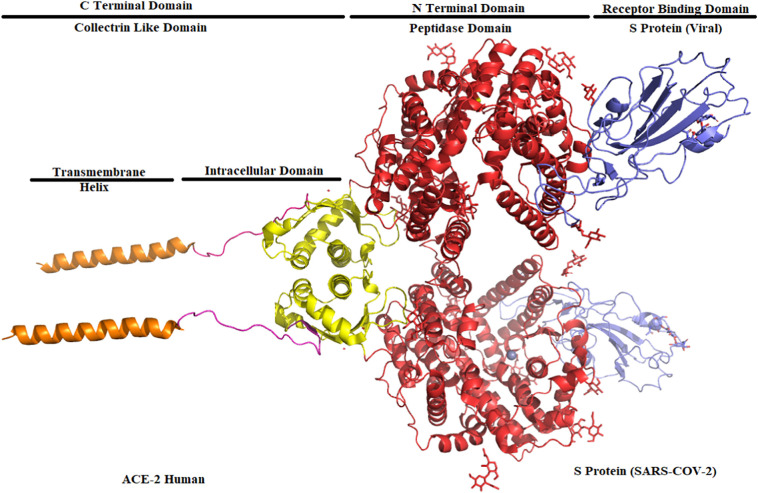
Structure of the peptidase domain (red) (ACE 2) binding to the receptor-binding domain (blue) (SARS-CoV-2. (For interpretation of the references to colour in this figure legend, the reader is referred to the web version of this article.)
Fig. 3
Fig. 3
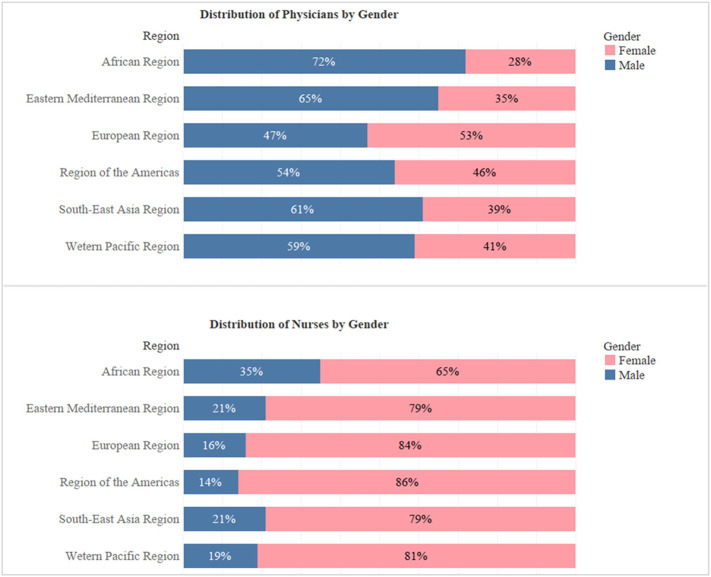
Distribution of physicians and nurses by gender.
Fig. 4
Fig. 4
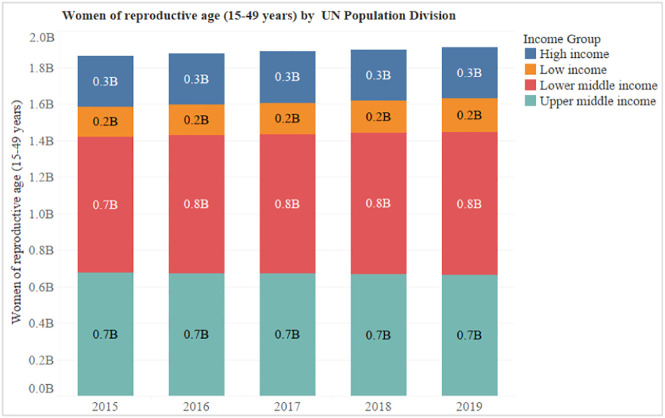
Women of reproductive age (15–49 years) by UN population division.
Fig. 5
Fig. 5
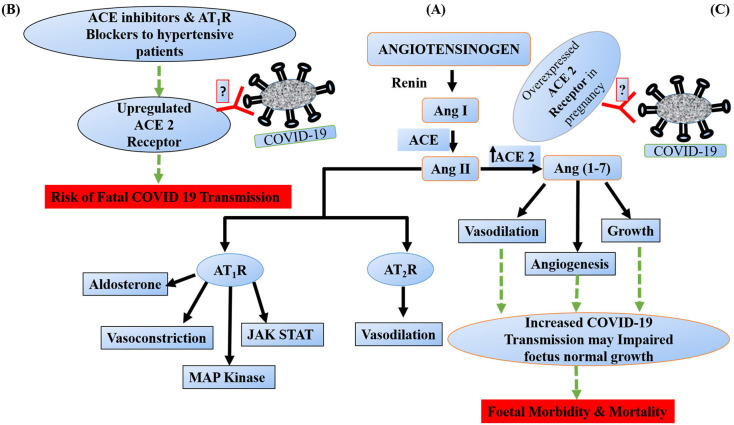
Renin-Angiotensin pathway & possible mechanism by which SARS-CoV-2 binds to fetal ACE 2 and might induce Fetal Morbidity and Mortality. (A) Briefly, renin is an enzyme that act on angiotensinogen to produce decapeptide angiotensin I (Ang I) which is further cleaved by angiotensin converting enzyme (ACE) to catalyze the formation of octapeptide angiotensin II (Ang II). Ang II binds to angiotensin 1 receptor (AT1R) to produce vasoconstriction, activates mitogen activate protein kinase (MAP) kinase, JAK-STAT pathway and induces aldosterone production on the other side AT2R has vasodilator property. (B) Further, ACE inhibitors and AT1R blockers upregulates the expression of ACE 2 to produce Ang (1–7). This upregulated ACE 2 act as a binding site for SARS-CoV-2 and may facilitate the COVID 19 infection. (C) During pregnancy condition, fetal ACE 2 is highly expressed and so we are hypothesized that if SARS-CoV-2 crosses placenta similar to SARS-CoV then it would interact with fetal ACE 2 and may induce fetal deaths and abortions. (Note: Green dotted arrow indicates proposed/hypothetical pathway). (For interpretation of the references to colour in this figure legend, the reader is referred to the web version of this article.)

References

    1. Turner A.J., Tipnis S.R., Guy J.L., Rice G., Hooper N.M. ACEH/ACE2 is a novel mammalian metallocarboxypeptidase and a homologue of angiotensin-converting enzyme insensitive to ACE inhibitors. Can. J. Physiol. Pharmacol. 2002;80:346–353. - PubMed
    1. Warner F.J., Smith A.I., Hooper N.M., Turner A.J. Angiotensin-converting enzyme-2: a molecular and cellular perspective. Cell. Mol. Life Sci. 2004;61:2704–2713. - PMC - PubMed
    1. Vickers C., Hales P., Kaushik V., Dick L., Gavin J., Tang J. Hydrolysis of biological peptides by human angiotensin-converting enzyme-related carboxypeptidase. J. Biol. Chem. 2002;277:14838–14843. - PubMed
    1. Chappell M.C. Of diabetic mice and ACE2: a new biomarker of renal disease? Am J Physiol Renal Physiol. 2013;305:F970–F972. - PMC - PubMed
    1. Santos R.A., e Silva A.C.S., Maric C., Silva D.M., Machado R.P., de Buhr I. Angiotensin-(1–7) is an endogenous ligand for the G protein-coupled receptor mas. Proc. Natl. Acad. Sci. U. S. A. 2003;100:8258–8263. - PMC - PubMed

MeSH terms

Substances