


Shining a light on metabolic vulnerabilities in non-small cell lung cancer
- PMID: 33130228
- PMCID: PMC7836022
- DOI: 10.1016/j.bbcan.2020.188462
Shining a light on metabolic vulnerabilities in non-small cell lung cancer
Abstract
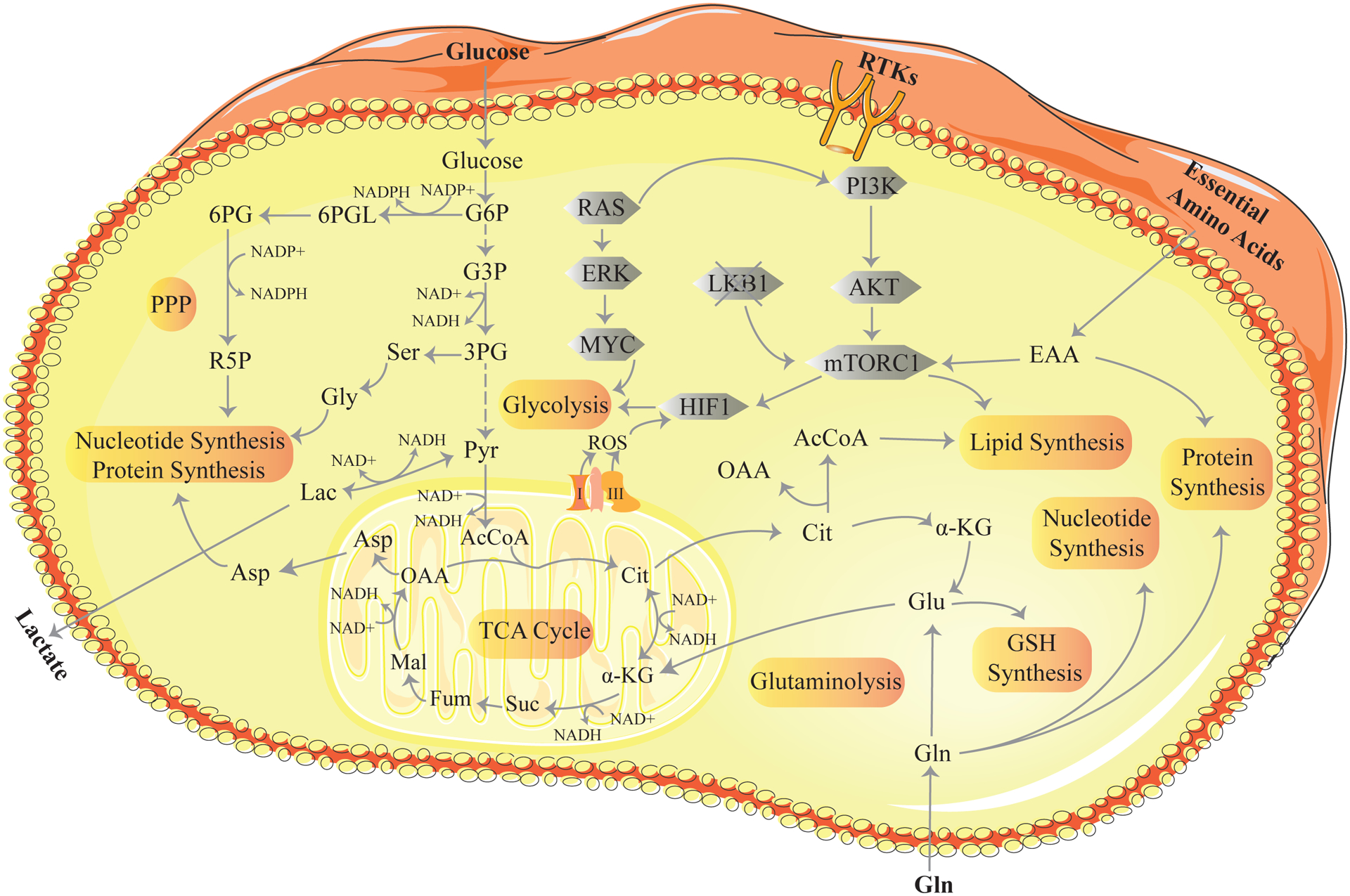
Metabolic reprogramming is a hallmark of cancer which contributes to essential processes required for cell survival, growth, and proliferation. Non-small cell lung cancer (NSCLC) is the most common type of lung cancer and its genomic classification has given rise to the design of therapies targeting tumors harboring specific gene alterations that cause aberrant signaling. Lung tumors are characterized with having high glucose and lactate use, and high heterogeneity in their metabolic pathways. Here we review how NSCLC cells with distinct mutations reprogram their metabolic pathways and highlight the potential metabolic vulnerabilities that might lead to the development of novel therapeutic strategies.
Keywords: Metabolic rewiring; Non-small cell lung cancer; Oncogenic drivers; Therapeutic strategies.
Copyright © 2020. Published by Elsevier B.V.
Figures

References
-
- Hanahan D and Weinberg RA, Hallmarks of cancer: the next generation. cell, 2011. 144(5): p. 646–674. - PubMed
-
- Warburg ОН PК and Negelein E, Uber den Stoffwechsel der Karzinomzelle. Biochem Z, 1924. 152: p. 309–44.
Publication types
MeSH terms
Grants and funding
LinkOut - more resources
Full Text Sources
Other Literature Sources
