


Gordian Knot: Gastrointestinal lesions caused by three highly pathogenic coronaviruses from SARS-CoV and MERS-CoV to SARS-CoV-2
- PMID: 33131637
- PMCID: PMC7581377
- DOI: 10.1016/j.ejphar.2020.173659
Gordian Knot: Gastrointestinal lesions caused by three highly pathogenic coronaviruses from SARS-CoV and MERS-CoV to SARS-CoV-2
Abstract
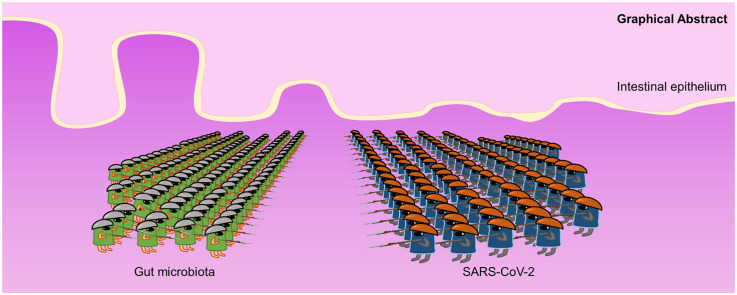
The severe acute respiratory syndrome coronavirus 2 (SARS-CoV-2), the pathogen of 2019 novel coronavirus disease (COVID-19), is currently spreading around the world. The WHO declared on January 31 that the outbreak of SARS-CoV-2 was a public health emergency. SARS-Cov-2 is a member of highly pathogenic coronavirus group that also consists of severe acute respiratory syndrome coronavirus (SARS-CoV) and Middle East Respiratory Syndrome Coronavirus (MERS-CoV). Although respiratory tract lesions were regarded as main manifestation of SARS-Cov-2 infection, gastrointestinal lesions were also reported. Similarly, patients with SARS-CoV and MERS-CoV were also observed. Common gastrointestinal symptoms of patients mainly included diarrhea, vomiting and abdominal pain. Gastrointestinal lesions could be used as basis for early diagnosis of patients, and at the same time, controlling gastrointestinal lesions better facilitated to cut off the route of fecal-oral transmission. Hence, this review summarizes the characteristics and mechanism of gastrointestinal lesions caused by three highly pathogenic human coronavirus infections including SARS-CoV, MERS-CoV, as well as SARS-CoV-2. Furthermore, it is expected to gain experience from gastrointestinal lesions caused by SARS-CoV and MERS-CoV infections in order to be able to better relieve SARS-CoV-2 epidemic. Targetin gut microbiota to regulate the process of SARS-CoV-2 infection should be a concern. Especially, the application of nanotechnology may provide help for further controlling COVID-19.
Keywords: COVID-19; Gastrointestinal lesions; Gut microbiota; MERS; SARS; SARS-CoV-2.
Copyright © 2020 Elsevier B.V. All rights reserved.
Conflict of interest statement
None.
Figures
References
-
- Arabi Y.M., Arifi A.A., Balkhy H.H., Najm H., Aldawood A.S., Ghabashi A., Hawa H., Alothman A., Khaldi A., Al Raiy B. Clinical course and outcomes of critically ill patients with Middle East respiratory syndrome coronavirus infection. Ann. Intern. Med. 2014;160:389–397. - PubMed
-
- Assiri A., Al-Tawfiq J.A., Al-Rabeeah A.A., Al-Rabiah F.A., Al-Hajjar S., Al-Barrak A., Flemban H., Al-Nassir W.N., Balkhy H.H., Al-Hakeem R.F. Epidemiological, demographic, and clinical characteristics of 47 cases of Middle East respiratory syndrome coronavirus disease from Saudi Arabia: a descriptive study. Lancet Infect. Dis. 2013;13:752–761. - PMC - PubMed
11.1 Web references
-
- News: Nature Coronavirus breakthrough: dexamethasone is first drug shown to save lives. Nature 2020. 2020 https://www.nature.com/articles/d41586-020-01824-5 - PubMed
-
- WHO . 2003. Summary of Probable SARS Cases with Onset of Illness from 1 November 2002 to 31 July 2003 (Based on Data as of the 31 December 2003)https://www.who.int/csr/sars/country/table2004_04_21/en/
-
- WHO . 2020. MERS Situation Update, January 2020. (Based on Data as of the January 2020)http://www.emro.who.int/health-topics/mers-cov/mers-outbreaks.html
-
- WHO . 2020. WHO Coronavirus Disease (COVID-19) Dashboard. (Based on Data as of the 5 August 2020)https://www.who.int/redirect-pages/page/novel-coronavirus-(covid-19)-sit...
Publication types
MeSH terms
LinkOut - more resources
Full Text Sources
Other Literature Sources
Miscellaneous
