Review
. 2020 Aug:50:101418.
doi: 10.1016/j.smim.2020.101418. Epub 2020 Oct 31.

Epitope prediction and identification- adaptive T cell responses in humans

Affiliations
Review

Epitope prediction and identification- adaptive T cell responses in humans

John Sidney et al. Semin Immunol. 2020 Aug.

Abstract

Epitopes, in the context of T cell recognition, are short peptides typically derived by antigen processing, and presented on the cell surface bound to MHC molecules (HLA molecules in humans) for TCR scrutiny. The identification of epitopes is a context-dependent process, with consideration given to, for example, the source pathogen and protein, the host organism, and state of the immune reaction (e.g., following natural infection, vaccination, etc.). In the following review, we consider the various approaches used to define T cell epitopes, including both bioinformatic and experimental approaches, and discuss the concepts of immunodominance and immunoprevalence. We also discuss HLA polymorphism and epitope restriction, and the resulting impact on the identification of, and potential population coverage afforded by, epitopes or epitope-based vaccines. Finally, some examples of the practical application of T cell epitope identification are provided, showing how epitopes have been valuable for deriving novel immunological insights in the context of the immune response to various pathogens and allergens.

Keywords: Epitope prediction; HLA; MHC; Polymorphism; T cell epitopes; Vaccines.


Conflict of interest statement

Disclosure

Declarations of interest: none.

Figures
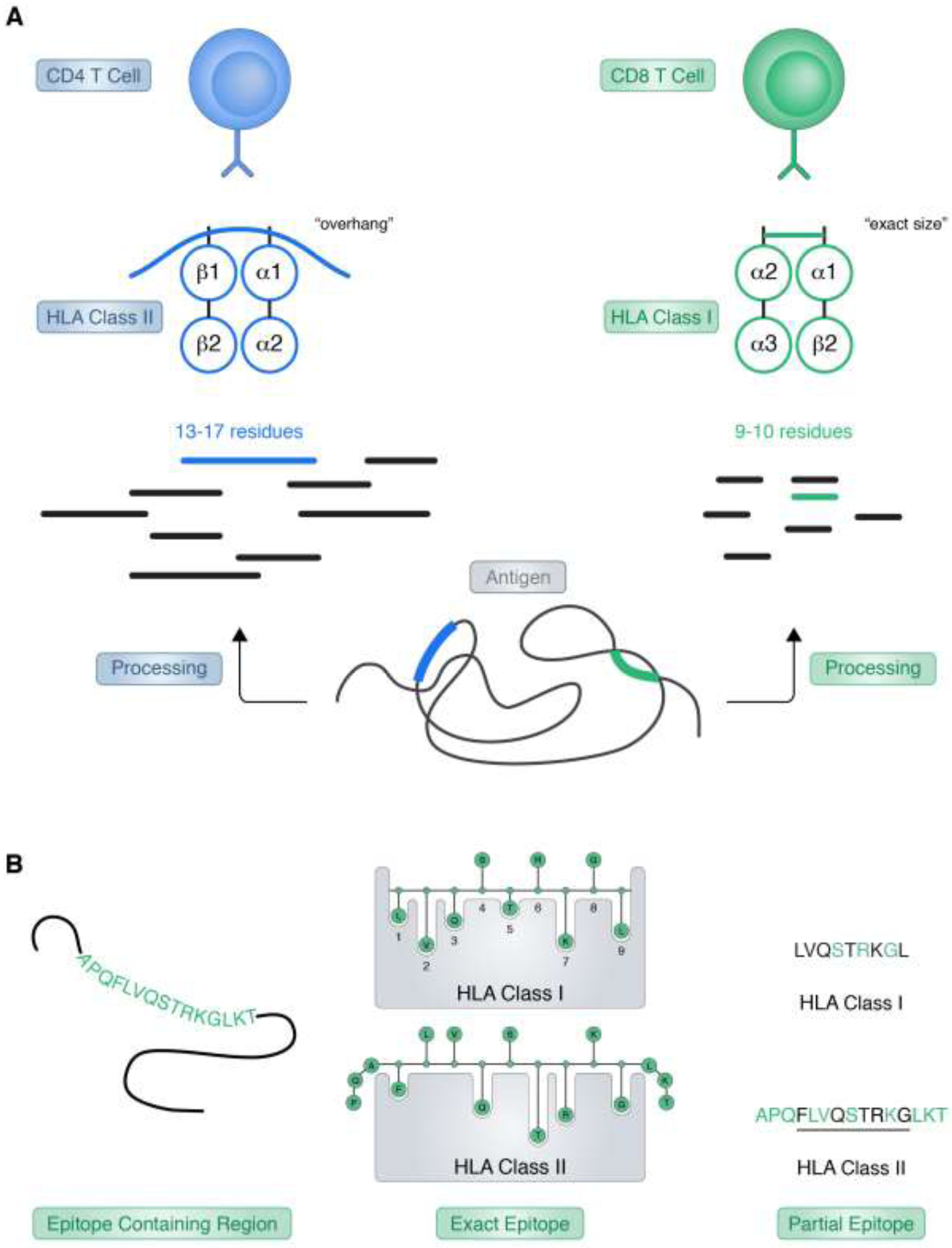
Figure 1.
Figure 1.. Epitope definition.
Presentation of peptide ligands by HLA class I and class II molecules is depicted. A) HLA class I and II ligands are generated by proteolytic processing of endogenously expressed proteins (antigen) (class I) or from proteins degraded in endocytic compartments (class II). Longer class II peptides typically overhang the open ends of the HLA class II binding groove, while shorter class I ligands are size constrained due to the closed end of the class I binding groove. With binding, and subsequent presentation on the cell surface, HLA-ligand complexes are available for scrutiny by CD4+ (class II) or CD8+ (class I) T cells. B) Ligands processed from longer protein antigens bind HLA using, in general, a nine-mer core region, where the main energy of binding is provided by interaction of some, but not all, peptide residues with residues forming the main pockets of the HLA binding groove. Definition of partial epitopes reflects that not all residues within an epitope region are necessarily important for HLA binding or T cell recognition, while mutation of other residues may ameliorate or abrogate specific immunity.
Figure 2.
Figure 2.. Metadata associated with epitope identification capture by the IEDB.
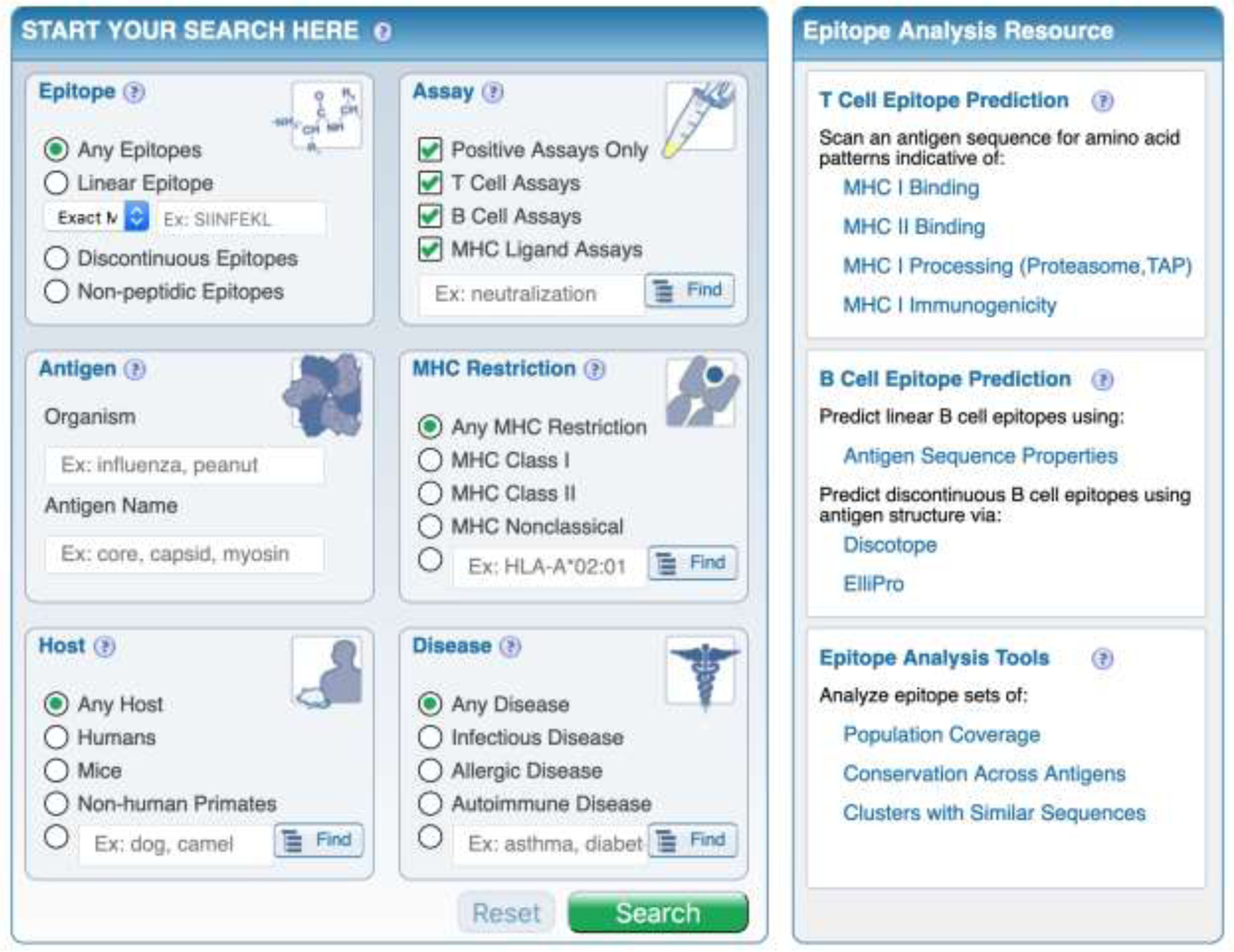
The IEDB homepage (www.iedb.org), and initial search fields are shown. The IEDB is an NIH-NIAID funded publicly available database of T and B cell epitopes curated from the published literature or by direct submission from NIH-NIAID funded large scale epitope discovery contracts. From the homepage, epitopes can be search using selected criteria, and subsequent results can be further filtered with additional criteria, to include specific assays or receptor(s).
Figure 3.
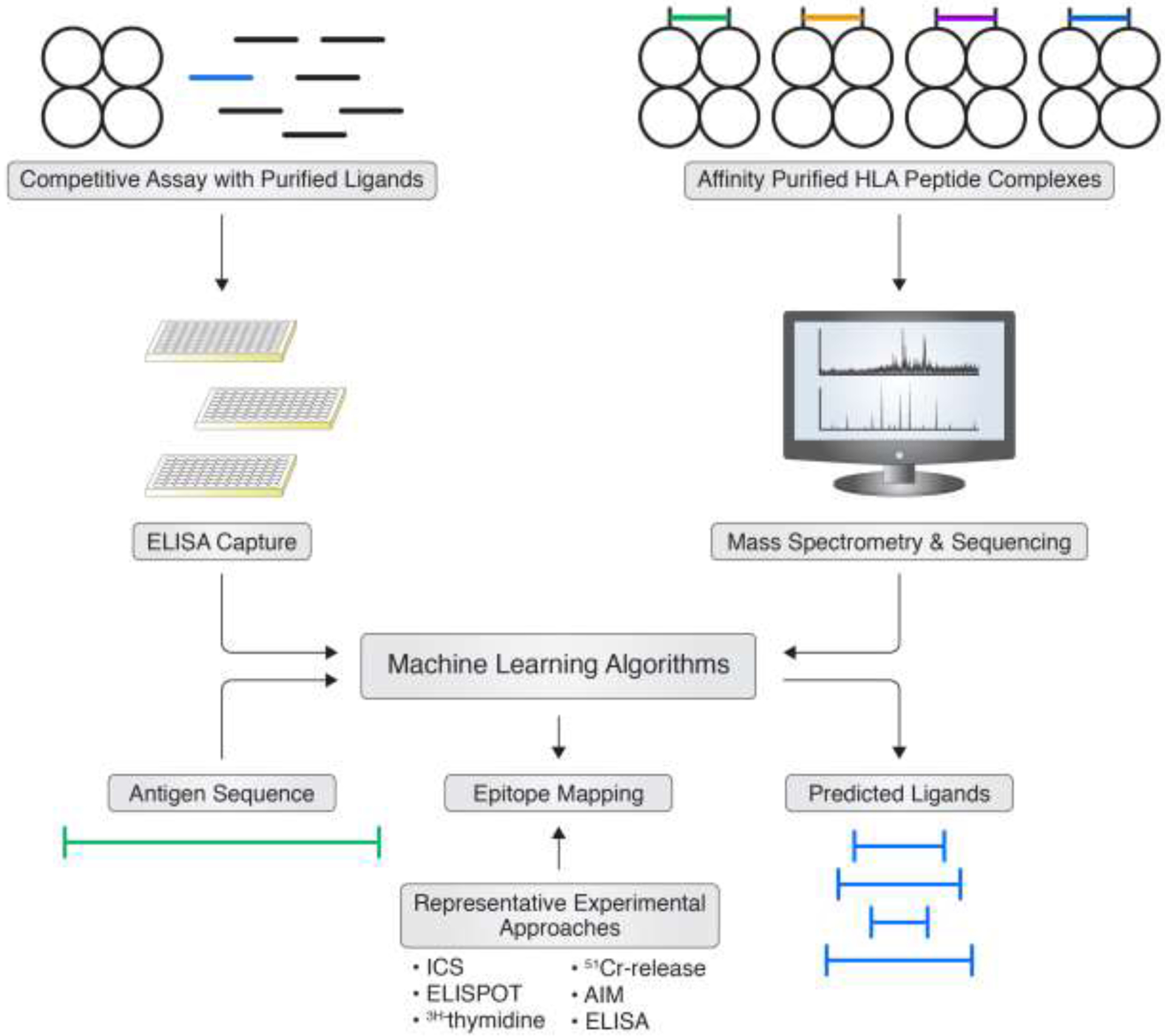
Figure 3.. Epitope predictions based on HLA interactions.
The development of bioinformatic tools to aid in identification of T cell epitopes is based on data generated from, for example, HLA-ligand assays or by mass spectrometry analysis of eluted ligands. This data is then utilized to develop machine learning tools to predict potential HLA binding peptides, and in turn candidate T cell epitopes.
Figure 4.
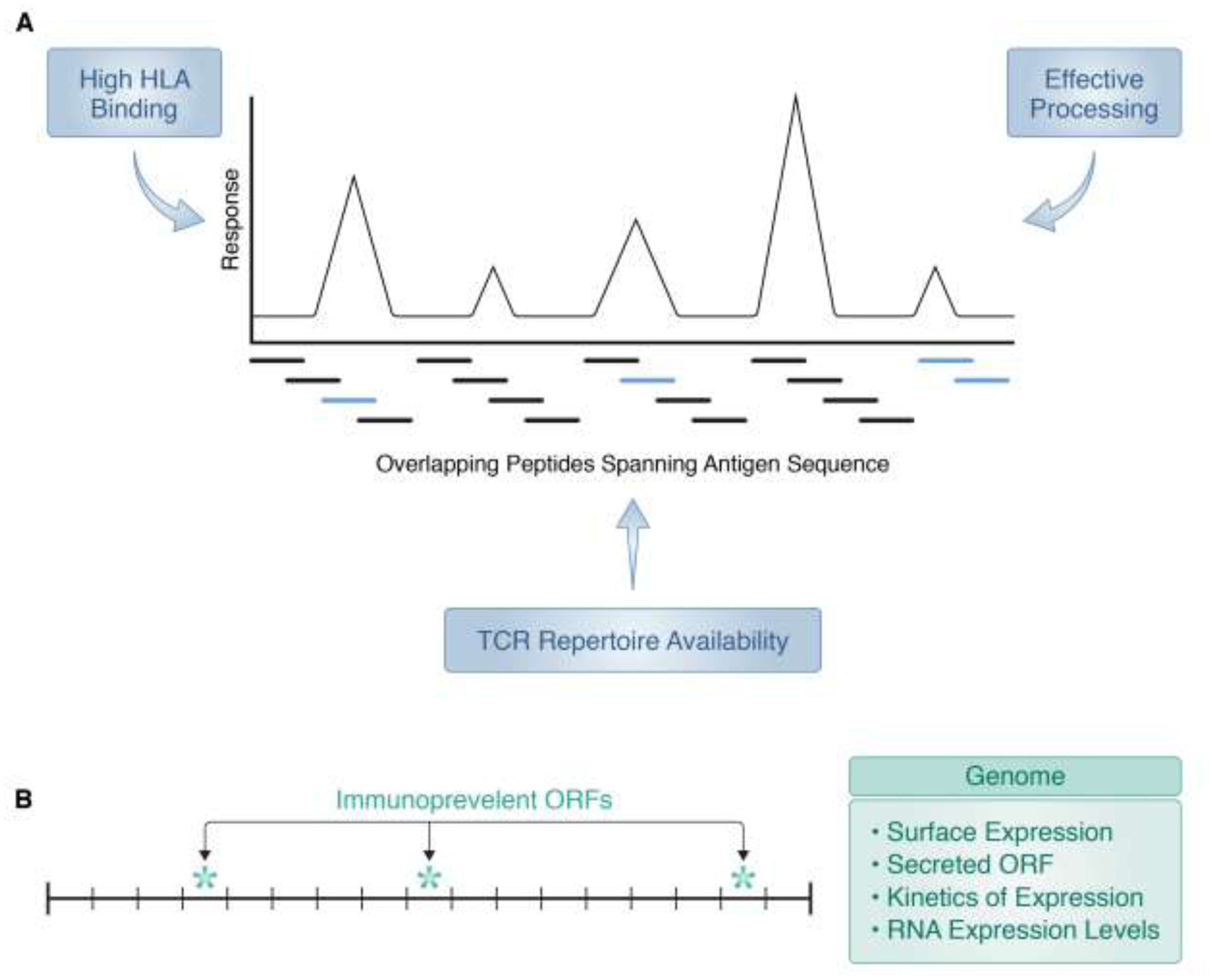
Figure 4.. Immunodominance and immunoprevalence.
A) Epitopes effectively generated by processing and for which a TCR repertoire is available (light blue bars), and capable of eliciting the (relatively) strongest T cell responses, are termed immunodominant. B) Epitopes, antigens or ORFs that elicit responses with high frequency in an out-bred population are termed immunoprevalent. Typically, only a few epitopes/ORFS/antigens are found to be immunoprevalent, and may be associated with high levels of surface or RNA expression or secretion (class II); kinetics (time) of expression is often associated with dominance of class I or class II responses.
Figure 5.
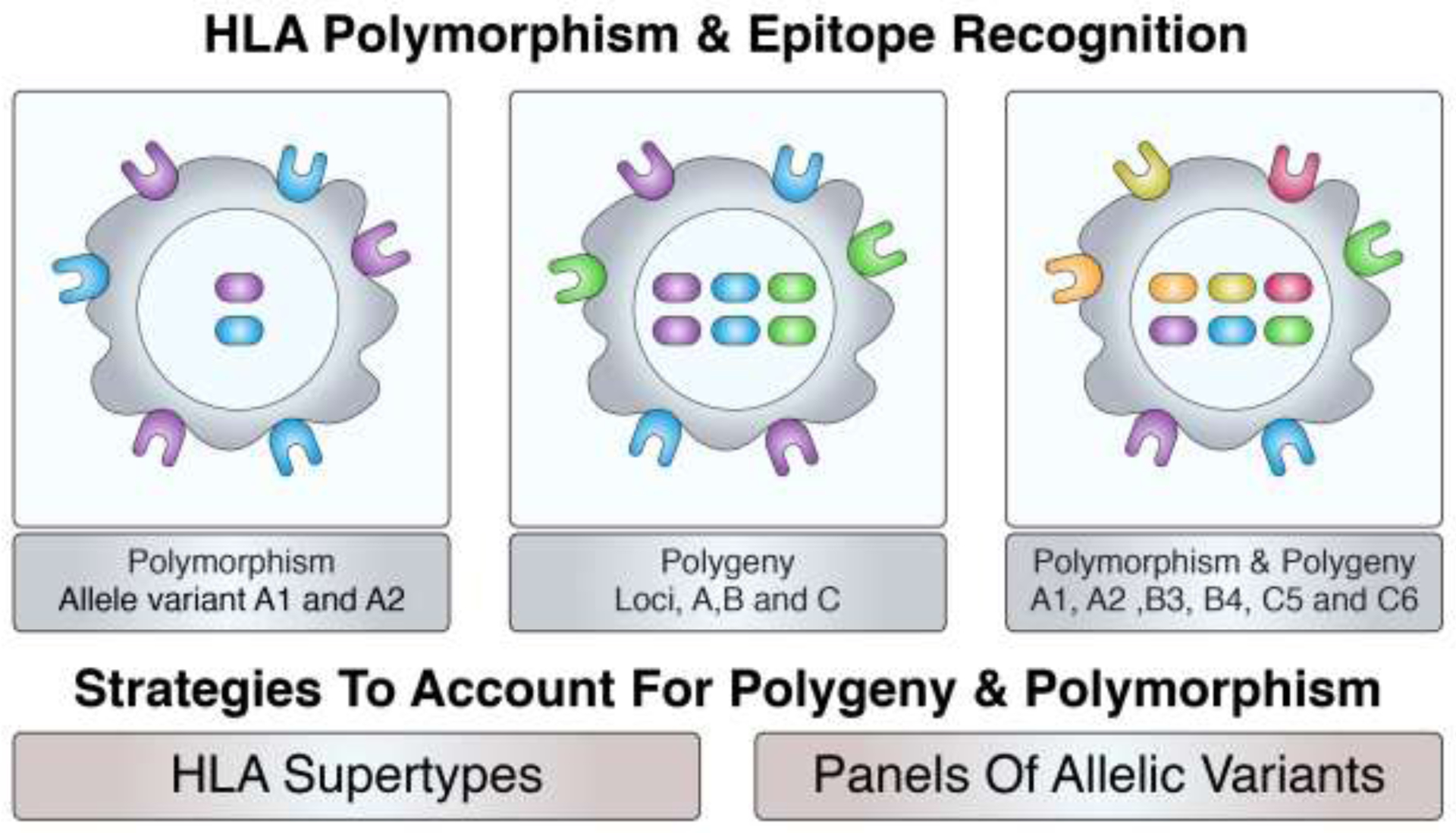
Figure 5.. HLA polymorphism and polygeny.
The HLA region is highly polymorphic, with thousands of different allelic variants expressed at each locus. With heterozygosity, each individual will express up to two different alleles at each locus. Further, with class I and II presentation across several loci (polygeny), up to six different class I (2 HLA-A, 2 HLA-B and 2 HLA-C) and eight different class II (2 HLA-DRB1, 2 HLA-DRB3/4/5, 2 DQ and 2 DP) molecules may be expressed by an individual.

References

    1. Peters B, Sidney J, Bourne P, Bui HH, Buus S, Doh G, Fleri W, Kronenberg M, Kubo R, Lund O, Nemazee D, Ponomarenko JV, Sathiamurthy M, Schoenberger SP, Stewart S, Surko P, Way S, Wilson S, Sette A, The design and implementation of the immune epitope database and analysis resource, Immunogenetics 57(5) (2005) 326–36. - PMC - PubMed
    1. Shiromizu CM, Jancic CC, gammadelta T Lymphocytes: An Effector Cell in Autoimmunity and Infection, Frontiers in immunology 9 (2018) 2389. - PMC - PubMed
    1. Karamooz E, Harriff MJ, Lewinsohn DM, MR1-dependent antigen presentation, Semin Cell Dev Biol 84 (2018) 58–64. - PMC - PubMed
    1. Terabe M, Berzofsky JA, Tissue-Specific Roles of NKT Cells in Tumor Immunity, Frontiers in immunology 9 (2018) 1838. - PMC - PubMed
    1. Lepore M, Mori L, De Libero G, The Conventional Nature of Non-MHC-Restricted T Cells, Frontiers in immunology 9 (2018) 1365. - PMC - PubMed

Publication types